
By Jennifer Jordan | Charleston Housing News
Just when Washington appeared poised to deliver one of the most significant housing reforms in decades, politics intervened.
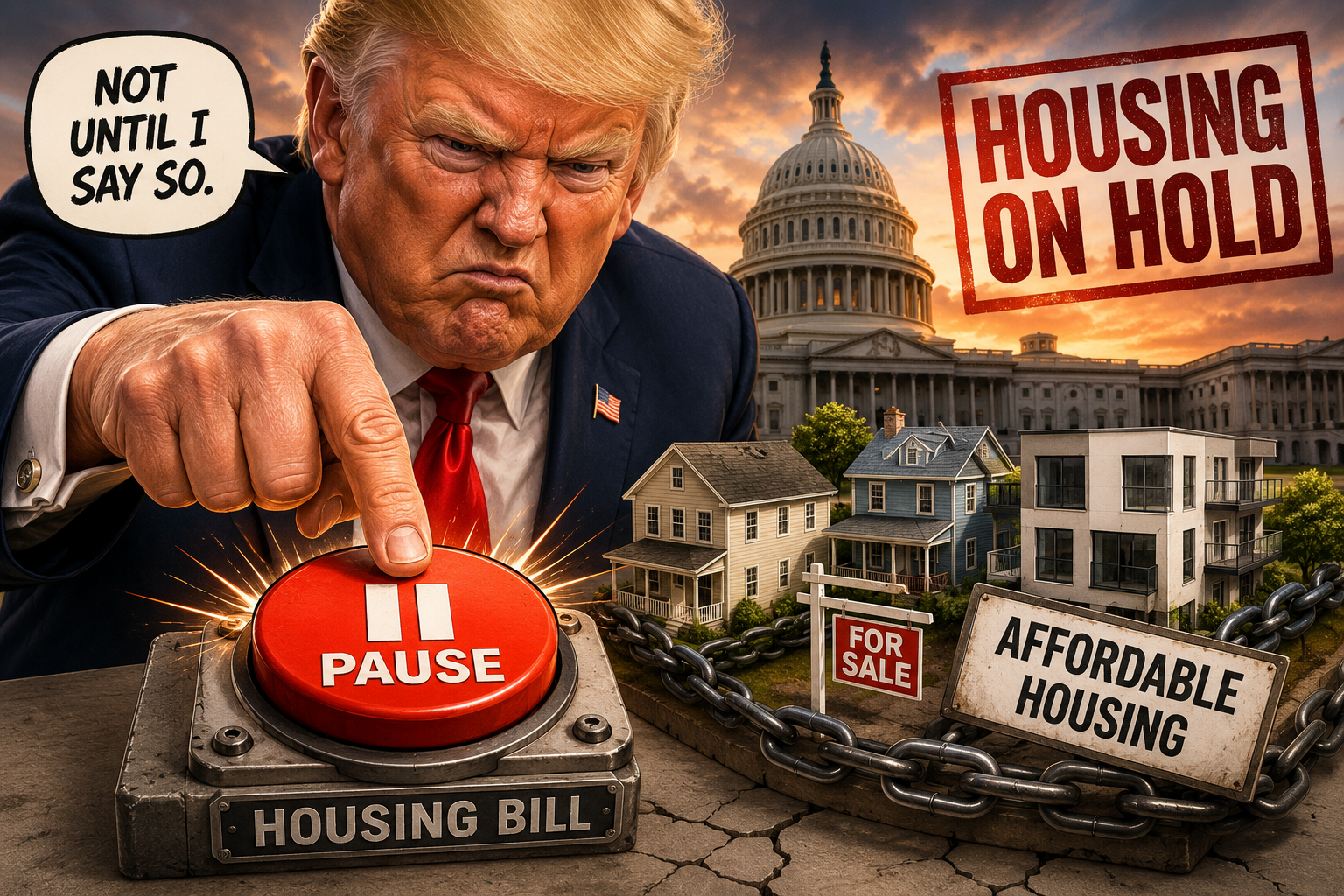
President Donald Trump abruptly canceled a scheduled signing ceremony this week for the bipartisan 21st Century ROAD to Housing Act, legislation widely viewed as the most substantial federal housing package in more than 30 years. The bill had already passed Congress with overwhelming bipartisan support, clearing the Senate by an 85-5 vote and the House by a 358-32 margin.
The legislation was designed to address one of America’s most pressing problems: housing affordability.
For buyers and renters across Charleston, where affordability continues to deteriorate, the delay is unlikely to be welcome news.
A Rare Bipartisan Victory—Put on Hold
The housing package included dozens of provisions aimed at increasing housing supply, streamlining permitting, encouraging new construction, rehabilitating aging housing stock, and limiting the number of single-family homes large institutional investors can own. Supporters argued the bill represented a rare example of Democrats and Republicans finding common ground on an issue affecting millions of Americans.
But only hours before he was expected to sign the measure, Trump announced on Truth Social that he was canceling the event until Congress passes the SAVE America Act, a separate election-related proposal focused on voter identification and proof-of-citizenship requirements.
The President called the election legislation a “national emergency” and indicated housing legislation would remain on hold until lawmakers act on that priority.
Housing and Politics Collide
The move immediately drew criticism from Democrats and surprised some Republicans who had championed the housing bill.
Supporters of the housing legislation argue that affordability has become one of the defining economic challenges facing American families. They note that home prices nationally have climbed dramatically since 2020, mortgage rates remain elevated, and the country continues to face a significant housing shortage.
Critics of Trump’s decision argue that delaying housing reform over an unrelated election measure unnecessarily postpones relief for homebuyers and renters already struggling with rising costs.
The White House and supporters of the SAVE America Act counter that election integrity is a foundational issue deserving immediate congressional action. The legislation would require proof of citizenship and voter identification standards for federal elections. Supporters argue these measures are necessary to strengthen confidence in U.S. elections.
Opponents argue that the legislation addresses a problem that is already rare and could create barriers for eligible voters who lack the required documentation.
What Does This Mean for Charleston?
In practical terms, Charleston homebuyers will not see any immediate impact from the delay.
Even if signed into law tomorrow, housing experts acknowledge that many provisions in the bill would take years to influence housing supply and affordability.
Still, for a region like Charleston—where inventory shortages, rising insurance costs, elevated construction expenses and affordability challenges continue to pressure buyers—the legislation represented a meaningful step toward expanding housing opportunities.
Charleston’s median home prices remain well above historical norms, while many first-time buyers continue struggling to enter the market.
Policies designed to increase supply have become increasingly important as the Lowcountry continues attracting new residents from across the country.
The Clock Is Still Running
Under the Constitution, the President has ten days to sign or veto legislation after it reaches his desk. Congressional leaders have indicated they still expect the housing bill to eventually become law, although its future timing remains uncertain.
For Charleston buyers, sellers and renters, the latest Washington drama serves as another reminder that housing policy—and housing affordability—have become deeply intertwined with national politics.
And for families hoping for relief from rising housing costs, the waiting continues.
Leave a Reply