
By Jennifer Jordan for Charleston Housing News
For generations, Charleston sold itself on charm.
Visitors came for cobblestone streets, historic homes, church steeples, shrimp and grits, and Southern hospitality that seemed to come naturally. But something fundamental has changed in recent years. Charleston is no longer simply a charming Southern destination. It has become one of America’s premier luxury travel markets — and that transformation is beginning to reshape everything from hospitality standards to residential real estate values.
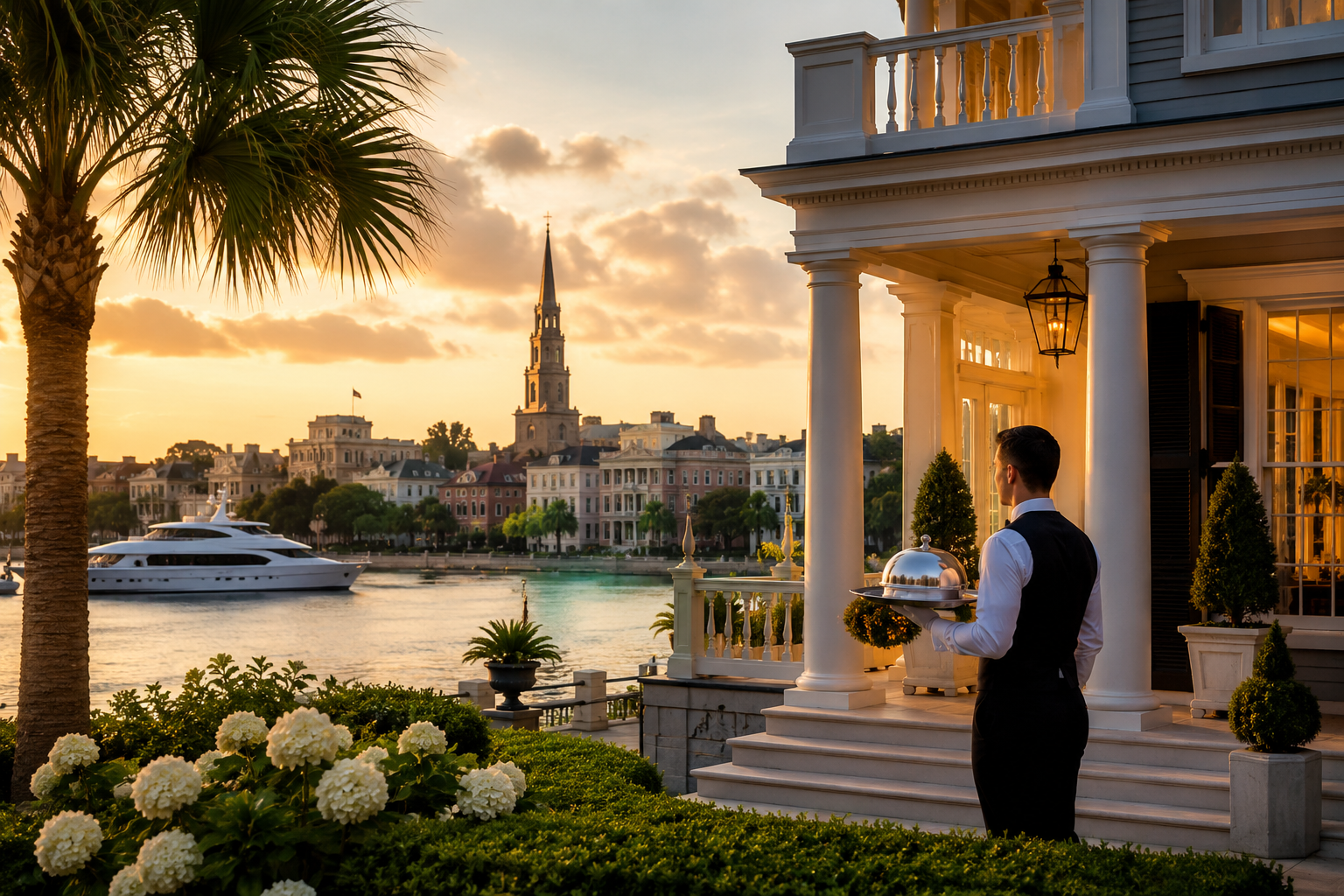
A recent Post and Courier article highlighted the arrival of a former butler to British Prime Minister Margaret Thatcher, who is now training hospitality professionals in Charleston. While the image of formal butler service may seem worlds away from everyday life in the Lowcountry, the broader story reveals something much bigger: Charleston’s luxury economy is maturing.
Today’s affluent visitors are arriving with expectations that extend far beyond clean accommodations and restaurant recommendations.
They expect personalized experiences.
They expect seamless service.
And increasingly, they expect Charleston to compete with luxury destinations such as Napa Valley, Palm Beach, Aspen, and the Hamptons.
Those expectations are already influencing the region’s housing market.
Luxury Travelers Are Becoming Luxury Homebuyers
Real estate professionals across the Charleston region have long observed a pattern: visitors frequently become buyers.
A family may initially rent a waterfront home on Isle of Palms, Kiawah Island, Sullivan’s Island, or in historic downtown Charleston for a week. After repeated visits, many begin searching for second homes, investment properties, or even permanent residences.
As Charleston attracts more affluent travelers, the profile of the eventual homebuyer often changes as well.
Today’s buyers increasingly include executives, entrepreneurs, physicians, retirees, professional athletes, and high-net-worth individuals relocating from major metropolitan markets such as New York, Boston, Washington D.C., Chicago, and California.
For these buyers, luxury is no longer defined solely by square footage or waterfront footage.
Service matters.
Concierge relationships matter.
Property management matters.
Lifestyle matters.
The Rise of the “Turnkey Luxury” Home
One of the strongest trends emerging in Charleston real estate is growing demand for turnkey properties that require little to no effort from owners.
Many luxury buyers now split time between multiple residences. They may own homes in Charleston, the Northeast, Colorado, Europe, or the Caribbean.
Because of this, buyers increasingly seek:
- Professional property management.
- Concierge and estate management services.
- Smart home automation.
- Lock-and-leave convenience.
- Resort-style amenities.
- Curated local experiences.
- Private chefs, transportation, and yacht services.
In communities such as Kiawah Island, Daniel Island Park, Wild Dunes, Mount Pleasant waterfront neighborhoods, and historic downtown Charleston, buyers are often purchasing an entire lifestyle package rather than simply acquiring a home.
Charleston Is Competing On A Global Stage
The opening of ultra-luxury accommodations such as The Cooper, alongside longstanding luxury icons including The Charleston Place and The Spectator Hotel, demonstrates that developers believe Charleston can support room rates that rival major international destinations.
That is significant for homeowners.
High-end hospitality investment often serves as an economic indicator. When investors commit hundreds of millions of dollars to luxury accommodations, they are making a long-term bet that affluent consumers will continue choosing Charleston.
So far, those bets appear well founded.
According to data from the College of Charleston’s Office of Tourism Analysis, the Charleston region welcomed a record 7.9 million visitors in 2025, generating approximately $14.3 billion in economic impact. More importantly, tourism officials report visitors are increasingly staying longer and spending more during each trip.
Those trends support demand for luxury housing, second homes, vacation properties, and upscale residential development throughout the Lowcountry.
Service May Become Charleston’s Biggest Competitive Advantage
Ironically, Charleston’s future as a luxury destination may depend less on new construction and more on preserving something the city has always possessed: genuine hospitality.
Luxury travelers can find beautiful hotels almost anywhere.
What cannot easily be replicated is authentic service, local knowledge, and memorable experiences.
For homeowners, sellers, investors, and real estate professionals, that matters because experiences create emotional connections — and emotional connections often lead to real estate purchases.
Charleston’s luxury evolution is no longer a future possibility.
It is already happening.
The question now is whether the region can maintain the authentic hospitality that built Charleston’s reputation while meeting the increasingly sophisticated expectations of a global luxury audience.
If it can, the impact on both tourism and housing may continue for years to come.
Leave a Reply