
By Jennifer Jordan | Charleston Housing News
OPINION:
The departure of Play It Again Sports from Fairmount Shopping Center marks the latest chapter in a transformation that has left many longtime Mount Pleasant business owners frustrated, displaced and wondering what exactly they’re getting in return.
When Fairmount Shopping Center sold last year for $15 million, several tenants publicly voiced concerns that rents would increase dramatically. Some reported facing rent increases of two to three times their previous lease rates. Since then, a number of longtime local businesses have either relocated or closed entirely.
Ownership has maintained that rents at the center had been below market for years and that significant renovations were needed.
Fair enough.
Commercial property owners have every right to improve their assets and seek market rents. But after touring the property and reviewing ongoing renovations, some observers may be asking an obvious question:
Is this truly a transformational redevelopment—or simply a cosmetic refresh accompanied by dramatically higher rents?

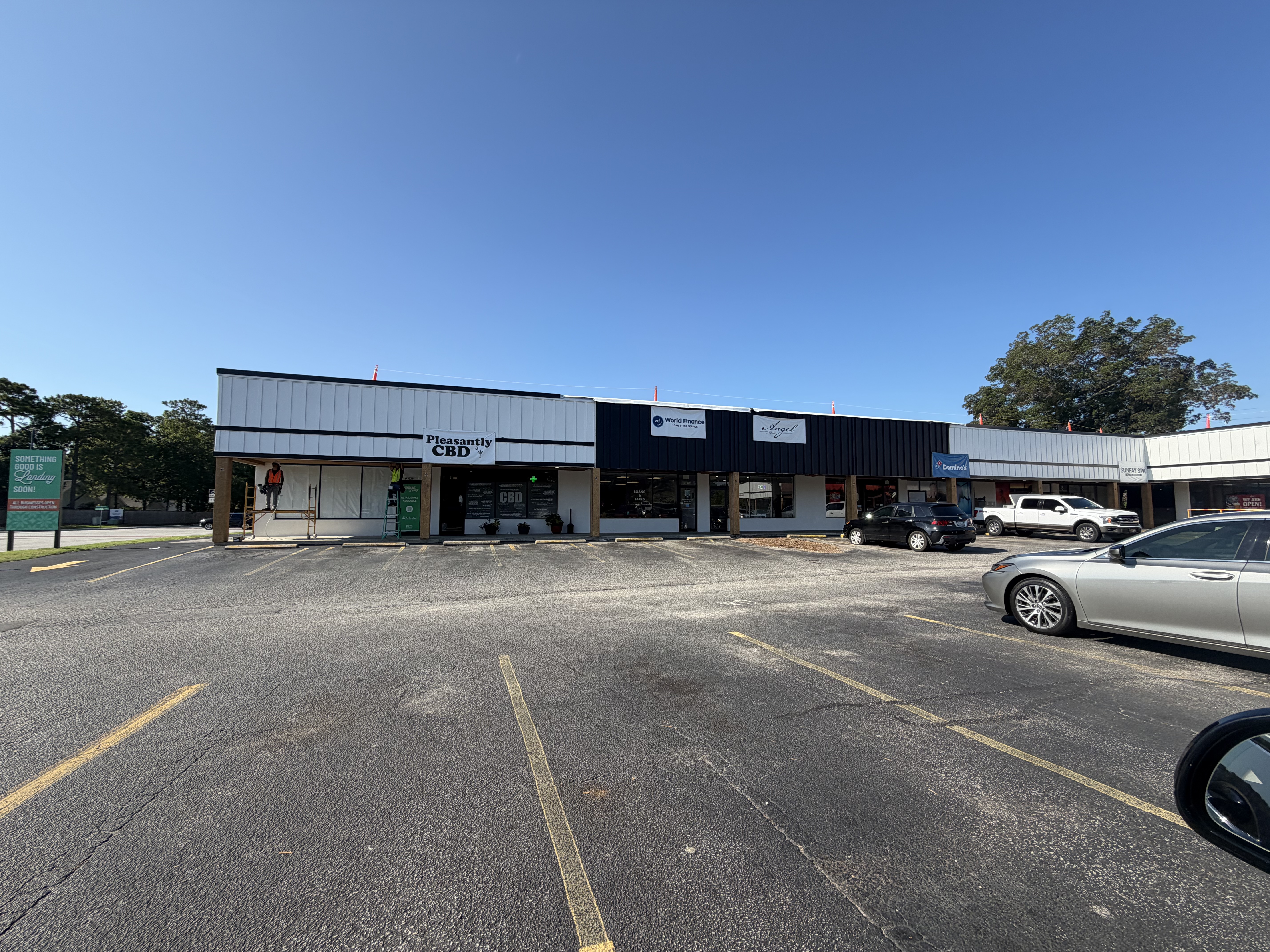
From fresh paint and updated facade panels to new accent materials and minor exterior improvements, much of the visible work appears largely aesthetic in nature. The center certainly looks cleaner and more contemporary than before.
But does it look dramatically different?

That depends on who you ask.
Photos from the property show freshly painted buildings, updated exterior finishes and resurfaced common areas. Yet many longtime tenants and customers may struggle to reconcile rent increases reportedly exceeding $30 per square foot with what appears to be, at least visually, a fairly modest renovation program.
In commercial real estate, this strategy is hardly unique.
Across the country, investment groups often acquire older shopping centers, modernize exterior appearances, reposition tenant mixes and seek substantially higher lease rates. The strategy can be profitable and, in some cases, can breathe new life into aging retail corridors.

The downside, however, is that locally owned businesses often become collateral damage.
Restaurants, service providers and neighborhood retailers that spent years building loyal customer bases suddenly find themselves unable to justify significantly higher occupancy costs.
The result can fundamentally alter the character of a shopping center.
Mount Pleasant residents have long valued locally owned businesses that give the community its identity. Replacing those businesses with higher-rent national or regional tenants may improve investor returns, but it also raises broader questions about what residents want their commercial corridors to become.
What exactly are tenants receiving in exchange for dramatically higher occupancy costs?
That question becomes even more relevant when looking beyond the freshly painted storefronts.
Behind the center, many of the property’s original service areas and infrastructure remain largely unchanged despite the exterior facelift.

Some business owners privately question whether the level of renovation justifies the scale of rent increases being sought. Others simply accepted that the economics no longer worked and moved elsewhere.
Play It Again Sports is simply the latest example in what has become an ongoing reshuffling of tenants.
Progress is important.
Investment is important.
Property owners deserve a return on their investments.
But there is also value in preserving the entrepreneurs and small businesses that helped make these centers successful in the first place.
As Fairmount Shopping Center continues its evolution, the market will ultimately decide whether customers believe the changes justify the costs.
For now, many local business owners appear unconvinced.
And judging by the photographs, some may argue that this renovation feels less like a complete transformation and more like a fresh coat of paint on an aging shopping center—with a substantially larger rent bill attached which harms local businesses and drives Mount Pleasant’s culture of small business downward.
Leave a Reply