
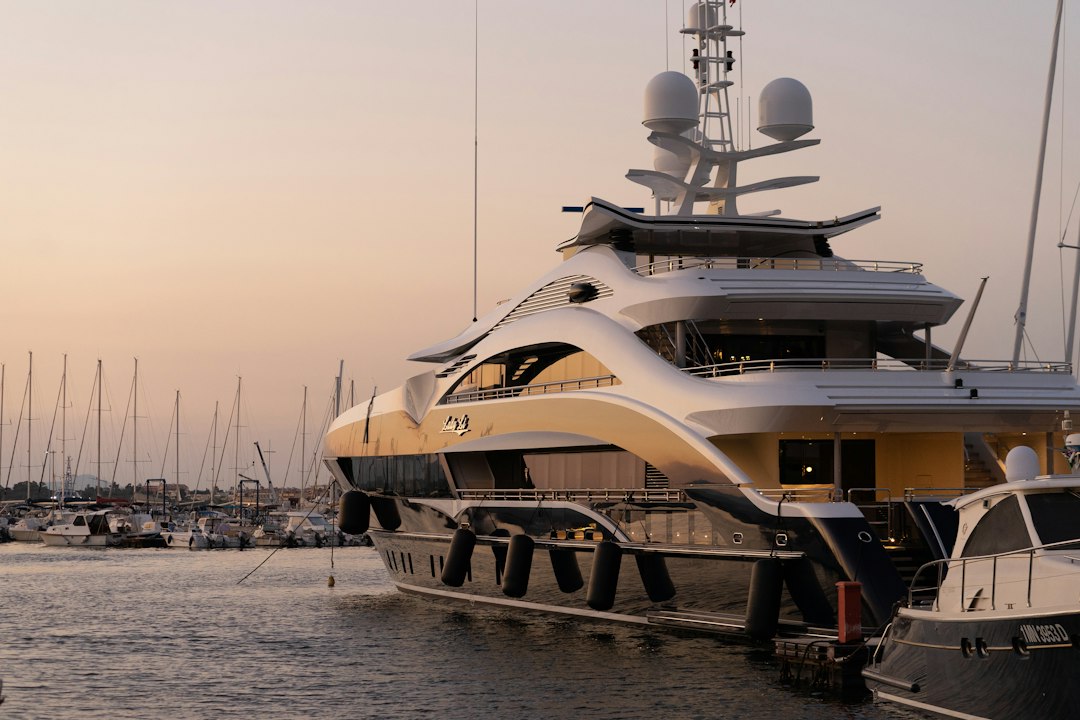
Something significant is happening along the waterways of coastal America, and Charleston is right in the middle of it. Luxury real estate buyers who once prioritized granite countertops, resort-style pools, and golf course views are now asking a very different question when they tour a property: “Where does the boat go?” The rise of marina-integrated residential developments, complete with private yacht slips, is reshaping what premium waterfront living looks like, and the Lowcountry is emerging as one of the most compelling markets in the country for this new category of luxury home.
Why Marina Developments Are Redefining Luxury Real Estate
The global shift toward marina-integrated living did not happen overnight. It has been building steadily as yacht ownership expanded beyond the ultra-wealthy into the broader high-net-worth demographic. According to industry trackers, global superyacht orders have grown consistently over the past decade, and the segment of buyers who own vessels in the 40- to 100-foot range has expanded considerably. These are not weekend sailors who can settle for a shared boat ramp. They want their vessel steps from their front door.
The remote-work wealth migration that accelerated after 2020 added another layer. High earners who decoupled from expensive urban centers found themselves free to choose locations based on lifestyle rather than proximity to an office. Coastal markets like Charleston saw a surge of exactly this buyer profile: financially mobile, boat-owning or boat-aspiring, and unwilling to compromise on water access. The live-work-dock lifestyle, once a niche concept associated with Florida’s Intracoastal communities, went mainstream.
Today, waterfront amenity packages anchored by private marina access consistently outrank traditional luxury features in buyer preference surveys. A deeded boat slip now commands more buyer attention than a wine cellar, a home theater, or even a guest house in many coastal markets.
What “Yacht Parking” Actually Means in a Residential Development
The term “yacht parking” is shorthand for something buyers need to understand with legal and practical precision before signing anything. There is a meaningful difference between a deeded private slip, a licensed slip, and general community marina access, and that difference directly affects both the property’s value and the buyer’s day-to-day experience.
A deeded boat slip is treated as real property. It is conveyed with the home purchase, appears on the title, and can be sold or transferred independently in some cases. It is the gold standard for marina property buyers because it provides the clearest ownership rights and the most stable long-term access.
A licensed slip grants the homeowner the right to use a specific slip, but that right is contractual rather than property-based. It can be revoked, modified, or subject to marina policy changes. For buyers planning to dock a high-value vessel, this distinction matters enormously.
Community marina access means the development has a shared marina facility, but individual slip assignments may be allocated by lottery, seniority, or additional fee. This works for some buyers but creates uncertainty for owners of larger or higher-maintenance vessels.
Beyond legal structure, buyers need to verify vessel compatibility specs: slip length (LOA, or length overall), beam width clearance, and draft depth. A 60-foot motor yacht with a 5-foot draft cannot be accommodated in a slip with 4 feet of water at low tide, regardless of what the marketing brochure says. Charleston’s tidal range, which averages around 5 to 6 feet, makes this a particularly critical variable in the Lowcountry market.
The Charleston Angle: Lowcountry Waterfront Development on the Rise
Charleston’s geography makes it a natural fit for marina-integrated luxury development. The metro area is threaded with navigable waterways, from the Ashley and Cooper Rivers to the Stono River, the Wando, and the creeks and inlets of the ACE Basin. This network of water creates extraordinary development opportunities, but it also introduces a complexity that buyers and developers must navigate carefully.
Several corridors are drawing serious attention from marina-adjacent luxury developers. Daniel Island has long been a benchmark for planned waterfront community development, with marina access built into the community’s DNA. Shem Creek in Mount Pleasant remains one of the most sought-after waterfront addresses in the region, with ongoing interest in mixed-use marina development along its banks. Johns Island and the broader James Island corridor represent emerging opportunities where larger parcels with direct waterway access are still available at prices that make development economics viable.
The Charleston Harbor waterfront, particularly along the upper peninsula and the North Charleston riverfront, is also seeing renewed developer interest as urban waterfront redevelopment gains momentum. Projects that combine residential units with marina slips and ground-floor maritime retail are being proposed in areas that were industrial just a decade ago.
Tidal dynamics, ACE Basin conservation overlays, and the navigable waterway designations administered by the Army Corps of Engineers all shape what can be built and where. Developments that account for these factors early in the planning process move faster through permitting and face fewer costly redesigns.
Who Is Buying Marina-Integrated Luxury Homes?
The buyer profile for marina-integrated luxury properties in Charleston has become increasingly well-defined. The typical purchaser is in their late 40s to early 60s, has a household net worth exceeding $3 million, and either currently owns a vessel or has a concrete plan to purchase one within 12 to 24 months of closing. Many are buying a second or third home, with a primary residence in the Northeast, Midwest, or another high-tax state.
Out-of-state migration is a dominant driver of Charleston marina demand. Buyers from New York, New Jersey, Illinois, and Connecticut have discovered that their real estate equity stretches dramatically further in the Lowcountry, and that Charleston’s boating culture, mild winters, and ICW access make it a genuine alternative to Florida’s more crowded and expensive coastal markets.
A meaningful subset of buyers are approaching marina properties as investment vehicles. A deeded slip in a well-managed marina can generate rental income when not in personal use, and the overall property appreciates with the waterfront premium baked in. For investors who are also boating enthusiasts, the marina home occupies a rare category: a lifestyle asset that also functions as a sound financial holding.
Charleston’s Marina Real Estate Pipeline: Active Projects and Emerging Hotspots
No competitor in this space has done the work of grounding the global marina development trend in specific Charleston neighborhoods and active projects. Charleston Housing News fills that gap here.
The Clouter Creek area north of the peninsula has attracted developer interest for larger-scale marina community planning, with access to the Cooper River system. Remley’s Point in Mount Pleasant offers direct harbor access and has seen waterfront residential transactions at significant premiums for properties with existing dock infrastructure. The Cainhoy Peninsula, long anticipated as a major growth corridor, includes waterway frontage that future marina-integrated developments are likely to target as infrastructure investment accelerates.
On the downtown peninsula, the ongoing evolution of the Union Pier redevelopment site represents perhaps the most high-profile opportunity for marina-integrated mixed-use development in the city’s history. How that project ultimately takes shape will set a benchmark for urban marina real estate in Charleston for years to come.
Buyers and investors tracking this pipeline should monitor permit filings with the City of Charleston’s planning department and Charleston County, as well as DHEC OCRM public notice postings, which flag new dock and marina permit applications along the coast.
Navigating South Carolina’s Dock and Marina Permitting Process: What Buyers and Developers Need to Know
South Carolina’s permitting environment for docks, slips, and marina facilities is more layered than most buyers expect, and understanding it is essential for anyone purchasing a property where marina infrastructure is planned, proposed, or needs to be maintained.
The primary regulatory authority is DHEC’s Office of Ocean and Coastal Resource Management (OCRM). Any dock, pier, floating dock, or marina facility constructed in navigable waters or tidelands requires an OCRM permit. The application process involves a public notice period, agency review, and in many cases coordination with the Army Corps of Engineers for a Section 404/10 permit as well.
Key factors that affect permitting outcomes in Charleston include: the width of the waterway (narrow creeks have stricter setback requirements), the presence of submerged aquatic vegetation or shellfish beds, proximity to navigation channels, and whether the property falls within a Critical Area as defined under the Coastal Zone Management Act.
For buyers purchasing a property with an existing dock or slip, it is critical to verify that all structures have valid, current OCRM permits and that no unpermitted modifications have been made. Unpermitted dock additions can trigger costly remediation requirements that transfer to the new owner at closing.
Permitting timelines for new marina facilities in South Carolina typically run 6 to 18 months, and complex projects with significant environmental review can extend beyond that. Buyers working with developers on pre-construction marina properties should ask specifically about permit status and contingency timelines before committing.
How to Accurately Value a Property With a Private Yacht Slip
Marina properties get priced wrong with surprising frequency, often because appraisers without specific waterfront experience undervalue the slip or treat it as a generic amenity rather than a distinct asset. Understanding the correct methodology protects buyers from overpaying and helps sellers price competitively.
A deeded slip should be valued using the sales comparison approach, with comparable sales drawn from marina communities where slips have transferred as part of property transactions. The relevant variables include: slip length and beam clearance, water depth at mean low water, marina management quality, and whether the slip carries a deeded title or only a license.
In Charleston’s market, deeded slips capable of accommodating vessels over 40 feet in well-managed communities have commanded premiums ranging from $75,000 to over $200,000 above comparable non-slip waterfront properties, depending on location and depth. Slips with direct harbor or ICW access command the highest premiums.
Buyers should insist that their appraiser has documented experience with marina property comparable sales and should request that the appraisal separately identify the slip’s contributory value. If the appraiser cannot provide relevant comps from marina communities, that is a signal to seek a specialist.
Marina Property Due Diligence Checklist: 10 Questions to Ask Before You Buy
- Is the slip deeded or licensed? Confirm the legal structure in writing and review the title documentation.
- What is the water depth at mean low water? Get a current depth survey, not a developer estimate. Charleston’s tidal range makes this critical.
- What are the slip dimensions (LOA, beam, and height clearance)? Verify they accommodate the buyer’s current and anticipated future vessel.
- Are all dock and slip structures fully permitted by DHEC OCRM? Request copies of all permits and confirm no unpermitted modifications exist.
- What does the HOA or marina association cover, and what are the fees? Review dockmaster services, dredging schedules, utility hookups, and reserve fund adequacy.
- What is the marina’s dredging history and schedule? Silting is a real issue in Lowcountry waterways; understand who pays for dredging and how often it occurs.
- What flood zone designation applies to the property? Check the current FEMA flood map and ask about pending map revisions.
- What is the current flood insurance premium, and has it increased in recent years? Charleston properties in AE and VE zones can carry significant insurance costs.
- Are there any environmental restrictions on the waterway? ACE Basin proximity, shellfish closures, or navigational restrictions can affect usability.
- What is the marina’s policy on vessel type and liveaboard use? Some marina HOAs restrict vessel categories or prohibit full-time liveaboard residents.
Buying on the Water in Charleston: Flood Risk, Insurance Costs, and What Resilient Design Looks Like
Charleston’s flooding challenges are nationally documented. The city consistently ranks among the most flood-vulnerable urban areas on the East Coast, with tidal flooding events increasing in frequency over the past two decades. For marina property buyers, this is not a reason to walk away, but it is an absolute reason to do the homework.
Sea-level rise projections for Charleston Harbor, based on NOAA modeling, suggest continued acceleration through mid-century. Properties at or near current tidal elevation will face increasing nuisance flooding, and in some cases, structural risk. Buyers should review the property’s finished floor elevation relative to base flood elevation and ask developers specifically about how new construction addresses projected sea-level scenarios, not just current FEMA requirements.
Flood insurance for marina-adjacent properties in Charleston’s AE and VE flood zones has become a significant line item. National Flood Insurance Program (NFIP) premiums have risen substantially under the Risk Rating 2.0 methodology, and private flood insurance markets have tightened. Buyers should obtain flood insurance quotes before closing, not after, and factor annual premiums into their total cost of ownership analysis.
The good news is that forward-thinking developers are building marina infrastructure with resilience engineered in: floating dock systems that rise with storm surge rather than resisting it, elevated utility connections, breakwater designs that absorb wave energy, and building pads set well above current base flood elevations. Buyers should ask developers for specific resilience design documentation, not just marketing language about “elevated construction.”
Is a Marina Development the Right Investment for You?
The long-term appreciation outlook for marina-integrated luxury properties in Charleston is broadly positive, supported by constrained waterfront supply, growing boating culture, and continued in-migration of high-net-worth buyers. Properties with deeded slips in well-managed communities have historically outperformed standard waterfront in resale scenarios because they serve a specific and motivated buyer pool.
That said, the cost realities deserve honest attention. Marina HOA fees in Charleston-area communities typically range from $500 to over $2,000 per month depending on amenity scope, with dredging assessments adding irregular but significant costs. Flood insurance, dock maintenance, and vessel-related expenses stack on top of standard homeownership costs. Buyers should model total annual carrying costs carefully before committing.
For the right buyer, a marina-integrated home in the Lowcountry represents something that few real estate categories can offer: a property that appreciates as a financial asset while delivering a daily quality of life that is genuinely difficult to replicate anywhere else. The boat is in the slip. The tide is coming in. That combination has real, durable value in the Charleston market.
Frequently Asked Questions
Where do wealthy boat owners typically dock their yachts near Charleston?
High-net-worth boat owners in the Charleston area dock at private marina communities on Daniel Island, along Shem Creek in Mount Pleasant, at Charleston City Marina on the peninsula, and at private docks associated with waterfront estates on the Ashley River, Wando River, and various Lowcountry creek systems. Deeded private slips in residential developments are the preferred option for buyers who want guaranteed, convenient access.
How much does a deeded boat slip add to a home’s value in Charleston?
In the current market, a deeded slip capable of accommodating a vessel over 40 feet in a well-managed Charleston-area marina community can add $75,000 to $200,000 or more in contributory value over a comparable non-slip waterfront property. Slips with direct harbor or ICW access, greater water depth, and larger dimensions command the highest premiums.
What permits are required to build a dock or slip in South Carolina?
Any dock, pier, or marina slip constructed in South Carolina’s tidal or navigable waters requires a permit from DHEC’s Office of Ocean and Coastal Resource Management (OCRM). Projects may also require a Section 404 or Section 10 permit from the Army Corps of Engineers. Buyers should verify that all existing dock structures carry valid OCRM permits before closing.
Is flood insurance required for marina properties in Charleston?
Most marina-adjacent properties in Charleston fall within FEMA-designated flood zones (typically AE or VE), and flood insurance is required by most mortgage lenders for properties in these zones. Even for cash buyers, flood insurance is strongly advisable given Charleston’s documented flood risk and the cost implications of uninsured flood damage.
What is the average lifespan of a yacht?
A well-maintained fiberglass or composite yacht typically has a functional lifespan of 30 to 50 years, with proper maintenance and periodic systems upgrades. Steel and aluminum-hulled vessels can last longer. Buyers purchasing marina properties with the intent to dock a specific vessel should factor vessel maintenance and eventual replacement costs into their long-term financial planning.
Leave a Reply