
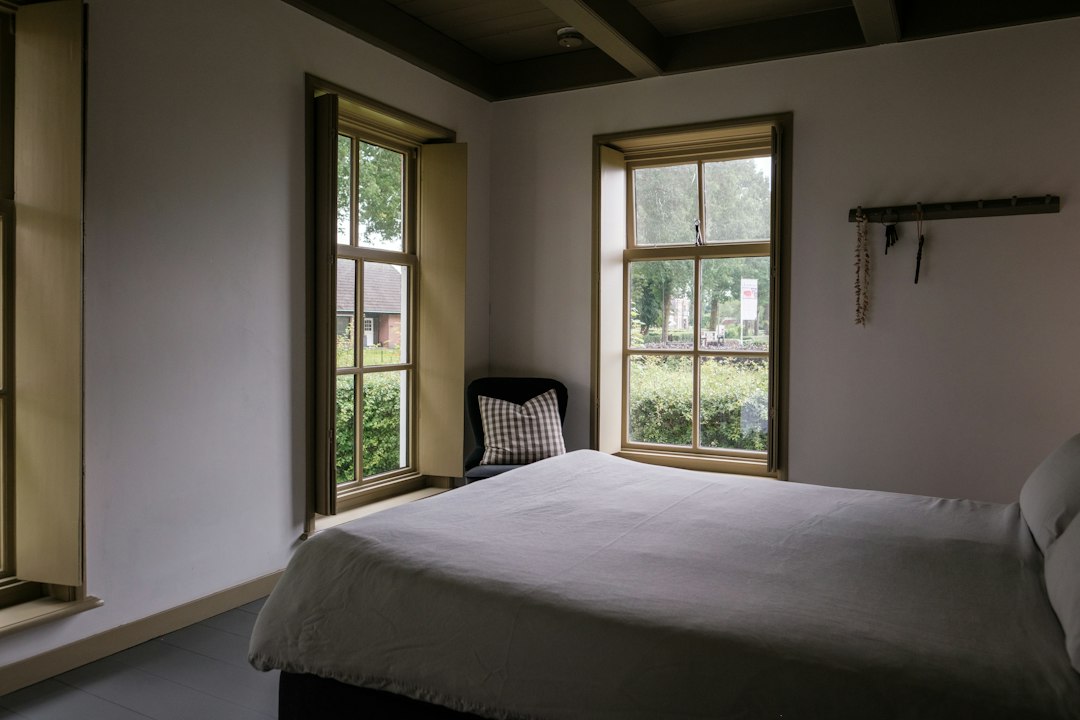
Few real estate listings stop Charleston market watchers in their tracks quite like this one. A 15-bedroom historic mansion in the heart of downtown Charleston, operating as a boutique inn, has officially hit the market at an asking price of $16.5 million. The property in question is the Stevens Lathers House, a landmark that has anchored one of the city’s most storied residential blocks for nearly two centuries. For buyers, investors, and preservation advocates alike, this listing represents something rare: a chance to own a piece of Charleston’s architectural and cultural DNA at a scale that almost never becomes available.
Whether a prospective buyer envisions it as a private family compound, a continued hospitality operation, or a preservation trophy, the Stevens Lathers House demands serious attention from anyone tracking the upper tier of Charleston’s real estate market.
Stevens Lathers House: A Charleston Landmark Hits the Market
The Stevens Lathers House sits within Charleston’s nationally recognized historic district, a stretch of the peninsula where antebellum architecture lines the streets and property transactions routinely make regional and national headlines. The home spans approximately 10,000 square feet across its primary structure, set on a generous lot that includes outbuildings, period gardens, and the kind of outdoor spaces that define the Charleston grand estate experience.
Currently configured as a licensed inn with 15 guest rooms, the property carries both a residential and commercial hospitality footprint. The $16.5 million asking price reflects not just the real estate itself, but the operational infrastructure, the historic designation, and the irreplaceable location within one of the most coveted zip codes in the American South.
The History of the Stevens Lathers House
The house takes its name from Richard Lathers, a prominent 19th-century financier and businessman who was closely associated with the property during a formative chapter of Charleston’s history. Lathers was a New York-based insurance executive and Southern sympathizer whose connections to Charleston’s elite social circles made him a notable figure in the city’s antebellum and Reconstruction-era life. The “Stevens” in the property’s name is believed to reference an earlier ownership connection, though the Lathers association is what cemented the house’s identity in local historical records.
The structure itself dates to the mid-1800s, constructed during a period when Charleston’s merchant and planter class was commissioning some of the most architecturally ambitious private residences in the American South. The home changed hands multiple times over the following century, surviving the Civil War, the earthquake of 1886, and the economic upheavals that reshaped Charleston’s urban fabric through the 20th century.
Its transition into an inn came during a later era, as preservation-minded owners recognized that the property’s scale and grandeur were better sustained through hospitality revenue than through the costs of purely private ownership. That conversion set the stage for the listing that buyers are now evaluating.
A Timeline of the Stevens Lathers House: From Private Estate to Inn
Understanding the property’s evolution helps buyers and investors contextualize both its current condition and its future potential. Here is a narrative timeline of the key milestones:
-
Mid-1800s: Construction of the primary structure during Charleston’s antebellum building boom, commissioned for a wealthy family connected to the city’s merchant and planter economy.
-
1860s-1870s: The property navigates the Civil War period and Reconstruction, remaining in private hands as Charleston’s economic landscape shifts dramatically.
-
1886: The great Charleston earthquake tests the structural integrity of buildings across the peninsula. The Stevens Lathers House, like many surviving landmarks, undergoes repairs that become part of its layered architectural history.
-
Early-to-mid 20th century: The property passes through several ownership transitions, with periods of both private residential use and partial commercial adaptation.
-
Late 20th century: Preservation advocates and historic real estate investors begin recognizing the property’s significance. Restoration efforts align the house with National Register standards.
-
Early 21st century: The Stevens Lathers House is formally converted to inn operation, obtaining the necessary hospitality licenses and adapting the interior to accommodate guest rooms while maintaining period features.
-
2026: The property hits the market at $16.5 million, marking one of the most significant historic real estate transactions in downtown Charleston in recent memory.
Inside the Property: Architecture, Rooms, and Historic Features
The Stevens Lathers House exemplifies the Charleston single-house and grand estate traditions, with deep piazzas, high-ceilinged rooms, and period millwork that reflects the craftsmanship of its era. Architectural details include original heart pine flooring, plaster medallions, ornate mantlepieces, and the kind of transom windows and shuttered facades that define the aesthetic of the historic district.
The 15 guest rooms vary in configuration, with the larger suites occupying the primary floors of the main house and additional rooms distributed across secondary structures on the property. Common spaces include formal parlors, a dining room, and garden areas that have been maintained in a manner consistent with the property’s historic character.
Restoration work completed in recent decades has addressed structural systems, roofing, and mechanical infrastructure while preserving the visual integrity that makes the house eligible for its historic designations. The result is a property that functions as a working hospitality business without sacrificing the architectural authenticity that drives its value.
Navigating Charleston’s Historic Preservation Rules as a New Owner
This is where many buyers underestimate the complexity of a transaction like this. Owning property within Charleston’s historic district is not simply a matter of paying the asking price and moving in. The Board of Architectural Review (BAR) exercises significant authority over any exterior changes to properties within the district, and the Stevens Lathers House falls squarely within its jurisdiction.
The BAR review process requires property owners to submit applications for approval before undertaking any exterior modifications, including changes to windows, doors, roofing materials, paint colors, fencing, and signage. For a property of this scale, even routine maintenance decisions can trigger a review cycle. The process is designed to protect the character of the district, but it adds time and cost to ownership decisions that buyers accustomed to conventional real estate transactions may find surprising.
Beyond the BAR, buyers should investigate whether the property carries a preservation easement, which is a legal agreement that restricts certain alterations in perpetuity, sometimes held by a preservation organization rather than a government body. Easements can affect financing options, insurance arrangements, and the range of permissible renovations. A qualified historic preservation attorney and a preservation architect familiar with Charleston’s regulatory environment are essential members of any due diligence team for a purchase of this magnitude.
Zoning classifications for the property likely reflect its dual residential and commercial hospitality use. Any buyer intending to change the use, whether converting entirely to private residence or expanding the inn operation, will need to verify that the intended use aligns with current zoning and, if not, pursue the appropriate variances or special use permits through the city.
Private Home or Working Inn? Two Paths for the Next Owner
The $16.5 million price tag opens two fundamentally different ownership scenarios, and the financial logic of each deserves careful examination.
Charleston Real Estate Broker, Bryan Crabtree says “these homes are akin to a work of art. They are unique in every way and new owners frequently find themselves being the steward of American history as they repurpose their use.”
Path One: Continued Inn Operation
Charleston’s hospitality market is robust, and a 15-room boutique inn in the historic district commands premium nightly rates. Depending on the room mix and occupancy levels, a property of this scale could generate gross annual revenue in the range of $1.5 million to $2.5 million or more, assuming competitive pricing and strong occupancy consistent with the broader Charleston market. Operating costs, including staffing, maintenance, insurance, marketing, and compliance with preservation standards, are substantial for a historic property of this size and would need to be modeled carefully against revenue projections to assess net operating income and implied cap rate.
For a hospitality investor, the appeal is clear: an irreplaceable asset in a high-demand market, with an existing operational infrastructure and a brand identity tied to the property’s historic status. The challenge is that historic properties carry maintenance costs that often exceed those of conventional commercial real estate, and the BAR approval process adds friction to any capital improvement plans.
Path Two: Private Residence Conversion
Converting the Stevens Lathers House to a private family estate is the other primary scenario. At 15 bedrooms, the property offers extraordinary space for a multigenerational household, a family compound with room for staff quarters and guest accommodations, or an owner who simply wants a trophy home at a scale that reflects Charleston’s grandest residential traditions.
The financial calculus here shifts from revenue generation to cost management. Without hospitality income to offset operating expenses, the annual cost of maintaining a historic property of this size, including staffing, utilities, insurance, and preservation compliance, could easily run into six figures annually. Buyers considering this path should enter with eyes open about the ongoing financial commitment and the regulatory constraints that will govern any modifications they wish to make.
What $16.5M Buys in Downtown Charleston’s Luxury Market
To understand whether $16.5 million represents fair value, it helps to look at the broader context of Charleston’s high-end real estate market. Downtown Charleston, particularly within the historic district south of Broad Street and along the Battery, consistently produces some of the highest per-square-foot prices in the Southeast. Luxury single-family homes in this corridor have traded in recent years at prices ranging from $3 million for smaller historic properties to well above $10 million for larger estates with significant lot sizes and waterfront access.
A 15-bedroom historic property with an active inn license and approximately 10,000 square feet of interior space represents a genuinely rare asset class. Direct comparables are difficult to find precisely because properties of this scale and designation rarely trade. The $16.5 million ask translates to roughly $1,650 per square foot on the interior alone, a figure that sits at the upper end of the Charleston luxury market but is defensible given the combination of historic designation, operational income potential, and irreplaceable location.
How Charleston’s Tourism Boom Is Driving Demand for Historic Inn Properties
The timing of this listing is not incidental. Charleston has experienced sustained growth as one of the most visited cities in the United States, consistently ranking among the top destinations in national and international travel surveys. Visitor volume, hotel occupancy rates, and average daily room rates in the Charleston market have trended upward over the past decade, with boutique and historic properties commanding a meaningful premium over branded hotel inventory.
This tourism backdrop creates genuine demand for historic inn properties at the high end of the market. Travelers seeking an immersive Charleston experience are willing to pay significantly more for a stay in a 19th-century mansion than for a room in a conventional hotel, and that willingness to pay flows directly into the revenue potential of properties like the Stevens Lathers House. For investors tracking the intersection of hospitality and historic real estate, Charleston’s tourism fundamentals make this an attractive market regardless of broader macroeconomic conditions.
What Preservation Experts Say About Properties Like This
Preservation architects and historic real estate specialists who work in the Charleston market consistently emphasize a few themes when evaluating properties of this caliber. First, the cost of deferred maintenance on a historic property of this scale is not linear: small problems compound quickly in older structures, and the materials and craftsmanship required for authentic restoration are significantly more expensive than conventional construction. Buyers who approach a property like the Stevens Lathers House without a thorough pre-purchase assessment from a qualified preservation architect risk underestimating the capital commitment required to maintain it properly.
Second, preservation professionals note that the regulatory environment in Charleston, while sometimes perceived as burdensome, actually protects value over the long term. Properties that comply with preservation standards and maintain their historic integrity consistently outperform non-historic luxury real estate in the Charleston market over multi-decade holding periods. The restrictions that constrain short-term flexibility also create the scarcity and authenticity that drive long-term appreciation.
Third, experts point out that the hospitality use of a historic property can be a preservation tool as well as a revenue source. Inn operations generate the income necessary to fund ongoing maintenance and restoration at a scale that private residential use often cannot sustain, making the continued inn operation scenario not just financially attractive but potentially preferable from a preservation standpoint.
Who Is Likely to Buy?
The buyer pool for a property priced at $16.5 million in downtown Charleston is naturally narrow, but it is not without depth. Three primary buyer profiles emerge:
-
Ultra-high-net-worth individuals seeking a trophy property: Buyers who want the most significant private residence available in one of America’s most architecturally rich cities, for whom the ongoing costs of ownership are secondary to the prestige and personal enjoyment of the asset.
-
Hospitality investors and boutique hotel operators: Groups or individuals with experience managing historic inn properties who see the Stevens Lathers House as an opportunity to acquire a high-quality asset in a strong tourism market with existing operational infrastructure.
-
Preservation-focused family offices or foundations: Buyers motivated by a genuine commitment to historic stewardship who view the property as a long-term cultural asset, potentially combining residential and limited hospitality use to sustain the economics of preservation.
Listing Details and How to Learn More
The Stevens Lathers House is listed through a brokerage with expertise in the Charleston luxury and historic property market. Prospective buyers interested in scheduling a showing or obtaining additional property details, including financials related to the inn operation, should contact the listing agent directly. Given the scale and complexity of the asset, serious inquiries are typically handled through a structured showing process that may require proof of financial qualification before access is granted.
For investors and buyers tracking this listing as part of a broader analysis of the downtown Charleston luxury market, the Stevens Lathers House represents a genuine market signal: demand for historic, income-producing properties in the historic district remains strong, and the supply of assets at this level is essentially irreplaceable.
Frequently Asked Questions
Who was Stevens Lathers and why is the house named after him?
The house is associated with Richard Lathers, a 19th-century financier with strong ties to Charleston’s elite social and business circles. The “Stevens” component of the name reflects an earlier ownership connection. Together, the name has become the accepted historic designation for the property in local records and preservation documentation.
Can the Stevens Lathers House continue to operate as an inn after the sale?
Continued inn operation is one of the primary use scenarios for a new owner, provided the buyer maintains the existing hospitality licenses and complies with zoning requirements. Any changes to the operational model would require review by the appropriate city departments and potentially the Board of Architectural Review if exterior modifications are involved.
How does $16.5 million compare to other historic home sales in downtown Charleston?
At $16.5 million, the Stevens Lathers House sits at the upper end of the downtown Charleston luxury market. Direct comparables are rare given the property’s scale and inn designation, but the price is consistent with valuations for large historic estates in the most desirable blocks of the historic district.
What are the historic preservation rules for buying property in downtown Charleston?
Buyers must comply with the Board of Architectural Review’s oversight of exterior changes, zoning classifications that govern allowable uses, and any preservation easements attached to the property. Working with a preservation attorney and architect familiar with Charleston’s regulatory framework is essential before closing.
What type of buyer is likely to purchase a 15-bedroom historic inn in Charleston?
The most likely buyers include ultra-high-net-worth individuals seeking a trophy estate, hospitality investors with boutique inn experience, and preservation-focused family offices or foundations. Each buyer type brings different financial motivations and operational intentions to the transaction.
Leave a Reply