
By Jennifer Jordan | Charleston Housing News
Charleston’s housing market slowdown is no longer just affecting home sales.
It is now beginning to reshape homeowner behavior across the Lowcountry — from remodeling projects to renovation spending and even how consumers approach basic home maintenance.
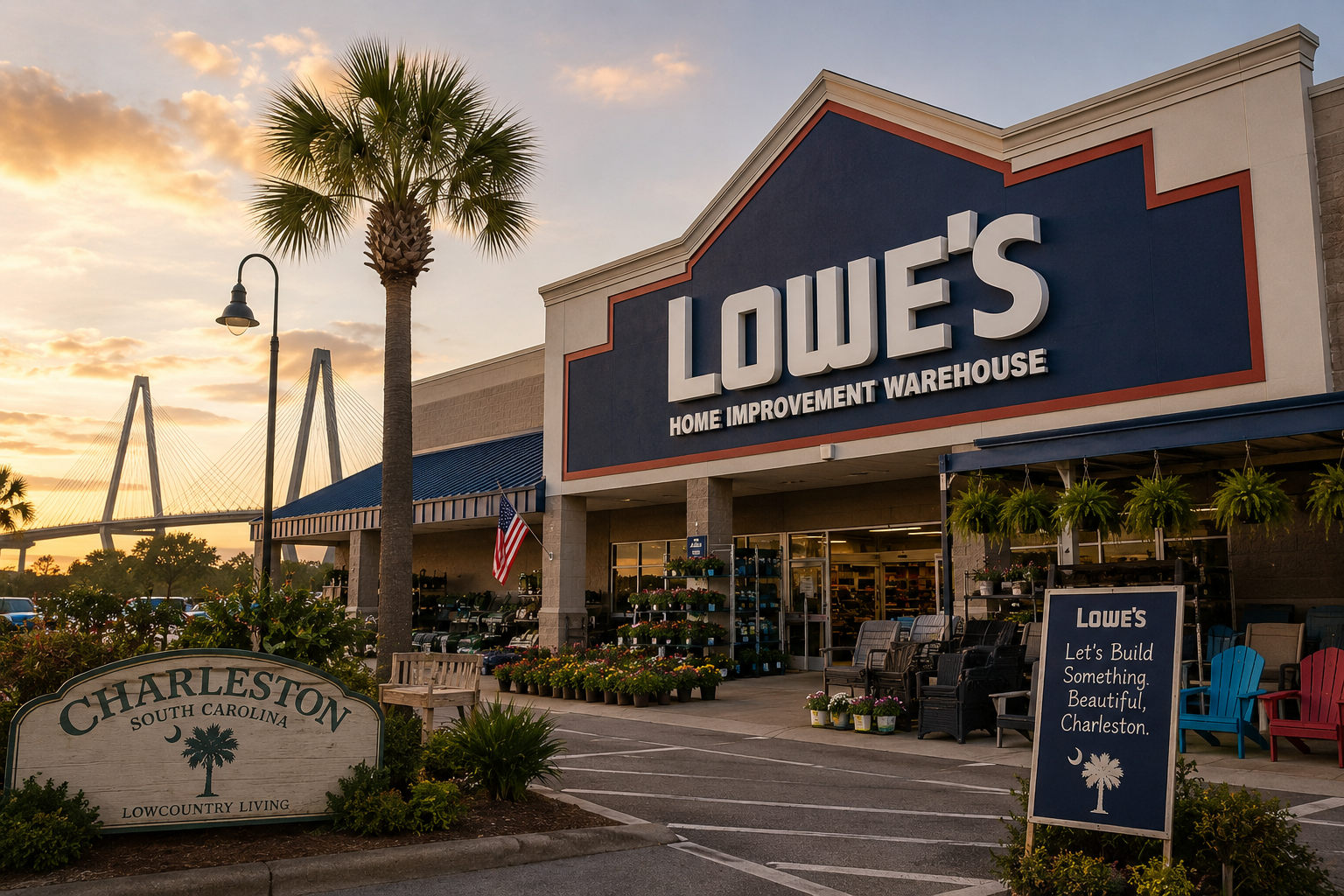
This week, Lowe’s CEO Marvin Ellison described the current national housing environment as the most difficult market he has seen since the 2008 financial crisis, pointing to elevated mortgage rates, low housing turnover, and growing consumer hesitation around large-scale spending.
And while Charleston has remained stronger than many national housing markets, local real estate professionals and contractors are increasingly seeing similar trends emerge across:
- Mount Pleasant
- Summerville
- West Ashley
- Johns Island
- Daniel Island
- Goose Creek
- North Charleston
Charleston’s “Golden Handcuff” Market Is Freezing Movement
One of the biggest forces shaping today’s housing market is what economists often call the “lock-in effect.”
Thousands of Charleston-area homeowners refinanced or purchased homes between 2020 and 2022 with mortgage rates near 2.5% to 4%.
Today, mortgage rates closer to 6.5%–7% have dramatically changed the economics of moving.
That means many homeowners who normally would:
- upgrade,
- downsize,
- relocate,
- or move closer to work
are instead staying put because replacing their current mortgage would substantially increase monthly costs.
The result is one of the slowest turnover markets Charleston has seen in years.
Homeowners Are Delaying Big Projects
Contractors and home improvement professionals across the Charleston region are also noticing a shift in consumer behavior.
Rather than taking on:
- full kitchen remodels,
- major additions,
- luxury outdoor expansions,
- or whole-home renovations,
many homeowners are focusing on smaller, more practical projects.
Across Mount Pleasant, Summerville, and Charleston County, homeowners are increasingly spending money on:
- painting,
- landscaping,
- roof repairs,
- HVAC replacements,
- water heaters,
- cosmetic touch-ups,
- flooring,
- and deferred maintenance items
instead of major discretionary upgrades.
Part of that is financial caution.
But part of it is uncertainty.
Many homeowners simply do not know where:
- mortgage rates,
- insurance costs,
- inflation,
- taxes,
- and the broader economy
are headed over the next several years.
Insurance Costs Are Adding Pressure in Charleston
Charleston homeowners also face challenges many inland markets do not.
Flood insurance increases, rising wind coverage costs, and sharply higher replacement-cost estimates are putting additional strain on household budgets — especially in coastal and waterfront communities.
In some parts of:
- Mount Pleasant,
- Isle of Palms,
- Sullivan’s Island,
- James Island,
- and Johns Island,
insurance increases alone are materially changing ownership costs.
That is making many homeowners more conservative with renovation spending and less willing to stretch financially.
Summerville Continues Seeing Growth — But Buyers Are More Careful
Summerville and Berkeley County continue attracting buyers searching for relative affordability compared to Charleston and Mount Pleasant.
But even there, the market has slowed from the pandemic frenzy.
Builders are still active throughout:
- Nexton,
- Cane Bay,
- Carnes Crossroads,
- Summers Corner,
- and Moncks Corner,
but incentives are becoming increasingly common as buyers grow more payment-sensitive.
Many consumers who once stretched aggressively during the ultra-low-rate environment are now:
- negotiating harder,
- comparing monthly payments more carefully,
- and becoming far more cautious about long-term affordability.
Charleston’s Housing Market Is Slowing — Not Collapsing
Unlike some overheated western and Sunbelt markets, Charleston continues benefiting from:
- migration,
- coastal lifestyle demand,
- wealth inflows,
- retirement buyers,
- and long-term desirability.
But the market is clearly transitioning.
Homes are generally taking longer to sell.
Price reductions are increasing.
Buyers are becoming more selective.
And homeowners are increasingly hesitant to make large financial moves.
That does not necessarily signal a crash.
But it does reflect a housing market operating under far more pressure than it was just a few years ago.
The DIY Shift Is Real
One interesting trend emerging nationally — and locally — is the return of smaller do-it-yourself projects.
Rather than undertaking six-figure renovations, many Charleston homeowners are focusing on:
- curb appeal,
- minor repairs,
- touch-up improvements,
- landscaping,
- and cosmetic refreshes
that improve quality of life without dramatically increasing debt exposure.
That trend is particularly visible among homeowners who already locked in favorable mortgage rates and simply want to maintain their homes rather than move.
The Bottom Line
Charleston’s housing market may still be outperforming many parts of the country, but the pressure inside the market is becoming increasingly visible.
Higher mortgage rates, rising ownership costs, insurance volatility, and slower housing turnover are reshaping consumer behavior across the Lowcountry.
For now, many Charleston-area homeowners are choosing caution over expansion:
staying put, delaying major renovations, and trying to navigate one of the most financially complicated housing markets since the Great Recession.
Leave a Reply