
By Jennifer Jordan | Charleston Housing News
As housing affordability continues deteriorating across the Charleston region, a major apartment acquisition in North Charleston is being positioned as part of a broader effort to keep working families from being pushed farther out of the Lowcountry.
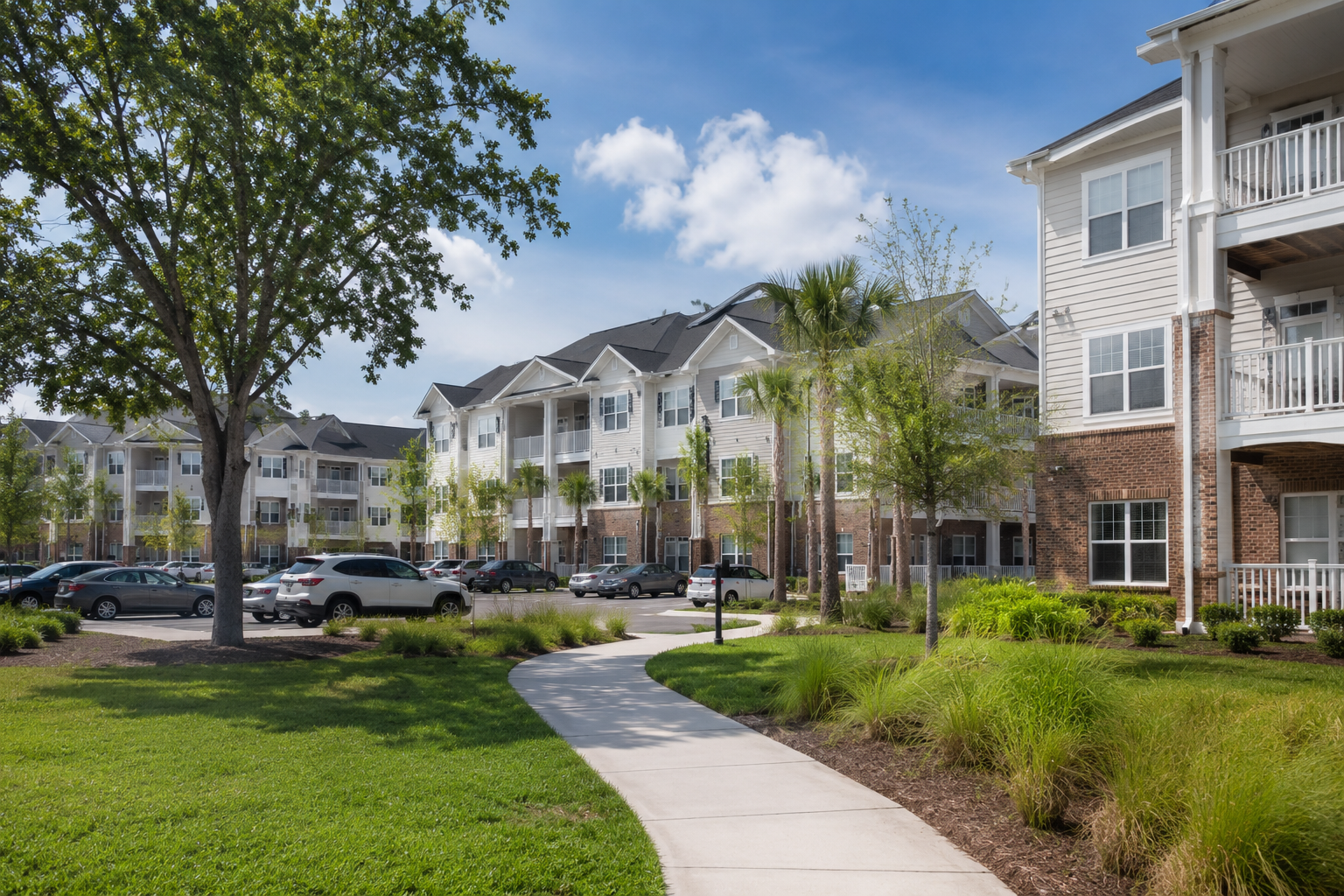
A Charlotte-based housing investment group, working alongside regional partners, recently acquired a large North Charleston apartment community with plans to preserve hundreds of units as workforce housing.
The move reflects a growing concern shared by employers, city leaders, and housing advocates throughout Charleston County, Berkeley County, and Dorchester County:
many essential workers can no longer comfortably afford to live near where they work.
Charleston’s Affordability Problem Is Expanding Beyond Downtown
For years, affordability discussions largely focused on downtown Charleston and luxury-driven coastal markets like Mount Pleasant, Daniel Island, and the islands.
But the pressure has now spread across nearly every major submarket in the region.
Today, rising rents and home prices are impacting:
- Teachers
- Nurses
- Hospitality workers
- Police officers
- Medical staff
- Retail employees
- Service industry workers
- Young professionals
Even traditionally more affordable areas like North Charleston, Goose Creek, Ladson, and Summerville have experienced major rent increases since 2020.
As a result, many workers are facing:
- Longer commutes
- Increased traffic expenses
- Housing instability
- Overcrowded living situations
- Delayed homeownership
- Financial strain despite steady employment
Workforce Housing Is Becoming an Economic Issue — Not Just a Social One
What makes Charleston’s affordability crisis different today is that businesses themselves are increasingly sounding alarms.
Employers across the region are struggling with:
- Employee retention
- Recruitment challenges
- Rising wage pressure
- Workforce shortages tied to housing costs
Large healthcare systems, hospitality groups, logistics companies, and regional employers recognize that housing costs are beginning to directly affect economic growth.
That is one reason workforce housing initiatives are attracting growing support from:
- Private investors
- Nonprofits
- Business organizations
- Local governments
- Economic development groups
The concern is simple:
if workers cannot afford to live reasonably close to Charleston’s job centers, the region’s long-term growth model becomes harder to sustain.
North Charleston Is Emerging as a Key Housing Battleground
North Charleston has increasingly become one of the region’s most important affordability pressure points.
Its central location near:
- Boeing
- Joint Base Charleston
- Charleston International Airport
- Major logistics corridors
- Downtown Charleston
- I-26 employment hubs
makes it one of the few areas where workforce housing remains somewhat geographically practical for many residents.
But prices there have also climbed sharply over the last several years.
Apartment rents throughout North Charleston surged during the pandemic housing boom as demand spilled outward from more expensive areas like Mount Pleasant and downtown Charleston.
Many renters who once expected to eventually purchase homes are now finding themselves stuck in the rental market far longer than anticipated.
The New Strategy: Preserve Existing Apartments Instead of Building New Ones
One major shift occurring nationally — and now locally — involves preserving existing apartment communities as affordable housing rather than relying entirely on new construction.
That approach is becoming more common because:
- New construction costs remain extremely high
- Land prices in Charleston continue rising
- Interest rates have made development financing more difficult
- Insurance and infrastructure costs keep escalating
Acquiring and repositioning existing apartment communities can often create affordability faster than building entirely new projects from scratch.
However, maintaining long-term affordability still remains challenging in a fast-growing market like Charleston where land values continue appreciating rapidly.
Summerville and Outer Growth Corridors Continue Feeling the Pressure
While much of the attention focuses on Charleston and North Charleston, affordability pressures continue spreading outward into:
- Summerville
- Cane Bay
- Moncks Corner
- Goose Creek
- Ridgeville
- Berkeley County growth corridors
Many renters and first-time buyers have already been pushed farther inland searching for lower costs.
But even these areas are becoming increasingly expensive relative to local wage growth.
Meanwhile:
- Traffic congestion continues worsening
- Infrastructure struggles to keep pace
- Insurance costs remain elevated
- Construction activity is slowing in some segments
That combination is creating growing frustration among working families throughout the region.
Mount Pleasant Illustrates the Broader Divide
Mount Pleasant remains one of the clearest examples of Charleston’s affordability divide.
While the town continues seeing strong demand and wealth migration, many middle-income workers who serve Mount Pleasant businesses can no longer realistically afford to live there.
That dynamic forces more workers into long daily commutes from outer areas of the metro region.
Over time, many planners worry that disconnect could reshape the character and economic functionality of the broader Charleston area.
The Bottom Line
Charleston’s housing affordability challenges are no longer isolated to luxury buyers or first-time homeowners.
The issue has become deeply tied to workforce stability, economic growth, transportation strain, and regional quality of life.
The recent North Charleston apartment acquisition represents a growing effort to preserve housing access for working families before even more residents are priced out of the region entirely.
But the broader challenge facing Charleston remains enormous:
housing costs across the Lowcountry continue rising faster than many local incomes can realistically support.
Leave a Reply