
By Jennifer Jordan | Charleston Housing News
For years, Charleston-area real estate seemed almost unstoppable.
Prices surged across Mount Pleasant, Summerville, Johns Island, Daniel Island, West Ashley, and much of the Lowcountry as record-low interest rates, pandemic migration, remote work trends, and out-of-state wealth poured into the region.
But in 2026, the conversation surrounding housing is beginning to shift.
Nationally, many once-booming housing markets are now seeing price declines from their pandemic peaks, particularly in formerly red-hot Sunbelt cities.
Charleston has not experienced those types of dramatic corrections — at least not yet.
But that does not necessarily mean the market is healthy.
Increasingly, local buyers are finding themselves trapped between:
- Historically elevated prices
- High mortgage rates
- Rising insurance costs
- Slowing appreciation
- Growing inventory
- Economic uncertainty
And while Charleston continues attracting buyers, the financial risks tied to purchasing today are becoming harder to ignore.
Charleston’s Pandemic Boom Changed Everything
From roughly mid-2020 through early 2022, Charleston experienced one of the most aggressive housing expansions in modern history.
Buyers flooded into the market from:
- New York
- New Jersey
- Connecticut
- California
- Illinois
- Florida
Many arrived with:
- Cash
- Large equity positions
- Remote-work flexibility
- Higher incomes than local residents
At the same time, mortgage rates fell below 3%, creating an affordability environment that fueled explosive price appreciation.
Homes across Charleston County, Berkeley County, and Dorchester County often sold:
- Above asking price
- Within days
- With waived inspections
- Through bidding wars
The frenzy pushed pricing far beyond what many local incomes could comfortably support.
The Problem Today Is Different
The challenge in 2026 is not that Charleston demand has disappeared.
The problem is affordability math.
Mortgage rates near 6.5% to 7% have dramatically altered monthly payments, even when home prices remain relatively stable.
For example:
- A Mount Pleasant home that sold comfortably at $850,000 with a 3% mortgage may now require thousands more per month to finance at current rates.
- In Summerville, many buyers who once qualified for homes near $550,000 may now find themselves capped closer to $400,000-$450,000.
- Insurance premiums and property taxes continue climbing, especially in coastal and flood-sensitive areas.
Many buyers today are not necessarily unwilling to buy.
They simply cannot comfortably justify the monthly payment.
Charleston’s Market Is Slowing — Even If Prices Haven’t Collapsed
The Lowcountry market still benefits from long-term lifestyle demand and migration trends, but signs of softening are increasingly visible.
Across portions of Charleston, Mount Pleasant, and Summerville, agents are seeing:
- Longer days on market
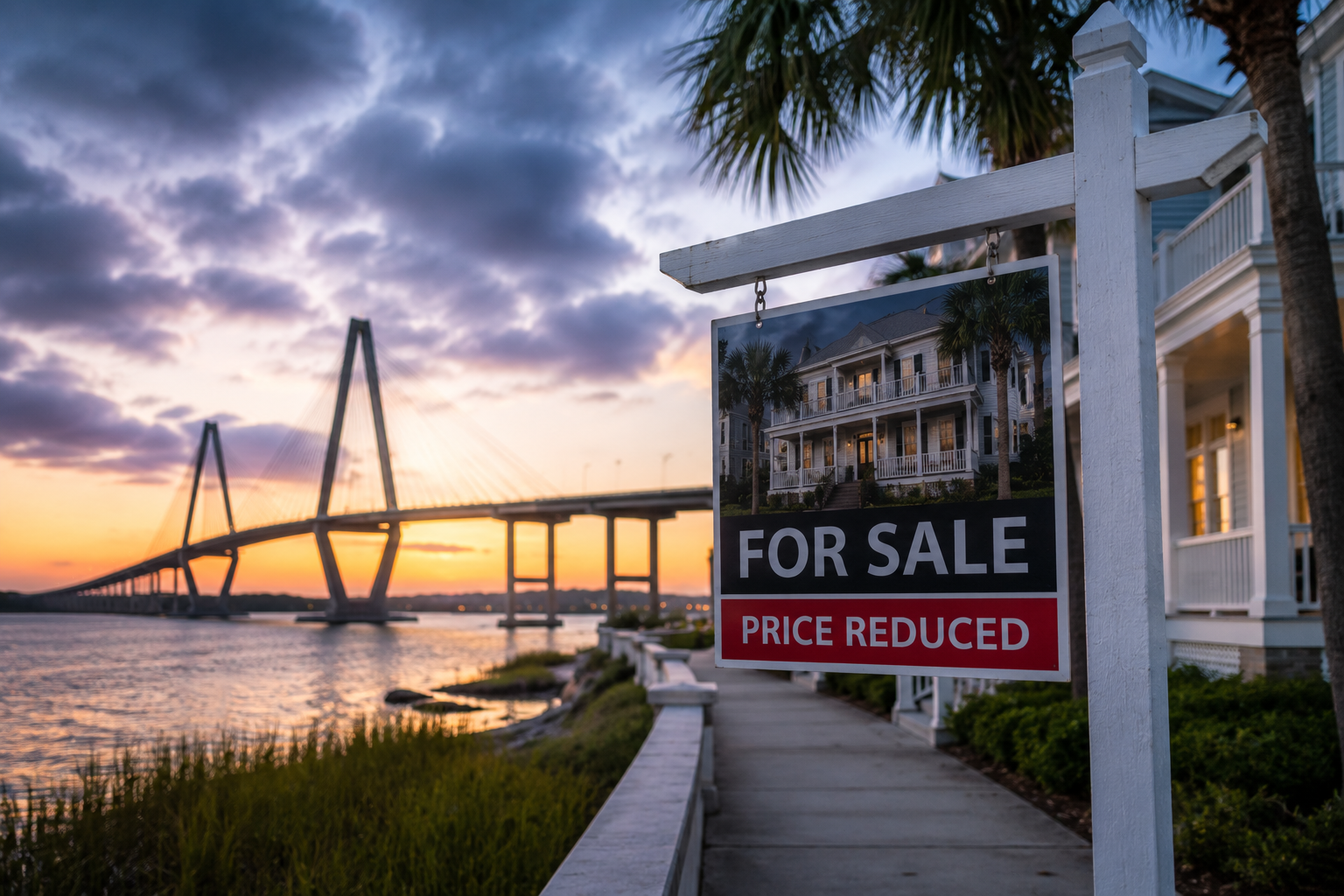
- More price reductions
- Increased seller concessions
- More expired listings
- Reduced buyer urgency
- Greater sensitivity to condition and pricing
In many suburban growth areas like:
- Cane Bay
- Nexton
- Goose Creek
- Moncks Corner
- Ladson
inventory has expanded noticeably compared to the pandemic years.
Builders are also continuing aggressive incentives, including:
- Mortgage rate buydowns
- Closing cost credits
- Appliance upgrades
- Flex cash programs
That often places resale sellers in a difficult position when competing against brand-new construction.
Charleston Is Not Immune to Housing Cycles
One dangerous assumption many buyers still make is believing Charleston real estate can only move upward.
History suggests otherwise.
While Charleston remains one of the Southeast’s strongest long-term housing markets, all real estate markets experience cycles.
The issue today is not whether Charleston will remain desirable.
The issue is whether many buyers purchasing near peak pricing levels can absorb:
- Higher rates
- Slower appreciation
- Potential economic slowdown
- Insurance escalation
- Property tax increases
- Job market volatility
That risk profile looks very different than it did in 2021.
Mount Pleasant and Downtown Charleston Face Different Risks
Higher-end Charleston submarkets may behave differently than outer suburban areas.
In Mount Pleasant, downtown Charleston, Daniel Island, Isle of Palms, and Sullivan’s Island, limited inventory and wealth-driven demand continue supporting pricing better than many national markets.
But even luxury buyers have become more cautious.
Homes perceived as:
- Overpriced
- Poorly renovated
- In flood-prone locations
- Burdened by extreme insurance costs
are increasingly facing resistance.
The days of nearly automatic appreciation appear to be fading.
Summerville and Outer Growth Markets May Face More Pressure
The greatest vulnerability may exist farther from Charleston’s urban core.
In areas where:
- Large-scale new construction expanded rapidly
- Commutes are longer
- Infrastructure remains strained
- Builder competition is intense
buyers are becoming much more price-sensitive.
That does not mean a crash is guaranteed.
But it does mean sellers may no longer have unlimited pricing power.
The Bottom Line
Charleston’s housing market is not collapsing like some western and Sunbelt boomtowns.
But the market is clearly becoming more fragile.
The combination of:
- Elevated mortgage rates
- Higher ownership costs
- Slowing appreciation
- Expanding inventory
- Affordability exhaustion
is creating a much riskier environment for buyers than many consumers fully realize.
For years, Charleston housing felt almost immune from economic gravity.
In 2026, gravity appears to be slowly returning.
Leave a Reply