
By Jennifer Jordan | Charleston Housing News
South Carolina has become one of the nation’s foreclosure hot spots, and while the Charleston region is not seeing anything close to a 2008-style collapse, the warning signs are becoming harder to ignore.
New national foreclosure data shows that April brought another year-over-year increase in distressed property activity across the United States. According to ATTOM’s April 2026 U.S. Foreclosure Market Report, 42,430 U.S. properties had some type of foreclosure filing in April, including default notices, scheduled auctions and bank repossessions. That was down 8 percent from March but up 18 percent from April 2025. Foreclosure starts rose 12 percent from a year earlier, while completed foreclosures increased 42 percent annually.
The national numbers matter, but the South Carolina numbers matter more locally.
South Carolina posted the second-worst foreclosure rate in the country in April, behind only Delaware. The state recorded one foreclosure filing for every 1,745 housing units, according to national reporting based on ATTOM’s latest data.
That should get the attention of anyone watching the Charleston-area housing market.
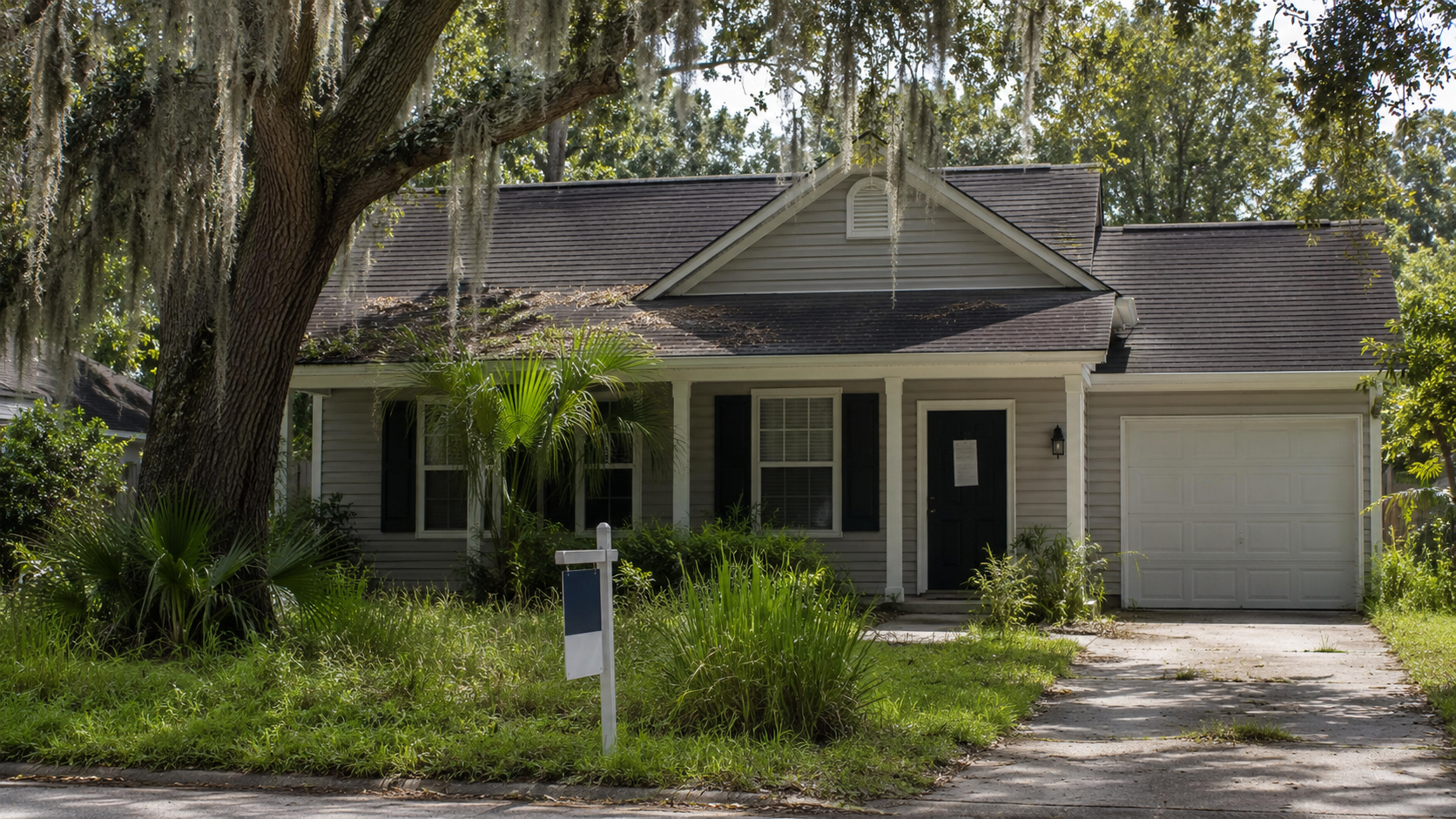
This is not panic territory. It is not a foreclosure wave. It is not 2009. But it is a sign that the financial pressure building under the surface of the housing market is beginning to show up in public filings, court rosters and scheduled foreclosure sales.
The National Foreclosure Picture
Across the country, foreclosure activity is still below pre-pandemic levels, but the direction has changed. ATTOM’s April report showed:
42,430 U.S. properties with foreclosure filings
18 percent increase from a year earlier
8 percent decline from March
28,414 foreclosure starts
12 percent annual increase in foreclosure starts
5,098 completed foreclosures, also known as REOs
42 percent annual increase in completed foreclosures
That combination tells a fairly clear story. Lenders are not suddenly flooding the market with distressed homes, but they are working through more troubled loans than they were a year ago. The era of pandemic-era mortgage protections, ultra-low rates and rapid appreciation is fading. Homeowners who bought at high prices, refinanced poorly, lost income or fell behind on taxes, insurance, HOA fees or consumer debt now have fewer escape routes.
ATTOM CEO Rob Barber described the trend as a gradual annual climb, noting that higher borrowing costs and affordability challenges are affecting some homeowners even though foreclosure activity remains far below pre-pandemic levels.
That distinction is important. The issue is not systemic collapse. The issue is stress.
Why South Carolina Is Showing Up Near the Top
South Carolina’s foreclosure pressure is tied directly to the state’s growth story.
For years, South Carolina has attracted new residents from higher-cost states. That migration brought jobs, buyers, builders and investment. It also pushed home prices higher, especially in coastal and fast-growing metro areas.
The problem is that local incomes did not always rise as quickly as home prices.
That creates a fragile ownership structure for some households. A buyer who stretched into a home in 2021, 2022 or 2023 may now be dealing with a higher mortgage payment, higher insurance premiums, higher taxes, higher repair costs and higher everyday living expenses. If that buyer loses a job, goes through a divorce, faces medical bills or takes on too much consumer debt, there may not be enough financial cushion left.
That is especially true for homeowners who bought with limited down payments near the top of the market. They may have equity, but not enough after commissions, closing costs, repairs and payoff balances to sell easily. Others may be trapped by rates: they cannot afford to move, cannot refinance into a meaningfully lower payment and cannot absorb another financial shock.
South Carolina’s issue is not that people no longer want to live here. It is that growth has made ownership more expensive, and some households are now getting squeezed.
Charleston’s Tri-County Market: Low Distress, But More Visible
Charleston County, Berkeley County and Dorchester County are not showing signs of broad foreclosure distress. In most neighborhoods, traditional resale inventory and new construction still dominate the market. Distressed properties remain a small slice of overall activity.
But foreclosure activity is becoming more visible.
Public foreclosure auction information and law firm sale lists show scheduled or pending sales across the tri-county area, including properties in North Charleston, Mount Pleasant, Goose Creek and Summerville. A pending foreclosure sale list from Hutchens Law Firm, for example, includes tri-county entries such as a Dorchester County property on Lilac Drive in Summerville, Berkeley County properties on Clarine Drive and Pearle Street in Goose Creek, and Charleston County properties in North Charleston and Mount Pleasant.
Charleston County’s Master-in-Equity office also maintains a public auction process for foreclosed properties, with the county explaining that when real property is ordered to be foreclosed, the Master in Equity issues an order directing the property to be sold.
That matters because foreclosure pressure in Charleston is unlikely to show up evenly.
It will not hit the Battery, Sullivan’s Island, Old Village or Daniel Island in the same way it may affect more payment-sensitive households in North Charleston, Goose Creek, Summerville, Ladson, Moncks Corner or parts of outer West Ashley. Luxury and equity-rich homeowners tend to have more options. Owners in newer, more leveraged, rate-sensitive segments may have fewer.
The Charleston-Specific Pressure Points
The Charleston region has several factors that can turn financial stress into foreclosure risk.
First is insurance. Coastal South Carolina has become more expensive to insure, especially for properties near water, in flood zones or with older roofs. Even inland buyers are seeing higher premiums than they expected.
Second is property condition. Many Charleston-area homes, especially in older neighborhoods, require significant maintenance. Roofs, HVAC systems, crawlspaces, drainage, siding, windows and plumbing can all become expensive problems. A homeowner who is already stretched may not have the cash to handle major repairs.
Third is new construction competition. Berkeley and Dorchester counties have large amounts of newer inventory. That helps supply, but it also puts pressure on resale homes that are older, dated or overpriced. A distressed owner may not be able to sell quickly if buyers can choose a builder incentive, rate buydown or brand-new home nearby.
Fourth is the cost of everyday life. Auto loans, credit cards, insurance, utilities, childcare and food costs all affect whether a homeowner can keep up with a mortgage. Foreclosure risk is rarely caused by one bill. It is usually caused by a stack of bills that eventually overwhelms the household.
Fifth is the post-pandemic reset. Some homeowners who received temporary relief during the pandemic are now facing the reality of missed payments, modified loans or repayment obligations. As lenders work through old inventory, more cases can move into public filings.
Why This Is Not 2008
It is important not to overstate the problem.
The Charleston housing market is not in a foreclosure crisis. Most homeowners still have meaningful equity. Lending standards after the Great Recession were generally stronger than the loose lending that fueled the last housing crash. Many owners also locked in very low mortgage rates during 2020 and 2021, which gives them staying power.
ATTOM’s report also makes clear that even with year-over-year increases, foreclosure activity remains significantly below pre-pandemic levels.
That is why the more accurate description is not “foreclosure wave.”
It is “foreclosure normalization with pockets of stress.”
South Carolina is seeing more distress because it has seen rapid growth, sharp price appreciation and rising ownership costs. Charleston is exposed to those same forces, but the region’s strong demand, limited coastal supply and continued population inflow help prevent a broad collapse.
What Homeowners Should Do Before It Gets Too Late
The most dangerous thing a struggling homeowner can do is wait.
In South Carolina, foreclosure is a judicial process, which means the courts are involved. Once the legal process begins, options narrow and timelines matter. Homeowners who act early may still be able to sell, negotiate with a lender, pursue a loan modification, explore a short sale or use equity to avoid a forced auction.
Waiting until a sale date is approaching usually reduces leverage.
For Charleston-area homeowners, the key question is whether there is still equity. In many cases, there may be enough equity to sell before foreclosure, even if the situation feels overwhelming. That is especially true for owners who bought before the pandemic and have benefited from several years of appreciation.
But equity can disappear quickly when missed payments, attorney fees, interest, penalties, repairs and closing costs pile up.
What Buyers and Investors Should Understand
For buyers and investors, rising foreclosure activity may create more opportunities, but expectations should be realistic.
Foreclosures in Charleston are not automatically bargains. Many properties have repair issues, title complications, occupancy concerns or bidding competition. In strong markets, especially in desirable areas, distressed properties can still attract multiple interested parties.
The better opportunity may not be buying at auction. It may be identifying owners before the foreclosure process reaches the final stage and helping them solve a problem before a forced sale occurs.
That requires experience, care and a clear understanding of South Carolina’s foreclosure process.
The Bigger South Carolina Housing Story
South Carolina’s foreclosure ranking is not just a distress story. It is a growth story.
The state attracted people, capital and development. Home prices rose. Ownership costs rose. Some households stretched too far. Now the market is beginning to reveal which owners had enough financial cushion and which ones did not.
Charleston remains one of the strongest housing markets in the state, but strength does not eliminate stress. It simply hides it longer.
The lesson is simple: foreclosure activity is rising, South Carolina is near the top nationally, and Charleston should pay attention before the numbers become more than a warning sign.
Leave a Reply