
By Jennifer Jordan | Charleston Housing News
Awendaw’s long-delayed public park was supposed to be a community win.
Instead, it has become a cautionary story about greenbelt land, private profit, public transparency and the growing tension over land use north of Mount Pleasant.
The town recently settled a legal dispute involving its first public park, a 290-acre property off Doar Road acquired through Charleston County’s greenbelt program. The settlement requires a sand mining company owned by Charleston International Airport CEO Elliott Summey to pay the town more than $400,000 to resolve claims tied to trees harvested and sand removed from the property before the park was completed.
For Awendaw residents, the result is unsatisfying.
The town may now receive money. The park is open in a limited, passive form. But the larger public questions remain: Did taxpayers get a fair deal? How much money was made from the removal of sand and timber? And why is a settlement involving public land and a municipal government being kept confidential?
Those questions matter far beyond Awendaw.
They strike at the heart of one of the Charleston region’s most important growth issues: how public land, conservation dollars and development pressure are managed in the fast-changing rural edges of the Lowcountry.
A Park That Became a Public Trust Problem
Awendaw is not Mount Pleasant. It is not Daniel Island. It is not downtown Charleston.
That is precisely why the park mattered.
As growth pushes north along Highway 17, Awendaw has become one of the last places in the Charleston region where residents still talk seriously about rural character, tree canopy, wetlands, wildlife corridors, large parcels and slower development. A public park should have strengthened that identity.
Instead, the town’s first park became entangled in controversy.
The property was acquired through Charleston County’s greenbelt program, which is designed to preserve land, protect natural resources and create public benefit. That alone raises the standard. When public conservation money is involved, the public should be able to clearly see how the land was handled, who benefited and whether the community received the value it was promised.
The controversy became more complicated because Summey, while serving on Charleston County Council, cast a key vote related to the greenbelt acquisition. His company later entered into an agreement with the town to develop the park. The arrangement may have been legal, but legality is not the only standard that matters when public land and taxpayer-funded conservation programs are involved.
In real estate and land use, appearances matter because public trust is part of the asset.
Once residents believe a public land deal may have created more private benefit than public benefit, confidence becomes difficult to restore.
The Sealed Settlement Is the Real Problem
The financial settlement may help Awendaw move forward, but the confidentiality surrounding it makes that difficult.
When a private party settles a private dispute, confidentiality is common. But when a town, public land and taxpayer-supported conservation dollars are involved, secrecy creates a different problem.
The public is being asked to accept the outcome without seeing enough of the math.
That is not good enough.
Residents should be able to understand how much sand was removed, how much timber value was extracted, how much money the company made, how much the town originally expected, and whether the final settlement reasonably compensates the public.
Without that information, the settlement feels less like closure and more like damage control.
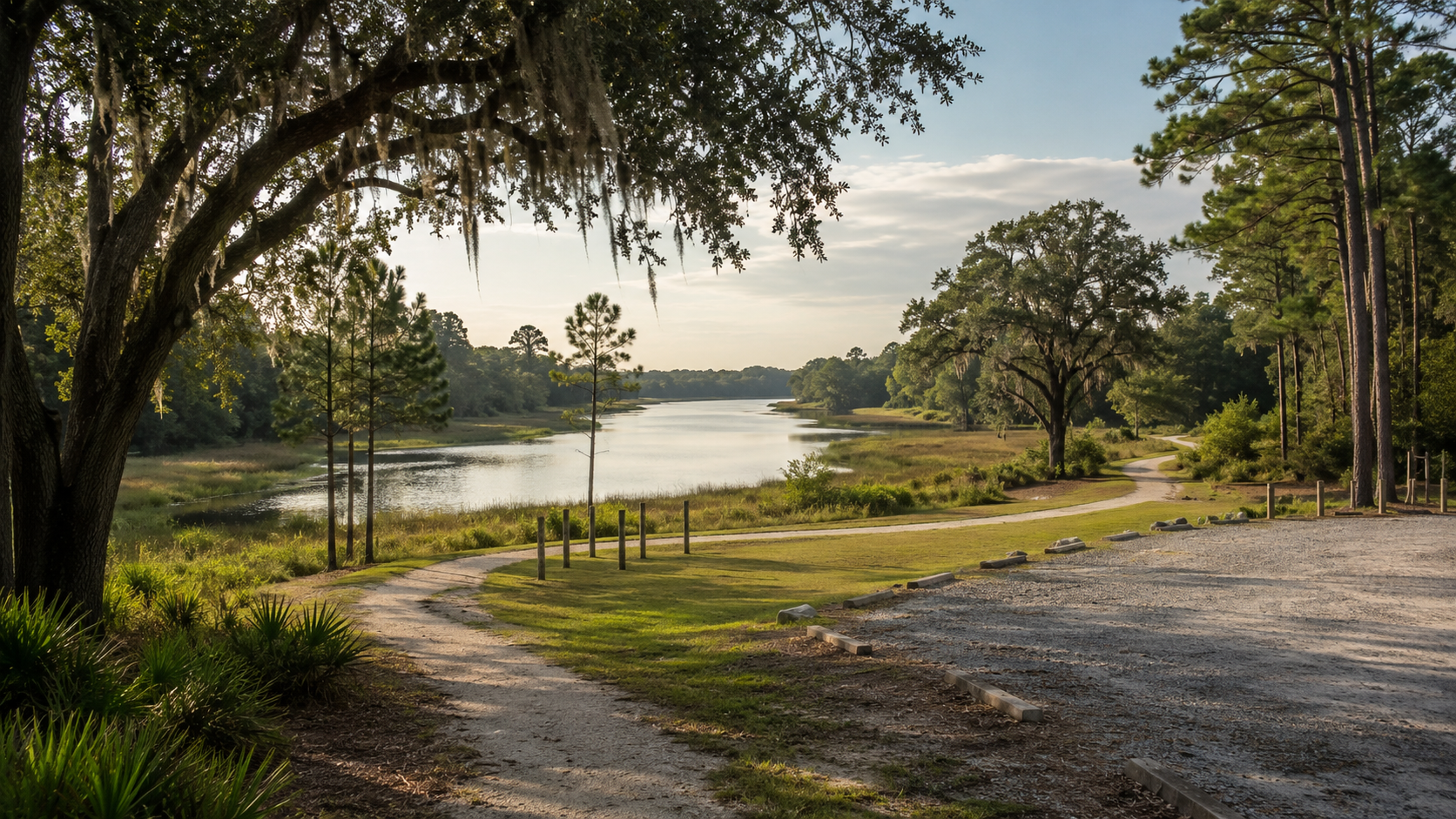
This is especially important because the original concept for the park reportedly included more amenities than what exists today. The public expected a more complete recreational asset. Instead, the park has opened largely as a passive space, with trails around remaining trees and a lake created in part through the extraction activity that triggered the dispute.
Passive parks can be valuable. Trails, open space, water views and natural areas are important public amenities. But that is not the same thing as delivering the full public vision that residents were led to expect.
If the town now has money from the settlement, the next question should be direct: how will it be used, and when will residents see the park improvements that were originally discussed?
Why This Matters to the Charleston Housing Market
At first glance, a park dispute in Awendaw may not seem like a housing story.
It is.
Parks, greenbelt land and public amenities are part of the value structure of a community. They influence quality of life, neighborhood desirability, buyer demand, property values and long-term land-use patterns.
This is especially true in the Charleston region, where growth has already transformed Mount Pleasant and is now pushing into Awendaw, McClellanville, Cainhoy, Wando and rural Berkeley County.
As Mount Pleasant becomes more expensive and more built out, buyers looking for land, privacy and a quieter Lowcountry lifestyle are looking farther north. That makes Awendaw increasingly important. It is no longer just a rural town outside the growth path. It is becoming part of the next frontier of Charleston-area housing pressure.
That does not mean Awendaw should become another Mount Pleasant. In fact, many residents strongly oppose that outcome.
But if Awendaw wants to preserve its identity while growth moves toward it, the town needs strong public trust, clear land-use rules and transparent handling of conservation assets.
A public park should be the easy part.
If even that becomes controversial, it raises concerns about how future land deals, development proposals and conservation decisions will be handled.
Greenbelt Land Should Not Feel Like a Backroom Deal
Charleston County’s greenbelt program has protected important land across the region. It has helped preserve open space, limit overdevelopment and provide public access to natural areas. The program has done real good.
That is why questionable deals are so damaging.
Greenbelt programs rely on public confidence. Voters and taxpayers support land preservation because they believe the land will be protected for public benefit. If they begin to believe politically connected insiders can profit from land tied to conservation programs, support for those programs weakens.
That would be a major loss for Charleston.
The Lowcountry needs greenbelt protection. It needs rural land preservation. It needs parks, trails, wetlands protection, public access and smart growth boundaries. But it also needs transparency.
The two cannot be separated.
A conservation program that does not clearly protect the public interest becomes vulnerable to criticism from both sides — from growth advocates who see it as government interference and from conservation advocates who fear the land is not truly being protected.
Awendaw Needs the Park to Become a Win
The best outcome now is simple: Awendaw should make the park the public asset residents were promised.
That means clear reporting, visible improvements and a public plan for the settlement money. Residents should know what amenities are coming, what they will cost and when they will be built.
Restrooms, picnic areas, kayak access, better signage, parking improvements, trails and environmental education features could help turn the property into something meaningful for the community.
But the town should not pretend the controversy is over just because a settlement has been reached.
The park may be open, but the trust issue remains open too.
A Warning for the Next Growth Fight
Awendaw is going to face more land-use pressure, not less.
The same forces that transformed Mount Pleasant are moving north: regional population growth, high housing costs closer to Charleston, demand for larger lots, interest in rural lifestyle properties and the continuing appeal of coastal South Carolina.
That makes every public land decision more important.
If Awendaw wants to preserve its rural character, it will need more than slogans. It will need disciplined planning, ethical leadership, transparent contracts and a clear understanding that public land is not just dirt on a map. It is part of the community’s future.
The park off Doar Road should have been a clean example of public land being used for public good.
Instead, it became a reminder that in a fast-growing region, even a park can become controversial when transparency comes too late.
Awendaw still has a chance to make this project a lasting community asset.
But the larger lesson is already clear: Charleston-area greenbelt land should never be handled in a way that leaves residents wondering who really got the better deal.
Leave a Reply