
By Jennifer Jordan | Charleston Housing News
WEST ASHLEY, S.C. — In a Charleston housing market where the phrase “affordable homeownership” often feels more like political branding than reality, a small townhome project off Savannah Highway is drawing attention for a simple reason: the prices start with a two.
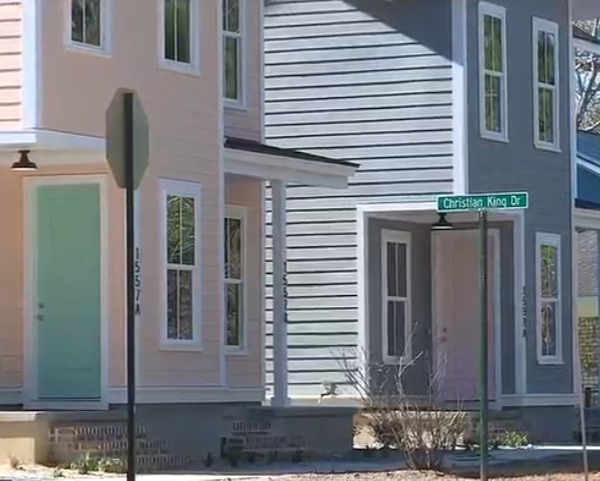
The Juniper Street Townhomes in West Ashley include 10 newly built units priced just under $289,000 after a $60,000 city subsidy. The homes are modest in size — a little more than 1,100 square feet — with two bedrooms, two-and-a-half bathrooms and modern finishes. Six units were still available as the homes moved to the open market through the city’s first-time homebuyer program.
In any normal American housing market, a two-bedroom townhome in the upper $200,000s would not be shocking. In Charleston, it almost feels like a unicorn.
The reason is obvious. Charleston County’s housing prices have moved far beyond the reach of many teachers, police officers, nurses, service workers, hospitality employees and young professionals who keep the local economy functioning. In West Ashley, townhomes and attached homes are often far more expensive than what many first-time buyers can afford, especially with today’s interest rates, insurance costs and monthly HOA fees.
That is what makes Juniper Street important. It is not just another small infill project. It is a reminder that attainable ownership is still possible when land, subsidy, private development and city coordination all line up.
The property at 1555 Juniper Street was acquired by the City of Charleston in 2018. The project eventually became part of the city’s First-Time Homebuyer Program, which is designed for buyers who have not owned a home recently and who fall within certain income limits. Current qualifications include earning between 80 percent and 120 percent of area median income, providing $2,500 in earnest money and completing a homebuyer education workshop.
That structure matters because Charleston’s affordability conversation too often focuses only on rental apartments. Rentals are needed, but they do not create equity for working families. Ownership does. A buyer who purchases one of these townhomes is not just getting a roof. They are getting a foothold in Charleston’s housing market before being permanently priced out.
The bigger question is why there are only 10 units.
That is not a criticism of the project. It is a criticism of the scale of the problem. Charleston does not need a few symbolic affordable units scattered around the city every several years. It needs a repeatable model that can produce attainable homes faster, in more neighborhoods and at greater volume.
West Ashley is one of the most logical places for that conversation. It remains one of Charleston’s most important middle-market housing areas, with access to downtown, I-526, Savannah Highway, Glenn McConnell Parkway, hospitals, shopping, restaurants and older established neighborhoods. But West Ashley is also under pressure. As prices rise in downtown Charleston, James Island, Mount Pleasant and the beaches, more buyers look west. That demand pushes prices higher and reduces the number of realistic entry-level ownership options.
This is where public-private partnerships may offer a practical path forward. The Juniper Street project shows that when the city controls land or helps close the affordability gap, private builders can deliver homes more quickly than government alone. The private sector can handle construction efficiency, design, timelines and cost controls. The public sector can help with land, subsidies, zoning flexibility and long-term affordability protections.
But Charleston must be honest about the tradeoffs. If the city wants more attainable ownership, it cannot treat every small infill project like a threat to neighborhood character. It cannot approve endless luxury apartments, hotels and commercial projects while making ownership housing painfully slow to produce. And it cannot continue pretending that affordability will magically appear without density, incentives or political courage.
The Juniper Street Townhomes are not the full answer. Ten homes will not solve Charleston’s housing crisis. But they are proof that the answer is not impossible.
Charleston needs more small-scale ownership projects like this in West Ashley, Johns Island, James Island, the upper peninsula and other areas where working residents are being pushed farther from the city they serve. The city also needs to distinguish between speculative overdevelopment and carefully planned attainable housing. Those are not the same thing.
The Juniper Street project should be viewed as a test case. If it works, the city should not simply celebrate it with a press release and move on. It should study it, refine it and replicate it.
Because in a market where the median buyer is getting squeezed from every direction, the most powerful housing policy may be the simplest one: build homes people who live and work here can actually buy.
Leave a Reply