
By Jennifer Jordan | Charleston Housing News
A rapidly growing stretch of the Charleston region is now at the center of a broader debate about development, infrastructure, and identity.
According to WCBD News 2, community members are organizing a public forum on March 30 to address mounting concerns tied to projected population growth across Cainhoy, Wando, and Huger. Estimates suggest as many as 45,000 new residents could move into the area over the next decade — a number that is reshaping both the physical landscape and the conversation around it.
A Corridor Under Pressure
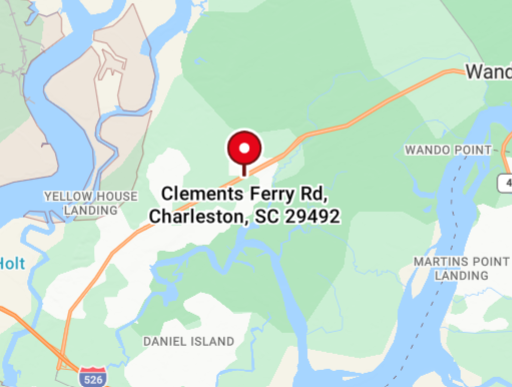
At the center of the issue is Clements Ferry Road, the primary connection linking these fast-growing areas.
Already, residents say the road is strained. Traffic congestion has become a daily reality, and concerns are growing about whether infrastructure improvements are keeping pace with development.
This is not a theoretical issue. It’s happening in real time — and accelerating.
Community Concerns Go Beyond Traffic
The upcoming forum at Phillip Simmons Elementary School will bring together elected officials, transportation leaders, and environmental advocates to discuss three primary concerns:
Preservation of freshwater wetlands
Limits on saltwater dock expansion
Protection of historic and natural landscapes
While traffic may be the most visible issue, the broader concern is whether the region’s growth is being managed in a way that protects what makes Charleston unique.
A Broader Warning From the Market
This debate is not happening in isolation.
A recent opinion piece published in The Daniel Island News raises deeper concerns about the long-term impact of development along the corridor. In that article, Is Clements Ferry growth erasing Charleston’s soul?
, the author argues that unchecked expansion risks permanently altering the Lowcountry’s defining landscape.
The piece warns that:
Large-scale clearing of land and wetlands is accelerating
Infrastructure is being built to meet current demand, not future density
Growth may be outpacing thoughtful planning
It describes the situation as a “defining moment” for Charleston — not just in terms of housing supply, but in determining what the region ultimately becomes.
The Scale of What’s Coming
The concern is not just philosophical — it’s grounded in real numbers.
Recent reporting indicates that more than 2,200 homes are already planned or under construction along Daniel Island and the Clements Ferry corridor alone, with additional multifamily and mixed-use projects in the pipeline.
That includes:
Large townhome communities
Apartment developments
Age-restricted and mixed-use projects
Continued expansion within Point Hope and surrounding areas
This level of development ensures that growth is not slowing down — it is just beginning.
Growth vs. Livability
As Charleston continues to attract new residents, the central question is shifting from whether growth will occur to how it will be managed.
There are competing realities at play:
Demand for housing remains strong, driven by migration and limited national inventory
Infrastructure limitations are increasingly visible, especially along key corridors like Clements Ferry
Environmental and quality-of-life concerns are gaining traction among existing residents
Striking the right balance between these forces will determine not only traffic patterns, but also long-term property values and community stability.
A Defining Moment for the Region
The March 30 forum reflects something larger than a local meeting — it represents a community attempting to influence the trajectory of one of the Charleston region’s most important growth corridors.
The outcome of these conversations, and the decisions that follow, will shape:
Development density
Infrastructure investment
Environmental preservation
The overall character of the Lowcountry
In many ways, this is a pivotal moment.
Because once development at this scale takes hold, the opportunity to reshape it becomes far more limited.
Bottom Line
Clements Ferry is no longer an emerging corridor — it is a focal point of Charleston’s future.
With thousands of homes planned, tens of thousands of residents expected, and infrastructure already under strain, the decisions being made now will have lasting consequences.
The question facing Charleston is no longer whether it will grow.
It’s whether it can grow without losing what made it desirable in the first place.
Leave a Reply