
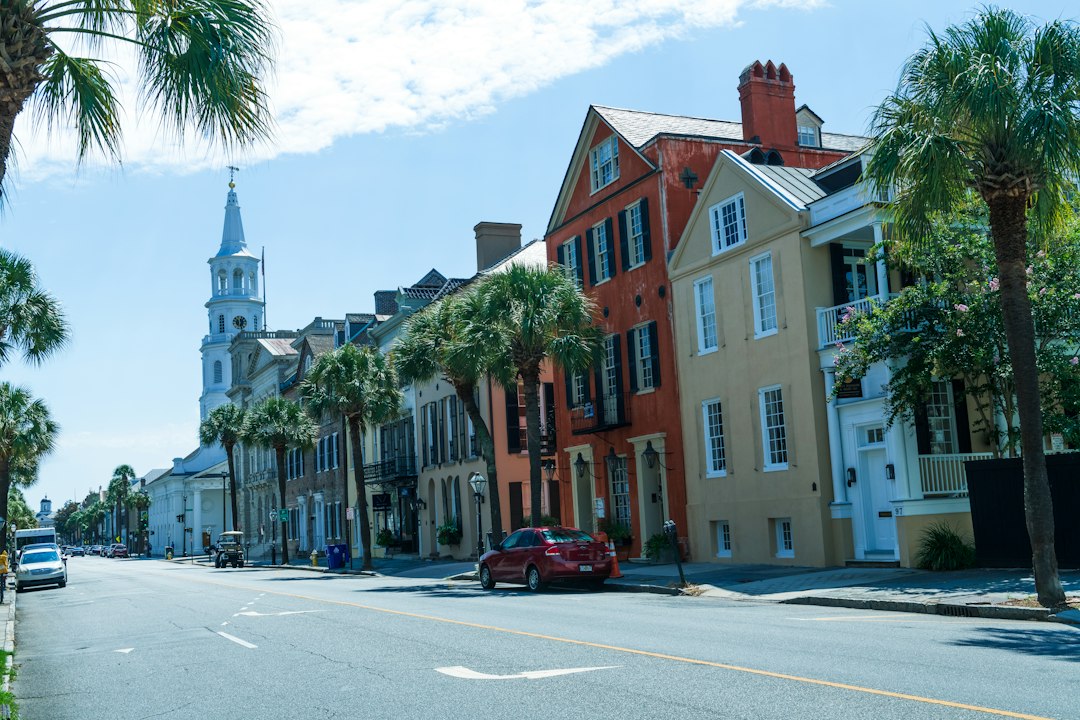
A new executive order signed by President Trump is drawing attention from homebuyers and homeowners across the country, and Charleston residents have good reason to pay close attention. The order takes aim at two of the most persistent cost burdens in homeownership: mortgage insurance premiums and refinancing fees. For a market like Charleston, where median home prices have climbed steadily and first-time buyers face stiff competition, even modest cost reductions could make a meaningful difference. Here is a clear-eyed breakdown of what the order says, what it actually changes, and what Charleston borrowers should do right now.
What Trump’s Executive Order on Housing Costs Actually Says
The executive order directs federal agencies, including the Department of Housing and Urban Development (HUD) and the Federal Housing Finance Agency (FHFA), to identify and reduce unnecessary costs in the homeownership process. The core goals are straightforward: make mortgage insurance easier to cancel on eligible future loans, and reduce the fees borrowers pay when refinancing. The order also includes provisions to expand financing options for manufactured housing, recognizing that affordability challenges extend beyond the traditional single-family market.
Importantly, the order does not set new rules on its own. It instructs agencies to begin rulemaking processes, which means the actual regulatory changes will take time to develop, finalize, and implement. Think of the executive order as a directive, not a finished policy.
How Mortgage Insurance Changes Could Affect Charleston Homebuyers
Mortgage insurance is the monthly cost many buyers pay when their down payment falls below 20 percent. There are two main types that work very differently:
- Private Mortgage Insurance (PMI): Required on conventional loans with less than 20 percent down. Under the existing Homeowners Protection Act, lenders must automatically cancel PMI once a borrower reaches 22 percent equity based on original value. Borrowers can also request cancellation at 20 percent equity.
- FHA Mortgage Insurance Premium (MIP): Required on FHA loans and, for most borrowers who put down less than 10 percent, it lasts the life of the loan. This is a critical distinction.
The executive order signals that automatic cancellation rules should be strengthened for future eligible loans, potentially making it easier for borrowers to shed mortgage insurance sooner. However, the specific thresholds and loan types covered will be defined during the rulemaking process.
FHA Loan vs. Conventional Loan: Which Charleston Borrowers Benefit More?
This is where the order’s impact splits significantly, and it is a distinction most national coverage glosses over.
Conventional loan borrowers with PMI are likely to see the most direct benefit from strengthened cancellation rules. If rulemaking lowers the equity threshold required for automatic cancellation, or speeds up the timeline, those borrowers could stop paying PMI sooner.
FHA borrowers face a tougher situation. FHA MIP does not follow the same cancellation rules as conventional PMI. For loans originated after June 2013 with less than 10 percent down, MIP typically runs for the life of the loan. The executive order’s direction to agencies could prompt HUD to revisit this policy, but FHA borrowers should not assume automatic relief is coming without a formal rule change. The most reliable path for an FHA borrower to eliminate MIP today remains refinancing into a conventional loan once sufficient equity is established.
In Charleston, FHA loans are commonly used by first-time buyers and lower-to-moderate income households, particularly in neighborhoods like North Charleston, Summerville, and Goose Creek. Those buyers stand to benefit most if HUD follows through with FHA-specific reforms, but they also face the longest wait for concrete changes.
What Existing Borrowers Can Already Do Right Now
The executive order does not change existing law for current borrowers. Under the Homeowners Protection Act, conventional loan borrowers already have the right to request PMI cancellation when their loan balance reaches 80 percent of the home’s original appraised value. With Charleston home values having appreciated significantly in recent years, many homeowners may have already crossed that threshold without realizing it.
Steps current borrowers can take today, independent of the executive order:
- Check the current loan balance against the original purchase price or appraised value.
- Request a new appraisal if home value has increased substantially (lender approval required).
- Submit a written PMI cancellation request to the loan servicer.
- For FHA loans, consult a HUD-approved housing counselor about refinancing options.
Refinancing Costs: What Could Get Cheaper and When
The order also targets refinancing fees, including closing costs and administrative charges that can add thousands of dollars to a refinance transaction. Reducing these costs could make refinancing more accessible for Charleston homeowners who took on loans at higher rates and are waiting for conditions to improve.
The realistic timeline here is measured in months, not weeks. Agencies must propose rules, accept public comment, and finalize changes. Borrowers should plan for meaningful refinancing cost reductions to arrive in late 2026 at the earliest, and potentially into 2027.
How Much Could Charleston Borrowers Actually Save? Real Numbers for Local Home Prices
Charleston’s median home price hovers around $400,000 to $420,000 in 2026, depending on the neighborhood. Here is what PMI typically costs at those price points:
- $350,000 loan with 5% down (PMI at 0.8%): Approximately $233 per month in PMI
- $400,000 loan with 5% down (PMI at 0.8%): Approximately $267 per month in PMI
- $420,000 loan with 10% down (PMI at 0.5%): Approximately $158 per month in PMI
If the order results in earlier automatic cancellation, a borrower on a $400,000 loan who currently pays PMI for 7 years before hitting 22 percent equity could potentially save 12 to 18 months of premiums, totaling $3,200 to $4,800 over the life of the loan. On the refinancing side, if closing cost reductions average $1,500 to $2,500 per transaction, Charleston homeowners considering a rate-and-term refinance would see meaningful savings at the closing table.
When Will Charleston Borrowers Actually Feel the Impact? The Rulemaking Reality
This is the part most coverage skips, and it matters. Executive orders are not self-executing laws. Each agency named in the order must go through the formal rulemaking process: drafting proposed rules, publishing them for public comment (typically a 30 to 60 day window), reviewing feedback, and issuing final rules. That process alone can take six months to over a year per rule.
Charleston borrowers should treat this executive order as a signal of policy direction, not an immediate change to their mortgage costs. Watching for HUD and FHFA announcements in early-to-mid 2027 is a more realistic timeline for seeing concrete implementation.
Manufactured Housing Provisions: A Charleston Perspective
The order’s manufactured housing provisions deserve attention in the Charleston metro context. The Lowcountry has pockets of manufactured home communities, particularly in rural Berkeley and Dorchester counties, where affordability constraints are most acute. Expanding financing access for manufactured homes, including potentially improving loan terms and insurance options, could open homeownership pathways for buyers who are currently priced out of the site-built market entirely. This is a longer-term affordability lever, but a meaningful one for the region’s housing inventory challenges.
Your Charleston Homeowner Action Checklist
While waiting for federal rules to take effect, Charleston homeowners and buyers can take these steps now:
- Request a current loan payoff statement and compare it to the home’s estimated market value.
- If on a conventional loan, calculate whether the loan balance is at or below 80 percent of original value and contact the servicer about PMI cancellation.
- If on an FHA loan, consult a HUD-approved counselor about whether refinancing into a conventional loan makes financial sense given current equity.
- Get pre-qualified or pre-approved now if planning to buy, so the home search is ready when market conditions shift.
- Ask lenders specifically about streamline refinance options and current closing cost structures.
- Monitor HUD and FHFA announcements for proposed rule releases related to this executive order.
Charleston Resources: Local Lenders, HUD Counselors, and Where to Get Help
Charleston-area borrowers have access to several resources for navigating these changes:
- HUD-Approved Housing Counseling Agencies: The HUD website (hud.gov) maintains a searchable directory of approved counselors in South Carolina. These counselors provide free or low-cost advice on mortgage options, PMI cancellation, and refinancing decisions.
- SC Housing (South Carolina State Housing Finance and Development Authority): Offers programs for first-time buyers and may have updated guidance as federal rules evolve.
- Local mortgage lenders and credit unions: Community lenders familiar with the Charleston market can provide loan-specific advice on PMI timelines and refinancing costs. Asking lenders directly about their PMI cancellation policies is always a smart first step.
Frequently Asked Questions for Charleston Homebuyers and Owners
Will this executive order lower mortgage interest rates?
No. The executive order targets mortgage insurance costs and refinancing fees, not interest rates. Mortgage rates are influenced by broader economic factors, including Federal Reserve policy and bond market conditions. As of late 2026, rates remain well above the historic lows seen earlier this decade, and no executive order directly controls them.
How long does a borrower have to pay PMI on a new loan?
On a conventional loan, PMI must be automatically canceled at 22 percent equity based on original value. Borrowers can request cancellation at 20 percent equity. The executive order may shorten this timeline for future loans, but the specific terms await rulemaking.
Can mortgage insurance be canceled on an existing FHA loan?
Generally, no, not without refinancing. For FHA loans originated after June 2013 with less than 10 percent down, MIP runs for the life of the loan. Refinancing into a conventional loan once sufficient equity is built remains the primary exit strategy.
How much does PMI cost on a $400,000 house?
PMI rates typically range from 0.5 percent to 1.5 percent of the loan amount annually, depending on credit score and down payment. On a $400,000 loan with a 0.8 percent PMI rate, that equals roughly $267 per month.
Will mortgage rates reach 4 percent in 2026?
Most housing economists do not project rates dropping to 4 percent in 2026. Current consensus forecasts suggest rates remain in the mid-to-upper 6 percent range through the end of the year, though conditions can shift.
The executive order is a genuine step toward reducing homeownership costs, and Charleston borrowers have real reasons to follow its progress. The key is staying informed, taking action on existing rights today, and setting realistic expectations about when new rules will actually arrive.
Leave a Reply