
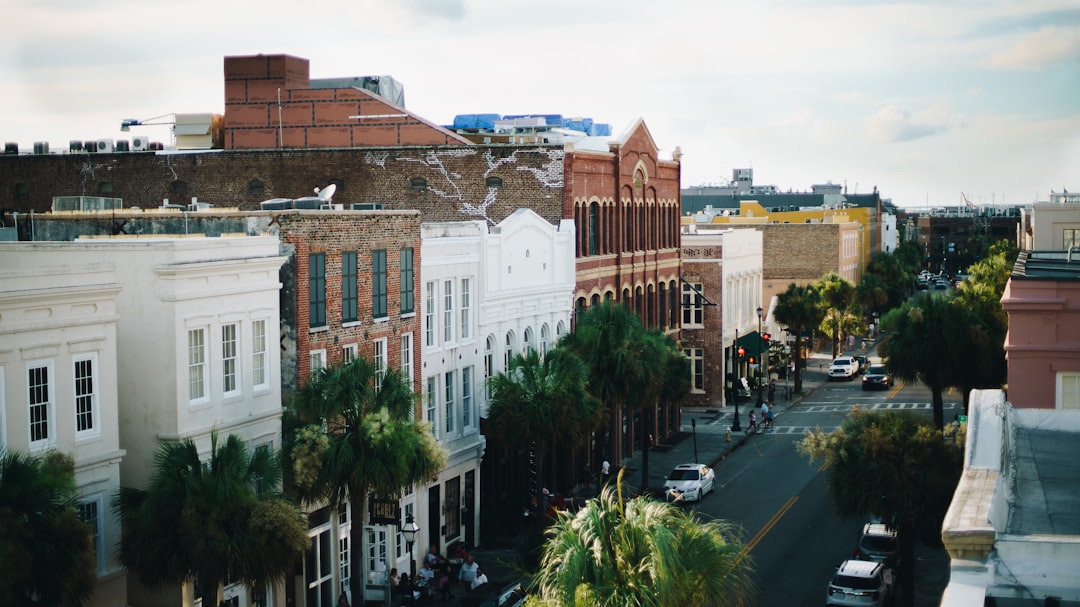
In a city where the ground itself holds centuries of layered history, it should come as no surprise that a luxury hotel project at 155 Meeting Street has paused long enough for archaeologists to listen to what the earth has to say. What they found, and what they did not find, is reshaping the conversation around Charleston’s development future, historic preservation obligations, and the complex calculus investors and developers face when building on the peninsula.
The Four Seasons Hotel and Residences project is one of the most anticipated luxury developments in South Carolina’s recent memory. But before a single pile can be driven into the ground, the site has yielded artifacts, structural remnants, and unanswered questions that reach deep into Charleston’s colonial and antebellum past. For real estate professionals, investors, and anyone tracking the Charleston housing market, this dig is more than a historical curiosity. It is a window into how development actually works in one of America’s most archaeologically layered cities.
What Archaeologists Found at 155 Meeting Street
The excavation at 155 Meeting Street produced a range of artifacts and structural remains consistent with Charleston’s colonial and antebellum occupation. Researchers documented building foundations, ceramics, glassware, and personal objects spanning several centuries of urban life. The site’s stratigraphy, meaning its layered soil deposits, revealed distinct periods of habitation and land use that helped archaeologists piece together how this particular block evolved over time.
What made the findings notable was not just what appeared but also what was conspicuously absent. Certain artifact types expected from well-documented occupational periods were missing, suggesting either significant prior ground disturbance, selective disposal practices, or gaps in the historical record that have yet to be explained. In archaeology, absence of evidence is itself a form of evidence, and researchers are treating those gaps with the same seriousness as the objects they did recover.
A Head-Scratcher: The Mysteries the Dig Left Unanswered
Every excavation raises as many questions as it resolves, and the 155 Meeting Street site is no exception. Archaeologists have noted puzzling inconsistencies between what documentary history suggests should be present and what the ground actually produced. Competing theories among researchers center on whether prior construction activity in the twentieth century disturbed earlier deposits, or whether the site’s use patterns simply differed from neighboring lots in ways that haven’t been fully accounted for.
These unresolved questions matter for the development community because incomplete archaeological records can sometimes trigger additional review requirements or requests for further study before regulatory agencies sign off on construction clearance. Developers and their legal teams are wise to monitor how state and federal reviewers interpret the findings before assuming a clean path to groundbreaking.
The Four Seasons Hotel and Residences: What’s Being Built Here
The project planned for 155 Meeting Street represents a significant addition to Charleston’s luxury real estate segment. The mixed-use development will include a Four Seasons-branded hotel alongside private residences, bringing a globally recognized hospitality brand to the lower peninsula. The development is positioned to compete at the very top of the Charleston luxury condo market, with residences expected to command prices that reflect both the brand premium and the site’s proximity to the historic district, the waterfront, and the city’s cultural core.
For Charleston’s evolving skyline and its housing supply conversation, the project is notable. It adds high-end inventory to a market that has seen sustained demand pressure, though it does little to address affordability concerns at the middle and lower ends of the market. Still, for investors and real estate professionals tracking the luxury segment, the Four Seasons development is a bellwether project whose trajectory deserves close attention.
South Carolina Law and Pre-Construction Archaeology: What Triggers a Mandatory Dig
Many people following this story have asked a straightforward question: why was an archaeological dig required here in the first place? The answer lies in a combination of federal and state regulatory frameworks that most developers encounter when working in historically sensitive areas.
At the federal level, Section 106 of the National Historic Preservation Act requires federal agencies to consider the effects of their undertakings on historic properties. When a project involves federal permits, federal funding, or federal land, this review process kicks in and can require pre-construction cultural resource surveys. South Carolina’s State Historic Preservation Office (SHPO) plays a central role in coordinating these reviews and determining whether a site has sufficient archaeological sensitivity to warrant excavation.
At the state level, South Carolina has its own preservation mandates that apply to certain categories of projects, particularly those in designated historic districts or on land with documented prior occupation. The lower Charleston peninsula, given its status as one of the oldest continuously occupied urban areas in North America, routinely triggers these requirements. Developers who do not anticipate this regulatory step in their project timelines and budgets often find themselves absorbing unexpected costs and schedule delays.
What Happens Next: From Dig Site to Development
Once the archaeological phase concludes and findings are documented, the regulatory process moves toward review and sign-off. SHPO and, where applicable, federal agencies assess whether the findings require additional mitigation, whether any discovered remains need to be preserved in place, or whether the project can proceed following documentation and artifact collection.
Artifacts recovered from the site are typically transferred to state repositories, university archives, or museum collections where they become part of the public record. South Carolina’s archaeological collections are managed through institutions including the South Carolina Institute of Archaeology and Anthropology (SCIAA), which maintains records accessible to researchers and, in many cases, the general public.
For the Four Seasons project, the projected groundbreaking timeline will depend on how quickly regulatory review is completed following the archaeological clearance. Delays at this stage are not unusual, but they are generally manageable when developers have engaged the process proactively rather than reactively.
Whose Past Was Buried Here: The Human Stories Beneath 155 Meeting Street
Charleston’s archaeological record cannot be discussed honestly without confronting whose lives and labor built this city. The lower peninsula was home not only to wealthy merchants and colonial administrators but to a large population of enslaved Africans and African Americans, as well as free Black residents whose presence shaped every aspect of Charleston’s physical and cultural landscape.
Sites in Charleston’s historic core routinely yield evidence of these communities, sometimes in the form of personal objects, sometimes in structural remains, and sometimes in the very absence of documentation that reflects how systematically their lives were erased from the official record. Descendant communities, including organizations representing African American heritage in the Lowcountry, have increasingly sought meaningful roles in how archaeological findings are interpreted, preserved, and communicated to the public.
For a project like the Four Seasons, situated in the heart of a city still grappling with its history of slavery and racial inequality, the human dimension of what lies beneath 155 Meeting Street is not a footnote. It is central to how the community understands the development and how the developer should approach its obligations to cultural stakeholders.
A History of What Charleston’s Construction Sites Have Revealed
The dig at 155 Meeting Street is far from the first time a Charleston development project has produced significant archaeological finds. The city’s construction history is punctuated by discoveries that have rewritten or deepened our understanding of its past. A few landmark moments:
-
The Gadsden’s Wharf site: Excavations near the waterfront have documented evidence of the slave trade at one of the largest points of entry for enslaved Africans in North America, findings that directly informed the planning of the International African American Museum.
-
The First Trident Hospital site: Pre-construction work in the peninsula’s upper reaches revealed colonial-era occupation layers that pushed back the documented settlement timeline for that area.
-
Various King Street and East Bay Street projects: Routine pre-construction surveys along these commercial corridors have produced ceramics, coins, and structural remnants from the eighteenth and nineteenth centuries, many now held by SCIAA.
Compared to other historically layered American cities, Charleston stands out for the density and diversity of what its ground holds. Cities like Boston, Philadelphia, and New Orleans face similar archaeological complexity, but Charleston’s particular combination of early European settlement, massive enslaved population, and relatively limited twentieth-century redevelopment means its downtown soil is extraordinarily rich with material culture.
What Developers and Investors Should Know Before Buying Land in Charleston’s Historic Core
For anyone considering a development acquisition on the Charleston peninsula, the Four Seasons dig offers a practical case study in due diligence. Here is a framework worth applying before any transaction closes:
-
Commission a Phase I cultural resource survey early. This desktop review of historical records, maps, and prior survey data can flag archaeological sensitivity before significant capital is committed.
-
Budget for Phase II and Phase III work. If the Phase I review suggests sensitivity, a Phase II survey (subsurface testing) and potentially a full Phase III excavation may be required. These can add hundreds of thousands of dollars and several months to a project timeline.
-
Engage SHPO early and proactively. Developers who treat the preservation review as a bureaucratic hurdle rather than a collaborative process often encounter more friction. Early engagement builds goodwill and can accelerate review timelines.
-
Identify cultural stakeholders before construction begins. Descendant communities and preservation organizations are increasingly active participants in the review process. Early outreach reduces conflict and demonstrates good faith.
-
Price archaeological risk into your pro forma. Schedule contingencies of three to six months and cost contingencies of one to three percent of total project value are reasonable starting points for historically sensitive peninsula sites.
Will the Archaeological Discovery Affect Four Seasons Residence Prices or Buyer Demand?
This is the question luxury buyers and their brokers are quietly asking. The short answer is: probably not negatively, and potentially the opposite. Charleston’s high-end buyers are often drawn to the city precisely because of its layered history. A development with documented archaeological provenance, handled transparently and respectfully, can become a marketing asset rather than a liability.
Developers in other historically rich markets have successfully woven archaeological narratives into their branding. If the Four Seasons team chooses to acknowledge and celebrate what was found beneath 155 Meeting Street, rather than treating it as an inconvenience, they may find that buyers respond positively. Conversely, any perception that findings were minimized or that cultural stakeholder concerns were dismissed could generate community friction that affects the project’s public reception and, ultimately, its sales velocity.
The Bigger Picture: Archaeology, Housing Supply, and Charleston’s Development Future
The 155 Meeting Street dig is a single episode in an ongoing story about how Charleston balances its obligations to the past with the very real pressures of housing supply, commercial development, and economic growth. The peninsula is finite. Land is scarce. And virtually every underdeveloped or redevelopable parcel in the historic district carries some degree of archaeological sensitivity.
This reality has direct implications for housing supply. Pre-construction archaeological requirements add time and cost to projects, and in a market already constrained by geography, historic district regulations, and height restrictions, those additional friction points matter. For investors and developers, understanding this landscape is not optional. It is a prerequisite for operating successfully in one of the Southeast’s most competitive and complex real estate markets.
The Four Seasons project, whenever it does break ground, will stand on ground that has been listened to carefully. That is not a delay to be lamented. It is a feature of responsible development in a city whose past is, quite literally, still being uncovered.
Frequently Asked Questions
How do archaeologists uncover the past at construction sites?
Pre-construction archaeology typically begins with a Phase I survey that reviews historical records and conducts limited subsurface testing. If evidence of significant occupation is found, a Phase II investigation follows with more extensive soil sampling and artifact recovery. A full Phase III excavation documents the site comprehensively before construction proceeds.
What happens to artifacts found at construction sites in South Carolina?
Artifacts recovered during legally required excavations in South Carolina are typically catalogued and transferred to the South Carolina Institute of Archaeology and Anthropology or other approved repositories. They become part of the public archaeological record and are accessible to researchers and, in many cases, the general public.
Can archaeological finds delay or stop a construction project?
Yes, though outright project stoppage is rare. More commonly, significant finds trigger additional review requirements, extended regulatory timelines, or mitigation measures that add months to a project schedule. In cases where human remains are discovered, additional legal requirements apply and can cause more substantial delays.
Why is Charleston so rich in archaeological history?
Charleston was one of the earliest and wealthiest colonial cities in North America, with continuous occupation dating to the late seventeenth century. Its role as a major port, its large enslaved population, and its relatively limited twentieth-century urban renewal activity mean that its historic district contains exceptionally dense and diverse archaeological deposits.
What is the Four Seasons Charleston development project?
The Four Seasons Hotel and Residences is a planned mixed-use luxury development at 155 Meeting Street in downtown Charleston. It will include a Four Seasons-branded hotel alongside private residential units, targeting the top tier of the Charleston luxury real estate market.
How does pre-construction archaeology affect real estate development costs?
Costs vary widely depending on site sensitivity and findings, but Phase II and Phase III archaeological work can range from tens of thousands to several hundred thousand dollars. Schedule impacts, which affect carrying costs and financing, often represent the larger financial exposure for developers working on historically sensitive land.
Leave a Reply