
by Jennifer Jordan
For years, many Charlestonians have viewed large-scale development projects with skepticism. Too often, redevelopment has meant more density, more traffic and more pressure on already strained infrastructure.
Union Pier may represent an opportunity to write a different story.
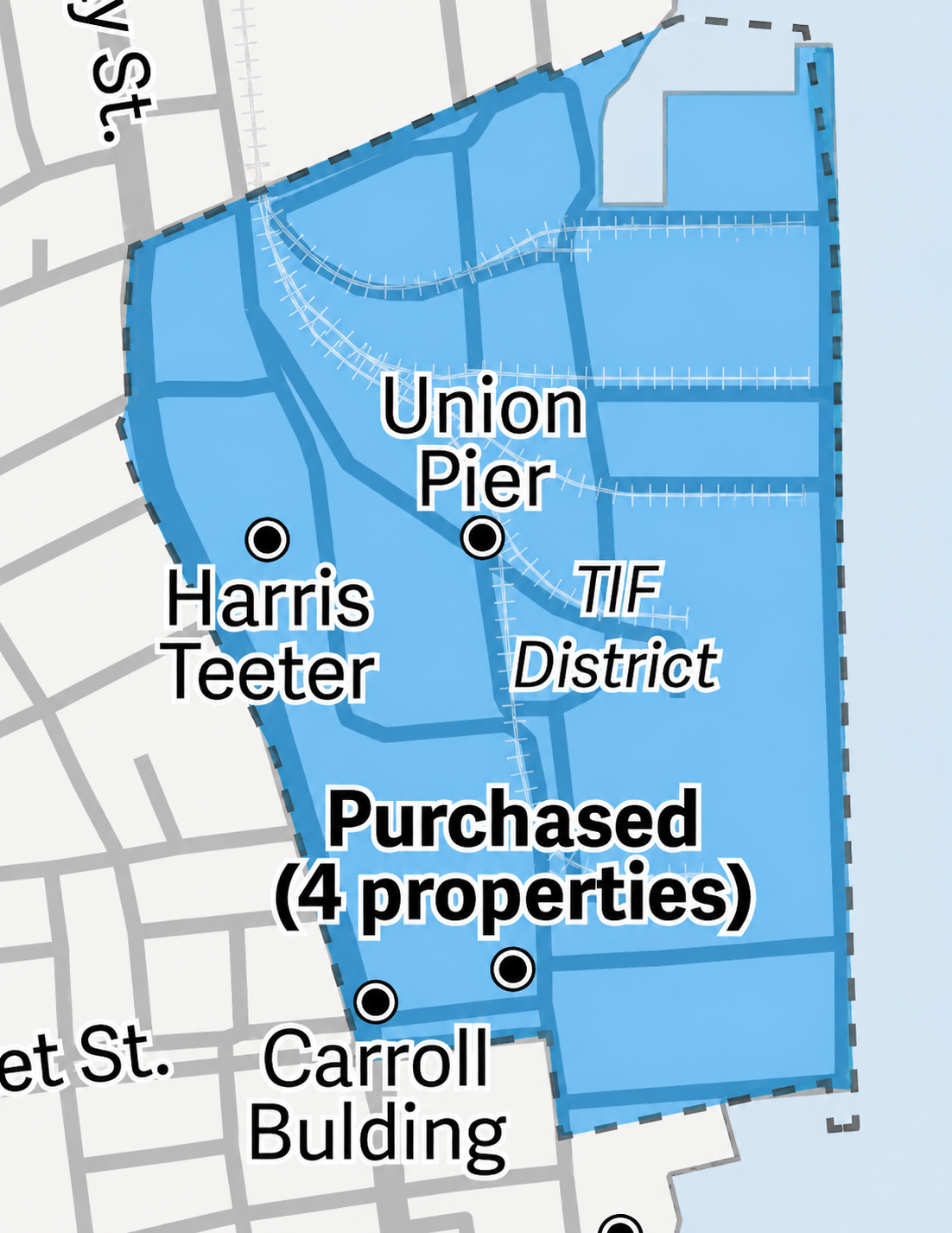
Developer Ben Navarro’s recent acquisition of additional properties along North Market Street is more than a series of real estate transactions. It’s part of a broader vision to reconnect Charleston’s historic downtown with one of the last major undeveloped waterfront sites on the peninsula. Rather than treating Union Pier as a standalone project, the plan appears to focus on creating a natural extension of the existing city by gradually activating the surrounding streets, public spaces and waterfront.
That approach matters.
For decades, Charleston has debated how growth should occur. Should every available parcel simply maximize the number of buildings and units it can support? Or should development focus first on creating places where people actually want to spend time?
Those are two very different philosophies.
Based on what has been shared publicly, Union Pier appears to lean toward the latter.
Instead of rushing to fill 65 acres with the highest possible density, the project team has repeatedly discussed building the district in phases, beginning at its edges and reconnecting it to surrounding neighborhoods. The recent purchases along Market Street reinforce that strategy by creating a more welcoming transition between the Historic City Market, East Bay Street and Charleston Harbor.
While detailed plans for the newly acquired properties have not yet been released, the emphasis on connectivity rather than simply maximizing development has attracted attention from many in the real estate community.
Luxury real estate broker Bryan Crabtree believes that approach deserves recognition.
“One of the biggest concerns Charleston residents have whenever a major project is announced is whether it will become another overbuilt development that overwhelms roads, neighborhoods and quality of life,” Crabtree said. “From everything we’ve seen so far, this appears to be a much better steward of growth than simply maximizing density. Many people are hopeful this becomes a well-managed community asset instead of another dense, overburdensome development.”
That distinction is becoming increasingly important across the Charleston region.
Communities throughout the Lowcountry are wrestling with how to accommodate continued population growth while protecting the character that attracted residents in the first place. Whether the discussion involves Highway 41, the future of Faison Road in Mount Pleasant or redevelopment opportunities on the peninsula, the conversation is shifting away from whether growth should occur and toward how it should occur.
Successful redevelopment today isn’t measured solely by square footage or property values.
It’s measured by walkability, public spaces, transportation connections, architecture, waterfront access and how well a project integrates into the surrounding community.
If Union Pier ultimately delivers on that vision, it could become a model for future redevelopment projects throughout South Carolina.
Of course, significant work remains.
The property transfer from the South Carolina State Ports Authority is expected to close in 2027, and individual projects will continue moving through Charleston’s public planning and design review process before construction begins. Residents, preservationists and city leaders will all have opportunities to shape what ultimately gets built.
But perhaps the most encouraging aspect of the project is its philosophy.
Charleston doesn’t necessarily need less investment.
It needs investment that respects the city, improves the public realm and leaves future generations with something better than what existed before.
Union Pier may become one of the largest redevelopment projects in Charleston’s history.
If it’s done thoughtfully, it may also become one of its most successful.
Leave a Reply