
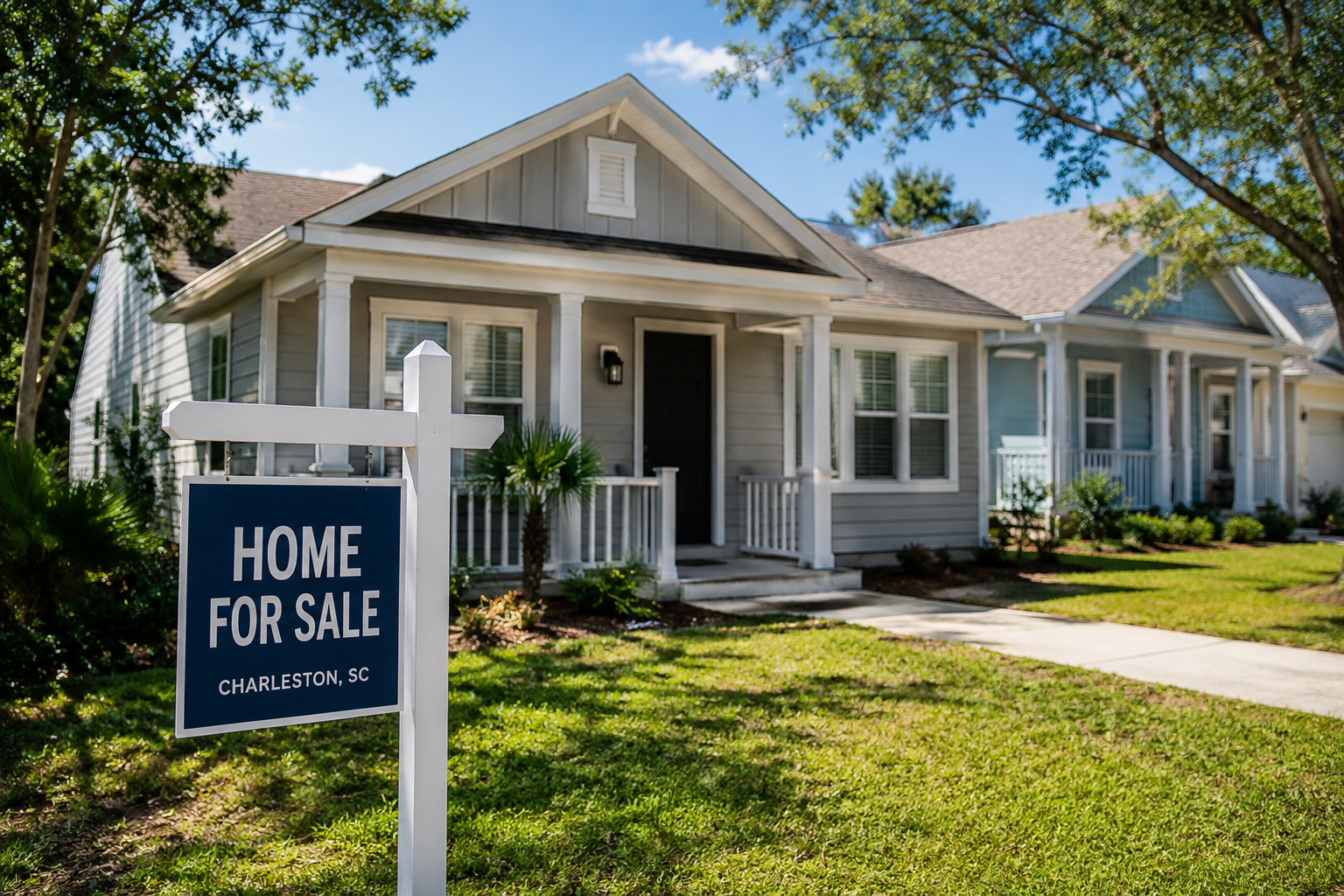
For first-time buyers, the definition of a “starter home” has changed dramatically across the Lowcountry.
By Jennifer Jordan | Charleston Housing News
For generations, buying a starter home represented the traditional first step toward homeownership.
It wasn’t expected to be perfect.
The house might have needed updating. It may have had fewer bedrooms, an older kitchen or a longer commute. Buyers accepted those tradeoffs because the goal wasn’t to find a forever home—it was simply to get into the market and begin building equity.
Today, that concept has changed dramatically across the Charleston region.
In many neighborhoods, what would once have been considered a move-up home has effectively become the new starter home. Rising prices, limited inventory and continued population growth have pushed the entry point for homeownership higher than many first-time buyers ever expected.
The Definition of a Starter Home Has Changed
Traditionally, a starter home was modest in size and price.
Today, many buyers simply define a starter home as the least expensive single-family home they can realistically purchase in the community where they want to live.
That distinction matters.
In Charleston, the question is no longer whether buyers can afford the home they want.
It’s whether they can afford to enter the market at all.
What Does a Starter Home Cost Across the Charleston Area?
Although every neighborhood is different, recent market data illustrates how dramatically entry-level pricing varies throughout the region.
Summerville
For many first-time buyers, Summerville remains one of the most attainable options. The median home sale price recently measured approximately $355,000, making it one of the region’s most accessible large housing markets.
North Charleston
North Charleston continues to offer some of the area’s lowest single-family prices, with recent market activity showing median pricing generally in the $310,000 to $340,000 range depending on the data source and reporting period.
Charleston
Within the City of Charleston, entry costs increase considerably. Median home prices now hover around $650,000, although buyers may still find smaller homes or condominiums below that level in select neighborhoods.
Mount Pleasant
Mount Pleasant remains one of the region’s most expensive markets. Median home prices generally range between $875,000 and $940,000, while many detached homes sell well above $1 million. Even modest single-family homes often exceed what many first-time buyers can comfortably afford.
First-Time Buyers Are Competing With More Than Other First-Time Buyers
Another challenge facing entry-level buyers is who they’re competing against.
Affordable homes are attractive not only to first-time purchasers but also to:
- Empty nesters looking to downsize
- Investors seeking rental properties
- Buyers relocating from more expensive states
- Families purchasing second homes
- Cash buyers looking for long-term appreciation
That means the most affordable homes frequently generate the strongest demand.
Rather than competing against buyers with similar budgets, first-time purchasers often find themselves competing against buyers with substantially more equity or cash available.
Higher Mortgage Rates Compound the Problem
Mortgage rates have remained elevated throughout much of 2026 compared to the historically low rates buyers enjoyed just a few years ago.
Higher financing costs reduce purchasing power even if home prices remain relatively stable.
A buyer who comfortably qualified for a $450,000 mortgage several years ago may qualify for considerably less today without increasing monthly payments.
That forces many buyers to compromise on size, location or amenities—or delay purchasing altogether.
Inventory Offers Some Hope
The market isn’t entirely working against first-time buyers.
Inventory has increased across much of the Charleston region compared to the extremely tight conditions seen during the pandemic housing boom.
More available homes give buyers additional time to compare properties, negotiate repairs and make more informed decisions rather than rushing into bidding wars.
While affordability remains challenging, today’s buyers generally have more choices than they did just two or three years ago.
Is the Starter Home Gone?
Not entirely.
But it looks different than it once did.
Many buyers entering the market today are purchasing homes they expect to remain in much longer than previous generations.
Rather than viewing their first purchase as a temporary stepping stone, many now approach it as a home they may own for 10 years or more.
For others, townhomes, condominiums and smaller detached homes have replaced the traditional three-bedroom starter house with a large yard.
The first step into homeownership still exists.
It simply requires a larger financial commitment than it did for previous generations.
In Charleston’s competitive housing market, the starter home has not disappeared—but it has become significantly more expensive, forcing buyers to redefine what “getting started” really means.
Leave a Reply