
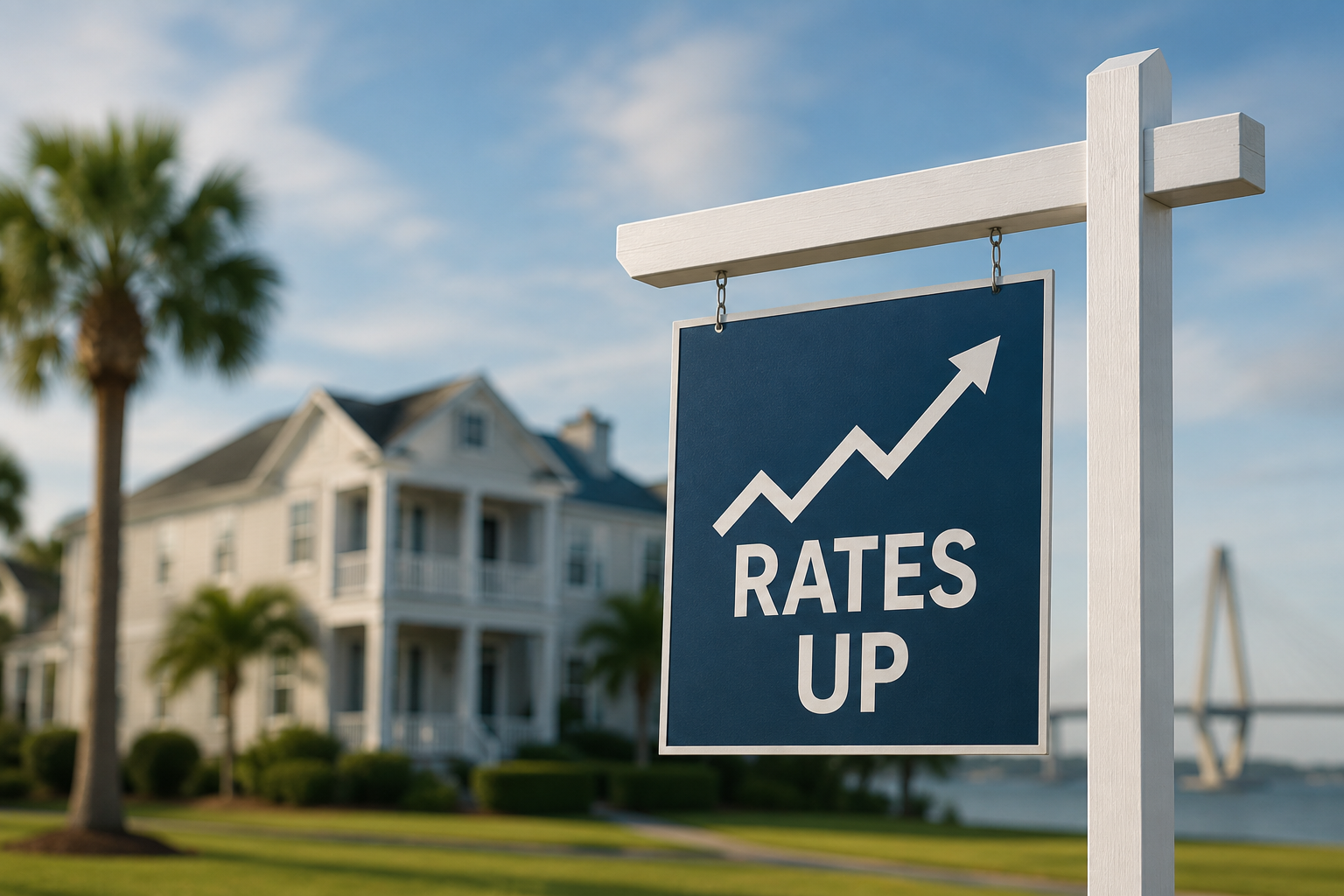
Higher borrowing costs haven’t stopped the market. They’re simply changing how buyers and sellers behave.
By Jennifer Jordan | Charleston Housing News
Mortgage rates have climbed to their highest level in nearly a year, delivering another reminder that the housing market isn’t getting the quick relief many buyers were hoping for.
According to Freddie Mac, the average 30-year fixed mortgage reached 6.58% this week, while many daily lender quotes briefly approached 6.85%, levels not seen in roughly eleven months.
For buyers across the Charleston region, that’s unwelcome news.
But it doesn’t tell the entire story.
Something more interesting is beginning to happen beneath the headlines.
The Problem Isn’t Just Mortgage Rates
Mortgage rates don’t move in a vacuum.
The latest increase has been fueled in part by rising oil prices and growing concerns that the conflict involving Iran could keep energy prices elevated. When energy costs rise, investors become more concerned about future inflation.
Higher inflation expectations generally push bond yields higher.
Mortgage rates tend to follow.
The result is a housing market that continues waiting for the interest rate relief many economists expected earlier this year—but which continues to be delayed.
For Charleston buyers, that means affordability remains under pressure.
Charleston Is Seeing Three Different Markets
National headlines often suggest the housing market is either improving or deteriorating.
Neither description accurately reflects what’s happening in the Lowcountry.
Charleston has become a collection of several very different housing markets operating at the same time.
Luxury waterfront communities, historic Charleston neighborhoods, and many parts of Mount Pleasant continue to see relatively healthy demand because inventory remains limited.
Meanwhile, many suburban neighborhoods stretching through Summerville, Nexton, Cane Bay, Moncks Corner and portions of Berkeley County are experiencing significantly more competition among sellers.
Those sellers are beginning to face something they haven’t experienced in several years:
Buyers with choices.
More Inventory Is Changing Buyer Psychology
Nationally, active inventory has increased approximately 4.2% compared to one year ago.
Charleston has experienced an even more noticeable increase in many price ranges.
More listings mean buyers no longer feel forced into making decisions after one showing.
They’re comparing homes.
They’re negotiating repairs.
They’re asking for closing cost assistance.
They’re waiting to see whether another property comes available next week.
That shift changes everything.
The market hasn’t become a buyer’s market across the board.
But it has become a market where buyers once again have leverage in many communities.
Higher Rates Are No Longer Stopping Everyone
One surprising trend emerging nationally is that mortgage purchase applications have begun increasing again despite higher rates.
Why?
Because life keeps moving.
Families continue relocating for jobs.
Children continue arriving.
Divorces happen.
Retirements happen.
People inherit homes.
Companies transfer employees.
Eventually, buyers stop waiting for the perfect interest rate and purchase the home that fits their lives today.
Many buyers are also recognizing something important:
Interest rates can usually be refinanced.
Buying the right house when inventory improves is often harder than refinancing a loan later.
Sellers Must Adjust to a New Reality
Many Charleston homeowners continue pricing their homes as though it were still 2022.
That strategy is becoming increasingly risky.
Today’s buyers have more information, more options and far less urgency.
Properties that miss the market by even a small percentage often sit longer, accumulate price reductions and ultimately sell for less than if they had been priced correctly from the beginning.
In neighborhoods where builders continue delivering new construction, resale homes face even greater competition.
Sellers are no longer competing only against their neighbors.
They’re competing against brand-new homes with builder incentives, mortgage rate buy-downs and closing cost assistance.
What This Means for Charleston
The Charleston region remains fundamentally stronger than many housing markets across the country.
Population growth continues.
Employment remains healthy.
Demand for coastal real estate hasn’t disappeared.
But the market has unquestionably become more balanced.
That’s healthier over the long run.
It rewards realistic pricing.
It rewards homes that show well.
And it rewards buyers who are prepared to act when the right opportunity appears.
The era of almost every listing receiving multiple offers within days is largely behind us.
The next chapter of Charleston real estate will likely belong to informed buyers, disciplined sellers and experienced agents who understand that strategy—not luck—is becoming the biggest advantage in today’s market.
Leave a Reply