
Proposed Income Increase Reflects Today’s Housing Market, Not Yesterday’s
By Jennifer Jordan | Charleston Housing News
While Highway 41 dominated much of Tuesday night’s Mount Pleasant Town Council meeting, another discussion could have significant implications for the future of workforce housing in one of South Carolina’s most expensive housing markets.
Town Council heard testimony supporting a proposal to increase the income eligibility limit for homeowners at Gregorie Ferry Towns, Mount Pleasant’s first workforce housing community, from 80% of the Area Median Income (AMI) to 150% AMI. Supporters say the change is necessary because the original income restrictions no longer reflect today’s housing market or the financial realities facing working families.
The proposal has already received attention during the town’s planning process and is now moving through Town Council for consideration.
A Different Kind of Housing
Gregorie Ferry Towns was created to address what housing experts often call the “missing middle”—working professionals who earn too much to qualify for traditional affordable housing but not enough to comfortably purchase market-rate homes in Mount Pleasant.
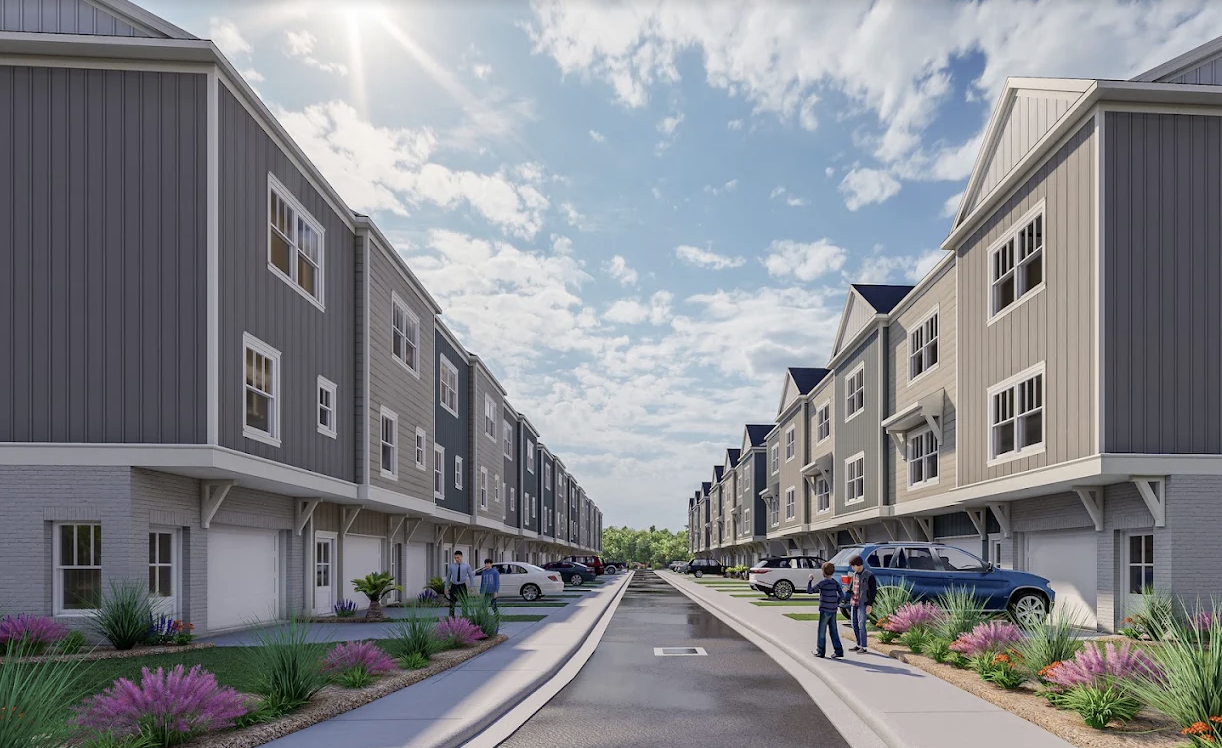
Developed through a partnership focused on attainable homeownership, the neighborhood was designed to give teachers, firefighters, nurses, police officers, municipal employees, hospitality workers, and other essential professionals an opportunity to own a home in the community they serve. The project includes 36 deed-restricted townhomes intended to remain workforce housing for decades.
Unlike subsidized affordable housing, Gregorie Ferry was created as attainable workforce housing, allowing buyers to build equity while keeping homes available to future working families.
Why the Rules Are Changing
When Gregorie Ferry was originally approved, buyers generally had to earn no more than 80% of Area Median Income to qualify.
Supporters now argue that those income limits have become outdated.
Mount Pleasant home prices have risen substantially over the past several years.
Mortgage interest rates remain significantly higher than during the community’s initial sales.
Insurance premiums, taxes, and homeowners association costs have also increased.
Residents told council that many prospective buyers now earn slightly above the existing income cap while still being unable to afford a typical Mount Pleasant home.
Sellers Are Feeling the Effects
One of the strongest arguments presented Tuesday involved current homeowners trying to sell.
Residents explained that the 80% income restriction dramatically limits the pool of qualified buyers, making it increasingly difficult to sell a home and move to another stage of life.
Benjamin Brown, president of the Gregorie Ferry homeowners association and a town employee, described one homeowner whose property remained on the market for more than a year before being rented. After the tenant stopped paying rent, the owner was forced through the eviction process while continuing to carry housing expenses on two properties.
Brown also shared his own experience of relocating to South Carolina with limited financial resources before building a career in public service.
He emphasized that Gregorie Ferry is serving the workforce exactly as intended but that today’s market requires updated eligibility standards.
“It is not affordable housing. It is attainable housing,” Brown told council.
Why 150% AMI?
Supporters are not asking the town to eliminate income restrictions altogether.
Instead, they argue Gregorie Ferry should be updated to match more recent workforce housing developments that recognize how dramatically the housing market has changed.
Under the proposal, households earning up to 150% of Area Median Income would become eligible to purchase homes, significantly expanding the number of qualified buyers while still reserving the neighborhood for middle-income workers rather than unrestricted market-rate purchasers. Similar income thresholds are already being used by local workforce housing initiatives.
Why This Matters
The discussion extends well beyond one neighborhood.
Communities across the country are reevaluating workforce housing programs created before the post-pandemic housing boom.
If income caps remain too restrictive while home prices continue climbing, programs designed to help working families can become increasingly difficult to sustain.
Current homeowners may struggle to sell.
Future buyers may no longer qualify despite earning solid middle-class incomes.
And workforce housing developments can gradually stop serving their intended purpose.
Supporters argue raising the income cap preserves—not weakens—the original mission by adapting to today’s economic conditions.
A Broader Housing Challenge
Mount Pleasant continues to face one of the region’s most difficult housing affordability challenges.
The town has long recognized that teachers, first responders, healthcare professionals, and other essential workers often struggle to live in the communities where they work. That challenge helped inspire the creation of Gregorie Ferry Towns and similar workforce housing initiatives.
As housing prices continue to outpace wage growth, local governments increasingly face difficult questions about how to preserve attainable homeownership without undermining the long-term affordability of these developments.
What’s Next?
Town Council will ultimately decide whether to amend the planned development and increase the income eligibility limit from 80% to 150% of Area Median Income.
Although the proposal centers on a single percentage, the decision could influence how Mount Pleasant approaches future workforce housing projects and whether existing developments remain viable in a rapidly changing real estate market.
For many who spoke Tuesday night, the issue was not abandoning the town’s workforce housing mission.
It was ensuring that mission continues to work in today’s housing market—not the one that existed when Gregorie Ferry Towns was first envisioned.
Leave a Reply