
By Jennifer Jordan | Charleston Housing News
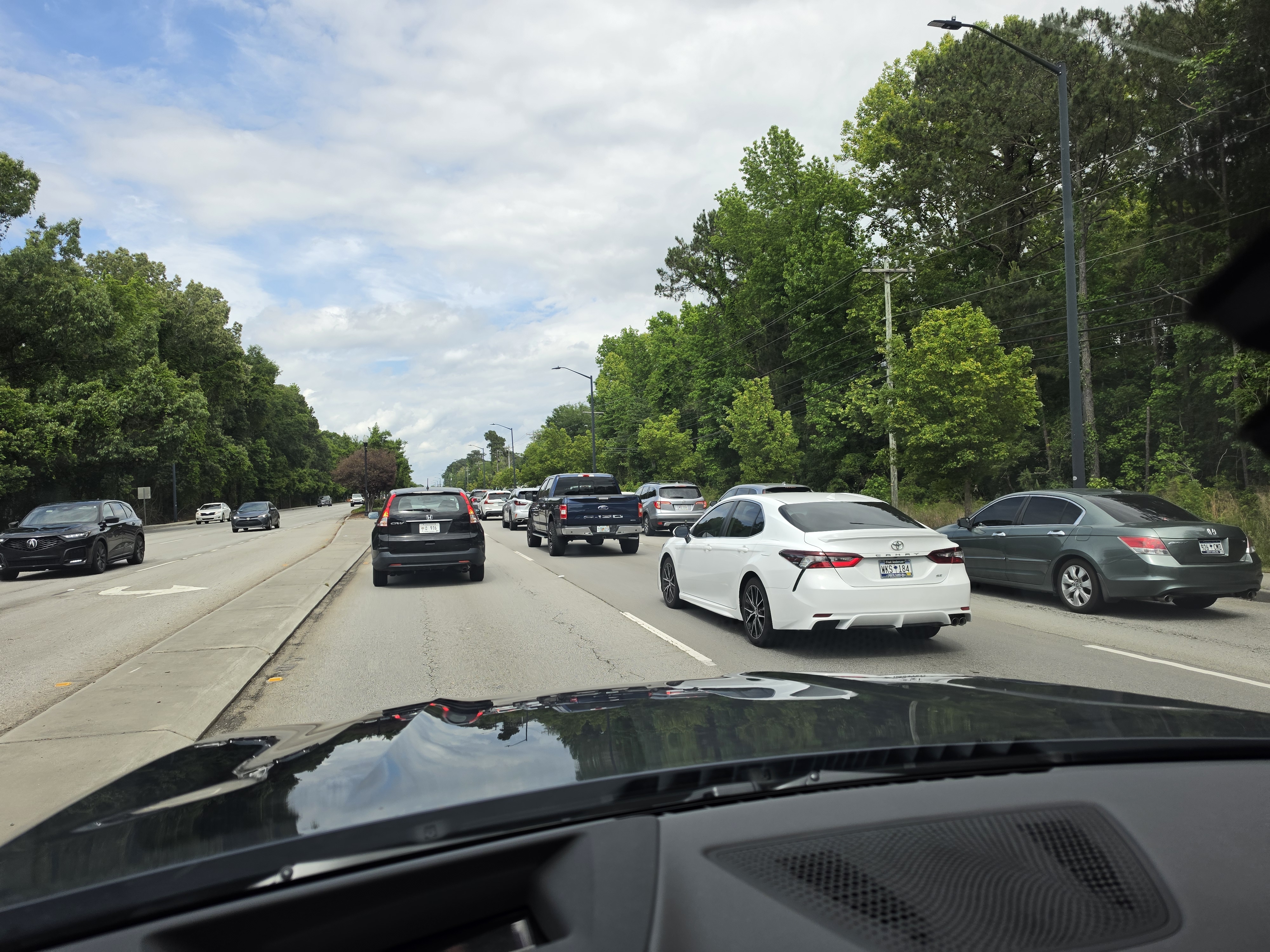
Anyone who has driven Highway 41 during rush hour already knows the problem.
Congestion has become a daily reality for thousands of Mount Pleasant residents, particularly those living in Dunes West, Park West, Rivertowne, Carolina Park, and communities farther north. As new neighborhoods continue to develop throughout Charleston County, one question keeps resurfacing:
How should Mount Pleasant solve one of its most persistent traffic bottlenecks?
That question returns to Town Council on July 14, when members are expected to consider whether to grant municipal consent for permits associated with the proposed Laurel Hill Parkway, a roadway that would create an additional north-south connection through portions of Laurel Hill County Park.
The proposal has generated passionate opinions on both sides. Supporters believe another transportation route could relieve congestion and improve regional mobility. Opponents argue the project spends millions of taxpayer dollars while permanently impacting protected public land without solving Highway 41’s underlying capacity problem.
Among the most outspoken critics is Mount Pleasant Town Councilman John Iacofano, who recently urged residents to become involved before the upcoming vote.
In a public statement, Iacofano questioned whether constructing what he describes as a parallel transportation corridor makes sense if long-term planning already recognizes widening Highway 41 as the eventual solution.
“If we know the long-term transportation solution is improving Highway 41 to four continuous lanes, why are we considering spending what I’ve heard could be upwards of $30 million to build a new roadway through protected public parkland?”
He also argues that roads such as Dunes West Boulevard and Park West Boulevard were designed to serve residential neighborhoods rather than function as regional traffic arteries.
Whether residents agree with his position or not, his comments highlight a broader debate that extends far beyond one roadway.
Growth Has Changed the Conversation
When many of Mount Pleasant’s master-planned communities were originally developed, traffic volumes looked dramatically different than they do today.
Since then, thousands of additional homes have been built throughout northern Mount Pleasant, Charleston County, and neighboring Berkeley County. Population growth has steadily increased pressure on Highway 41, Highway 17, Clements Ferry Road, and Interstate 526, creating congestion that many residents now experience every day.
Transportation planners face a difficult balancing act.
Expanding road capacity often improves mobility but can also affect wetlands, parks, established neighborhoods, and environmentally sensitive areas. Conversely, preserving open space without addressing transportation needs can leave communities struggling with worsening congestion as additional residents arrive.
More Than a Traffic Debate
For homeowners, transportation decisions often have consequences that extend beyond commute times.
Road improvements can influence development patterns, neighborhood desirability, commercial investment, and ultimately property values. They also shape where future housing is built and how quickly surrounding areas continue growing.
Communities with improving infrastructure frequently become more attractive to buyers, while persistent congestion can eventually influence purchasing decisions as families weigh commute times alongside schools, amenities, and neighborhood character.
That reality makes projects like Highway 41 more than engineering discussions.
They become real estate issues.
A Question of Priorities
The debate also reflects two fundamentally different philosophies about long-term planning.
One approach argues that preserving public parkland should remain a priority and that available funding should focus first on fully improving Highway 41 itself.
The other suggests that additional roadway connections may be necessary to accommodate future growth while reducing pressure on existing roads.
Neither position ignores the traffic problem.
They simply disagree about the best long-term investment.
What Happens Next?
The Town Council’s decision won’t immediately solve congestion regardless of which direction members vote.
Highway 41 remains one of the Charleston region’s most challenging transportation corridors, and long-term improvements will likely require continued cooperation among Mount Pleasant, Charleston County, state transportation officials, environmental agencies, and nearby communities.
What happens on July 14, however, could significantly influence how that conversation moves forward.
Why Homeowners Should Pay Attention
Transportation projects often shape communities for generations.
The roads built—or not built—today influence future development, property values, commuting patterns, environmental preservation, and quality of life long after today’s debates have ended.
For buyers considering northern Mount Pleasant, Dunes West, Park West, Rivertowne, Carolina Park, and surrounding communities, the outcome of this discussion may become one of the more significant planning decisions affecting the area’s future.
Whether Laurel Hill Parkway ultimately moves forward or not, one thing is clear:
Mount Pleasant’s traffic challenges aren’t going away.
The real question is whether this proposal represents the right solution—or simply the next chapter in a much longer conversation about how one of America’s fastest-growing communities balances growth, infrastructure, environmental stewardship, and the quality of life that attracted so many residents in the first place.
Leave a Reply