
By Jennifer Jordan | Charleston Housing News
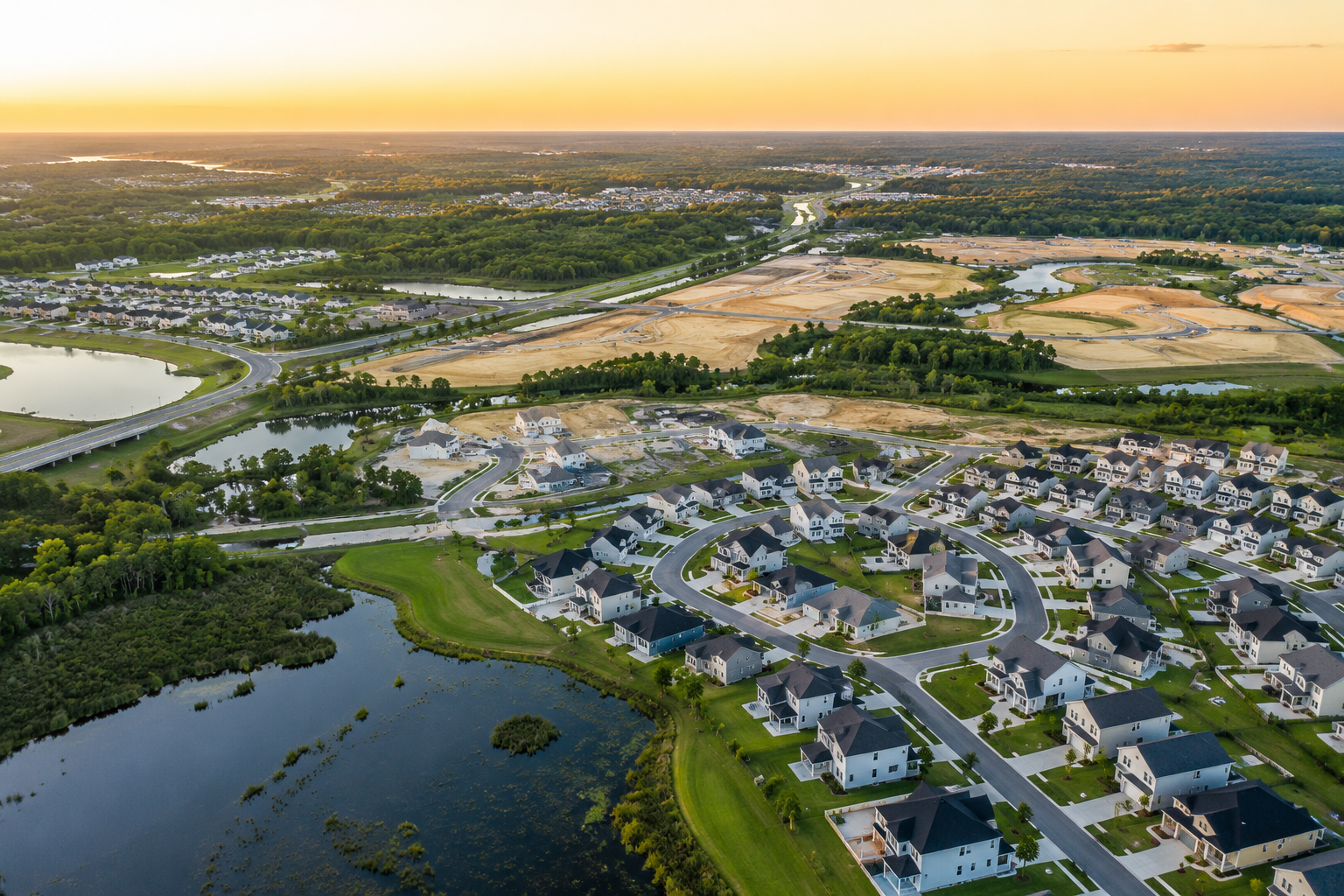
One of the largest residential land acquisitions in the Charleston area this year is set to bring nearly 800 new homes to the rapidly expanding Point Hope community, reinforcing the Clements Ferry corridor’s role as one of the region’s fastest-growing development areas.
Mount Pleasant-based TBC Development has acquired approximately 92 acres within the Point Hope master-planned community for $24 million and announced plans for a diverse, multi-generational neighborhood that will include 778 residences serving buyers across multiple stages of life.
Rather than focusing on a single housing product, the proposed community will feature a mix of traditional single-family homes, attached residences, townhomes, workforce housing, age-restricted housing for active adults, and senior living options including assisted living and memory care.
The project, known as Restore II, reflects a growing trend among developers who are designing neighborhoods intended to accommodate residents throughout every stage of life instead of building communities aimed at just one buyer demographic.
Point Hope Continues Its Long-Term Buildout
While this latest acquisition is significant on its own, it’s only one piece of a much larger vision for the Cainhoy Peninsula.
Point Hope has been planned for decades as one of the largest master-planned communities in South Carolina. Over the coming years, thousands of additional homes, commercial development, schools, parks, and employment opportunities are expected to transform what was once largely undeveloped land into one of the Charleston region’s newest population centers.
As additional neighborhoods are completed, Point Hope is expected to become an increasingly important residential alternative for buyers seeking newer homes with convenient access to both Mount Pleasant and downtown Charleston.
Housing Diversity Addresses Changing Buyer Needs
One of the most notable aspects of the Restore II proposal is its emphasis on housing diversity.
Today’s housing market looks much different than it did even ten years ago.
Young professionals are searching for attainable starter homes.
Families need larger single-family residences.
Many empty nesters want to downsize without leaving the Charleston area.
At the same time, demand continues growing for active adult communities, assisted living, and memory care as South Carolina’s population ages.
Rather than separating these housing types into different developments across the region, Restore II is designed to integrate multiple generations into one community.
That approach has become increasingly popular among national developers as demographics continue to evolve.
Major Builders Join the Project
Several well-known homebuilding companies are expected to participate in the community.
David Weekley Homes will construct a variety of single-family and attached homes, while Mungo Homes plans to build additional attached residences designed to appeal to workforce buyers as well as many 55-and-over homeowners.
The senior housing components will be developed in partnership with Panther Residential Management, creating options that allow residents to remain within the same community as their housing needs change over time.
Growth Continues Along Clements Ferry Road
The announcement also highlights how dramatically the Clements Ferry corridor has changed over the past decade.
What was once primarily rural land has become one of the fastest-growing sections of the Charleston metropolitan area.
New schools, medical facilities, retail centers, apartment communities, and residential neighborhoods continue to reshape the corridor, attracting buyers who want newer construction while remaining within commuting distance of Mount Pleasant, Daniel Island, North Charleston, and downtown Charleston.
As development continues, transportation and infrastructure improvements will remain critical to supporting the area’s long-term growth.
Traffic along Clements Ferry Road has increased substantially in recent years, making roadway improvements and future transportation planning an important part of accommodating additional residential development.
What It Means for Charleston Buyers
For prospective homebuyers, projects like Restore II help expand housing choices in a market where inventory remains limited in many established neighborhoods.
Offering multiple housing types within one master-planned community also reflects how builders are responding to today’s affordability challenges by creating options at a variety of price points rather than focusing exclusively on large single-family homes.
As Charleston continues to experience steady population growth, developments that combine workforce housing, family homes, active adult living, and senior care may become increasingly common throughout the Lowcountry.
The Bottom Line
The acquisition of 92 acres for Restore II represents more than another subdivision.
It illustrates how Charleston’s next generation of communities is evolving to meet changing demographics, affordability concerns, and long-term housing demand.
While questions remain about infrastructure and transportation improvements needed to support continued growth along the Clements Ferry corridor, the investment also signals continued confidence in Charleston’s long-term housing market and the ongoing demand for thoughtfully planned communities that serve residents throughout every stage of life.
Leave a Reply