
By Jennifer Jordan | Charleston Housing News
For the first time in several years, sellers across much of the Charleston region are discovering that simply putting a home on the market is no longer enough.
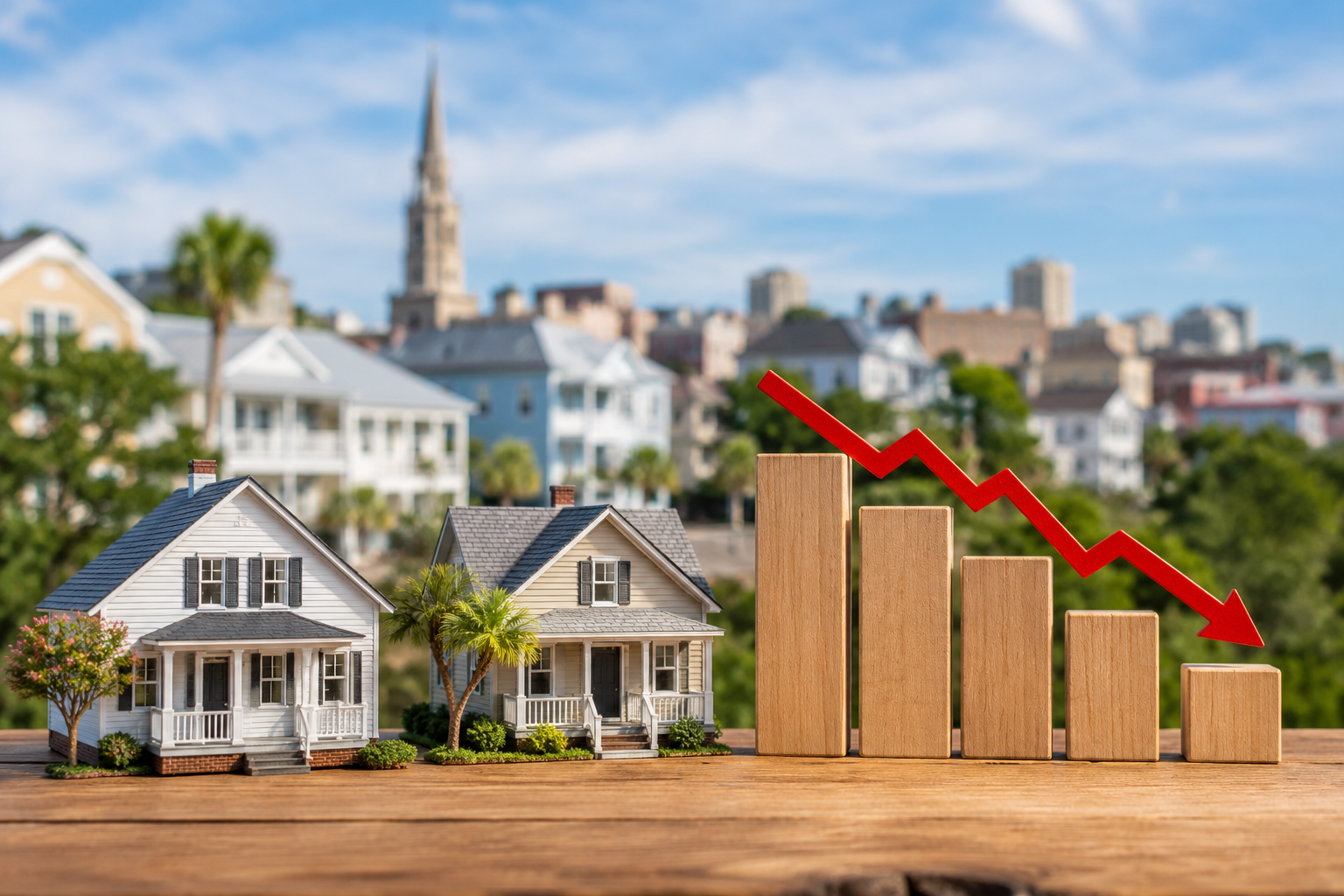
Nationally, Realtor.com reports that the median U.S. asking price fell 2.5% year-over-year in June to $430,000—the largest annual decline since the company began tracking the data in 2017. While that doesn’t mean home values are collapsing, it does signal something important: sellers are adjusting their expectations to meet a more selective buyer.
That same trend is becoming increasingly visible throughout the Charleston metro, although not every community is experiencing it equally.
Summerville Is Leading the Shift
If there is one area where buyers are gaining negotiating power the fastest, it’s Summerville.
Neighborhoods throughout Summerville, Cane Bay, Nexton, Carnes Crossroads, and other parts of Berkeley and Dorchester Counties have seen inventory build steadily throughout 2026. Buyers now have considerably more choices than they did just two years ago, and that competition is forcing many sellers to reduce prices before receiving an acceptable offer.
Homes that would have generated multiple offers in a single weekend during 2021 or 2022 may now spend several weeks—or even months—on the market if they are priced aggressively.
Many sellers are discovering that buyers simply move on to the next listing rather than negotiate with an overpriced home.
Charleston County Tells a Different Story
Charleston County remains considerably more stable.
While overall sales activity has slowed compared to the post-pandemic boom, many established neighborhoods continue to benefit from limited inventory, strong long-term demand, and desirable locations close to employment, beaches, and downtown Charleston.
Communities such as Mount Pleasant’s Old Village, portions of South Mount Pleasant, Daniel Island, Isle of Palms, Sullivan’s Island, and many waterfront neighborhoods continue to attract well-qualified buyers despite elevated mortgage rates.
That doesn’t mean every property sells quickly.
Homes that are dated, over-improved for their neighborhood, or priced based on last year’s comparable sales are taking longer to attract offers. The difference today is that buyers have options—and they’re willing to wait for the right value.
Luxury Remains Surprisingly Resilient
The Charleston luxury market has also held up better than many expected.
Many high-end buyers are purchasing with substantial equity or cash, making them less sensitive to mortgage interest rates. Waterfront homes, historic downtown properties, and unique luxury estates continue to attract relocation buyers from the Northeast, California, Florida, and Texas.
However, even luxury buyers have become more disciplined.
The era of paying virtually any price simply to secure a property has largely faded. Today’s affluent buyers are studying comparable sales, evaluating days on market, and negotiating more aggressively than they were just a few years ago.
Pricing Is Once Again the Most Important Marketing Tool
Perhaps the biggest change in today’s market is that pricing has regained its role as the single most important factor determining how quickly a home sells.
During the pandemic frenzy, nearly any reasonably maintained home would attract significant interest regardless of pricing strategy.
Today’s environment is much different.
Buyers compare every new listing with dozens of competing homes available online. If one property appears overpriced, they simply schedule the next showing.
The first two weeks on the market now matter more than ever. Sellers who price correctly from day one often generate the strongest traffic and best negotiating position. Those who “test the market” with an aspirational asking price frequently find themselves making multiple price reductions while their listing grows stale.
Buyers Finally Have Choices Again
For buyers, this changing landscape represents welcome news.
More inventory means less pressure to make immediate decisions, more opportunities to negotiate repairs or closing costs, and a greater likelihood of finding the right home without competing against ten other offers.
That doesn’t mean Charleston has become a buyer’s market everywhere.
Instead, the region is becoming increasingly localized.
Some neighborhoods still strongly favor sellers. Others have shifted toward balance. And in portions of Summerville and surrounding communities, buyers are beginning to hold considerably more negotiating power than they’ve enjoyed in years.
The Bottom Line
Charleston’s housing market isn’t declining—it is normalizing.
The extraordinary conditions of 2021 and 2022 are giving way to a healthier market where pricing, presentation, condition, and location once again determine success.
For sellers, that means realistic expectations and strategic pricing have never been more important.
For buyers, it may finally feel like the market they’ve been waiting for.
Leave a Reply