
by Jennifer Jordan
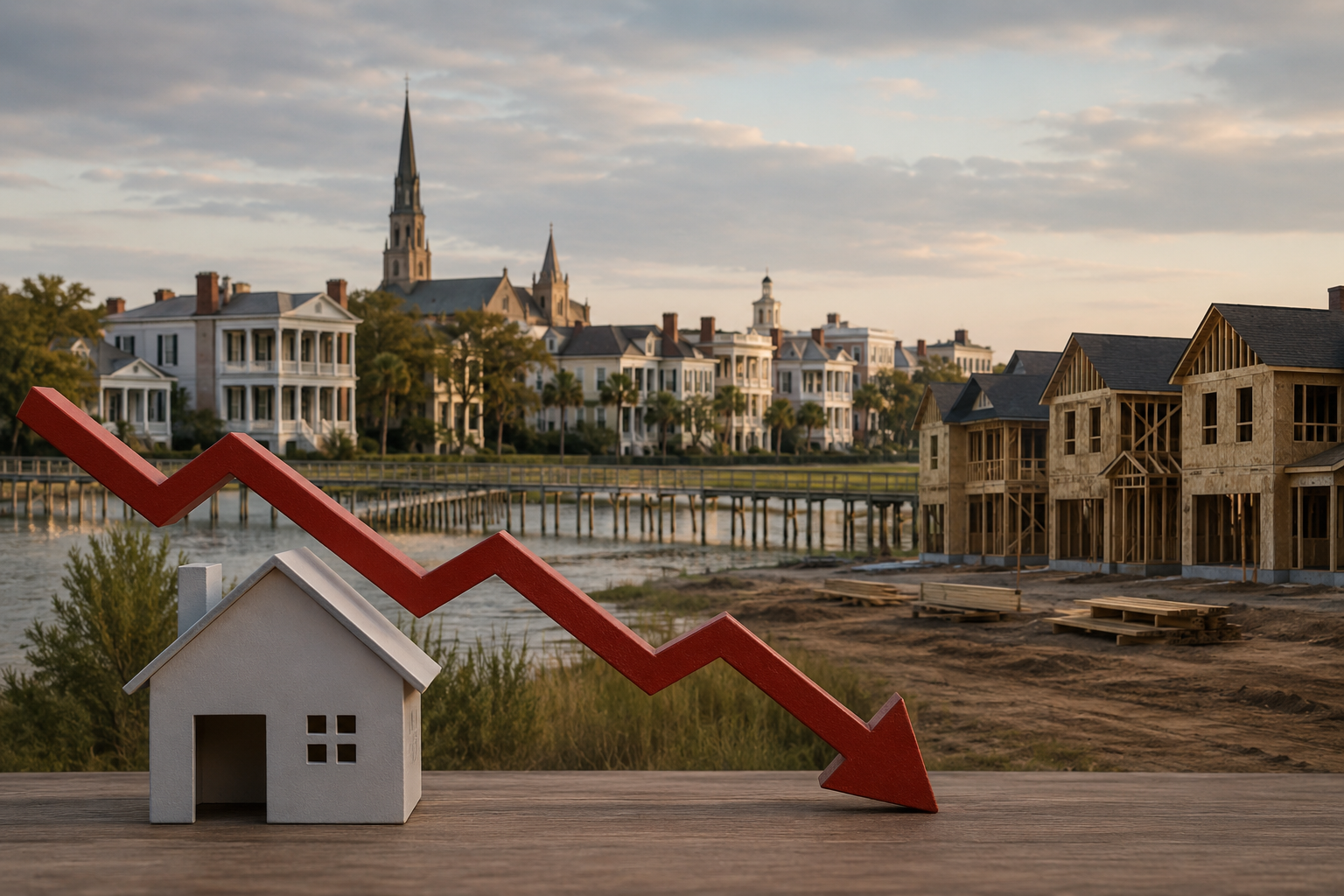
CHARLESTON, S.C. — A national slowdown in single-family home construction is beginning to echo through Charleston’s housing market, where higher inventory, longer marketing times, and a mild price decline are creating a more selective environment for buyers and sellers.
According to newly released federal data, U.S. single-family housing starts fell 9% in April to a seasonally adjusted annual rate of 930,000 units. Single-family permits, a forward-looking measure of future construction, also declined 2.6%. :contentReference[oaicite:0]{index=0} The U.S. Census Bureau reported the same 9% drop in April single-family starts, while total privately owned housing starts slipped 2.8%. :contentReference[oaicite:1]{index=1}
Charleston is not seeing a collapse. But it is seeing a shift.
Local MLS data shows the median sales price across the Charleston Trident market fell to $433,000 in April 2026, down 1.6% from $440,000 a year earlier. Average sales price also slipped 1.7%, from $664,615 to $653,555. :contentReference[oaicite:2]{index=2}
That is a mild decline, not a crash. But it matters because Charleston has spent years operating in a market where sellers expected appreciation almost by default.
Inventory is part of the story. The Charleston market had 5,342 homes for sale at the end of April, up 3% from the prior year and dramatically higher than the tight inventory conditions that defined the pandemic-era boom. Months supply stood at 3.4 months, still below a true buyer’s market but much healthier than the shortage-driven market of recent years. :contentReference[oaicite:3]{index=3}
Homes are also taking longer to sell. Average days on market reached 51 days in April, up from 47 days a year earlier. Sellers received an average of 96.3% of original list price, down from 96.8% last April, showing that pricing discipline is becoming more important. :contentReference[oaicite:4]{index=4}
For builders, the pressure is especially clear. Elevated mortgage rates have reduced buyer urgency, while construction costs, insurance concerns, land prices, and affordability limits continue to squeeze the market. Nationally, Reuters reported that high mortgage rates, builder inventory, and cost pressures are weighing on new construction activity. :contentReference[oaicite:5]{index=5}
In Charleston, that dynamic plays out differently by submarket.
Mount Pleasant, Daniel Island, Sullivan’s Island, Isle of Palms, and historic Charleston remain supported by wealth, lifestyle demand, and limited land. But even in those stronger areas, buyers are more selective. Overpriced homes, dated finishes, weak photography, or poorly positioned listings are sitting longer.
In outer growth corridors such as Summerville, Goose Creek, Moncks Corner, Cane Bay, Nexton, and parts of Johns Island, the competition from newer inventory is more obvious. Builders have more tools than individual sellers: rate buydowns, closing cost incentives, design credits, and quick-move-in discounts. That puts pressure on resale sellers who are trying to compete without adjusting price or presentation.
The broader takeaway is simple: Charleston remains desirable, but it is no longer forgiving.
The market is not collapsing. Pending sales were actually up sharply in April, and closed sales rose 2.6% year over year. :contentReference[oaicite:6]{index=6} But the days of casual pricing, minimal preparation, and automatic appreciation are fading.
For buyers, this creates opportunity. There is more inventory, more room to negotiate, and less pressure to waive protections.
For sellers, the message is sharper: price correctly, prepare the home, and market it with precision. In today’s Charleston market, the best homes still sell. The average ones need a strategy.
Leave a Reply