
By Jennifer Jordan | Charleston Housing News
Charleston officials say momentum is building again around one of the city’s most ambitious housing initiatives in decades, but major questions still remain about how — and when — key redevelopment projects on the peninsula will move forward.
City leaders, housing officials, and development partners are signaling renewed cooperation surrounding Charleston’s long-term affordable housing goals, particularly plans involving aging public housing communities on the upper peninsula.
At the center of the discussions is Mayor William Cogswell’s broader “Project 3500” initiative — a city-backed effort aimed at significantly increasing affordable and workforce housing inventory throughout Charleston over the next several years.
The plan reflects a growing reality facing Charleston residents:
housing affordability has become one of the city’s defining economic and political challenges.
Charleston’s Housing Problem Continues to Intensify
As Charleston’s popularity has surged nationally, so have home prices and rents.
Over the past decade, strong migration, limited developable land, rising construction costs, and growing luxury demand have dramatically reshaped the peninsula and surrounding communities.
Many longtime residents now find themselves increasingly priced out of:
- Downtown Charleston
- Upper Peninsula neighborhoods
- Mount Pleasant
- James Island
- West Ashley
- Daniel Island
Even many middle-income workers — including teachers, nurses, hospitality employees, police officers, and city staff — struggle to find housing near where they work.
That pressure has intensified calls for more workforce and mixed-income housing developments across the city.
Upper Peninsula Redevelopment Remains Central
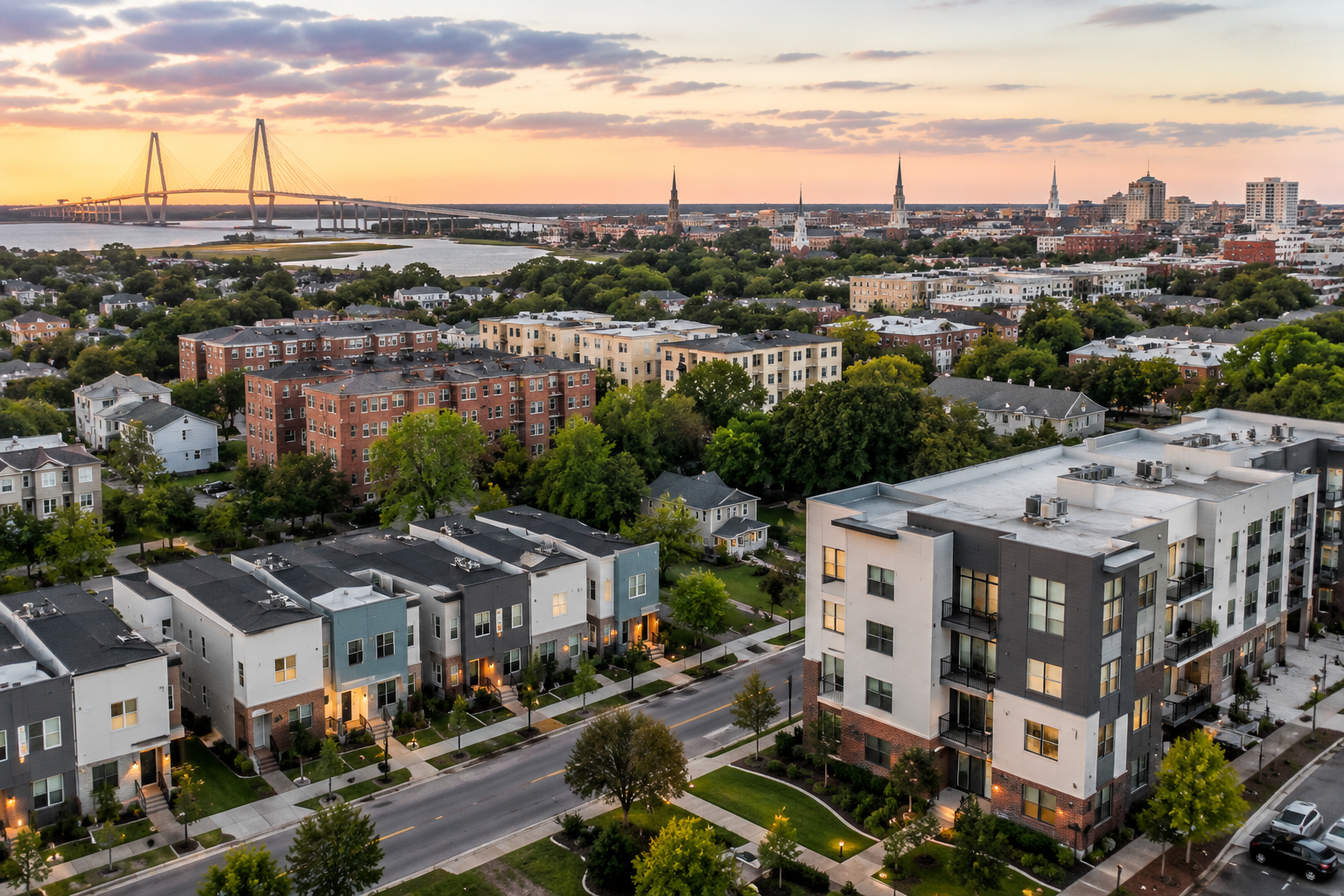
A major component of Charleston’s affordable housing strategy involves the future redevelopment of older Charleston Housing Authority properties on the upper peninsula.
Those sites represent some of the largest remaining redevelopment opportunities near downtown Charleston.
City leaders have emphasized the importance of transforming aging housing communities into larger mixed-income developments that could potentially include:
- Affordable housing units
- Workforce housing
- Market-rate apartments
- Retail and community spaces
- Improved infrastructure and green space
The vision aligns with broader urban planning trends seen in fast-growing cities across the Southeast where leaders are attempting to balance revitalization with long-term affordability preservation.
However, redevelopment discussions involving public housing are rarely simple.
Balancing Growth, Density, and Displacement Concerns
One of the biggest challenges Charleston faces is balancing redevelopment goals with resident trust and community stability.
Affordable housing redevelopment projects often create tension between:
- Increasing density
- Preserving affordability
- Avoiding resident displacement
- Expanding tax base growth
- Maintaining neighborhood identity
- Improving infrastructure capacity
On Charleston’s peninsula, those concerns become even more amplified because of:
- Limited land availability
- Flooding concerns
- Historic preservation restrictions
- Infrastructure limitations
- Rising land values
Residents and housing advocates continue closely watching how redevelopment plans evolve and what guarantees existing residents may receive regarding relocation, return rights, and long-term affordability protections.
Charleston’s Workforce Housing Challenge Is Becoming Regional
While much of the focus remains on downtown Charleston, affordability pressures are increasingly regional.
Many workers who once lived near the peninsula are now commuting from:
- Summerville
- Goose Creek
- Moncks Corner
- Ladson
- Cane Bay
- Outer West Ashley
- Johns Island
That outward migration has contributed to growing traffic congestion and infrastructure strain throughout the Lowcountry.
For many city leaders, expanding housing opportunities closer to Charleston’s economic core is viewed as critical to the region’s long-term sustainability.
The Politics of Affordable Housing Are Changing
Affordable housing discussions in Charleston have also become more politically significant as voters increasingly focus on:
- Cost of living
- Traffic
- Workforce retention
- Neighborhood change
- Gentrification concerns
- Infrastructure pressure
Unlike previous decades where affordability issues were often concentrated among lower-income households, today’s housing pressures are affecting many middle-income residents as well.
That shift is changing how city officials, developers, and voters approach redevelopment discussions.
No Final Deal Yet — But Momentum Appears to Be Returning
Although city officials and development partners are publicly expressing optimism, no finalized redevelopment agreement has been announced.
Discussions surrounding upper peninsula redevelopment remain ongoing, and timelines for major construction activity are still uncertain.
Still, the renewed cooperation between Charleston leadership, housing officials, and development stakeholders suggests the city recognizes the urgency of the housing issue.
And with land becoming increasingly scarce on the peninsula, the decisions made over the next several years could significantly shape Charleston’s future housing landscape for decades to come.
The Bottom Line
Charleston’s affordable housing debate is no longer a niche policy issue.
It has become one of the defining challenges shaping:
- Economic growth
- Workforce stability
- Transportation
- Development patterns
- Quality of life across the Lowcountry
As redevelopment conversations continue surrounding key upper peninsula housing sites, the broader question facing Charleston is becoming clearer:
How does one of America’s fastest-growing and most desirable coastal cities continue growing without pricing out the very people who keep the city functioning?
Leave a Reply