
By Jennifer Jordan for Charleston Housing News
As Charleston’s outer islands and rural corridors continue to feel pressure from rapid population growth, another piece of the Lowcountry landscape has been permanently shielded from development. The recent conservation of H&H Farm on Wadmalaw Island is more than just an environmental story — it’s a window into the increasingly intense battle between growth, preservation, housing demand, and the long-term identity of the Charleston region.
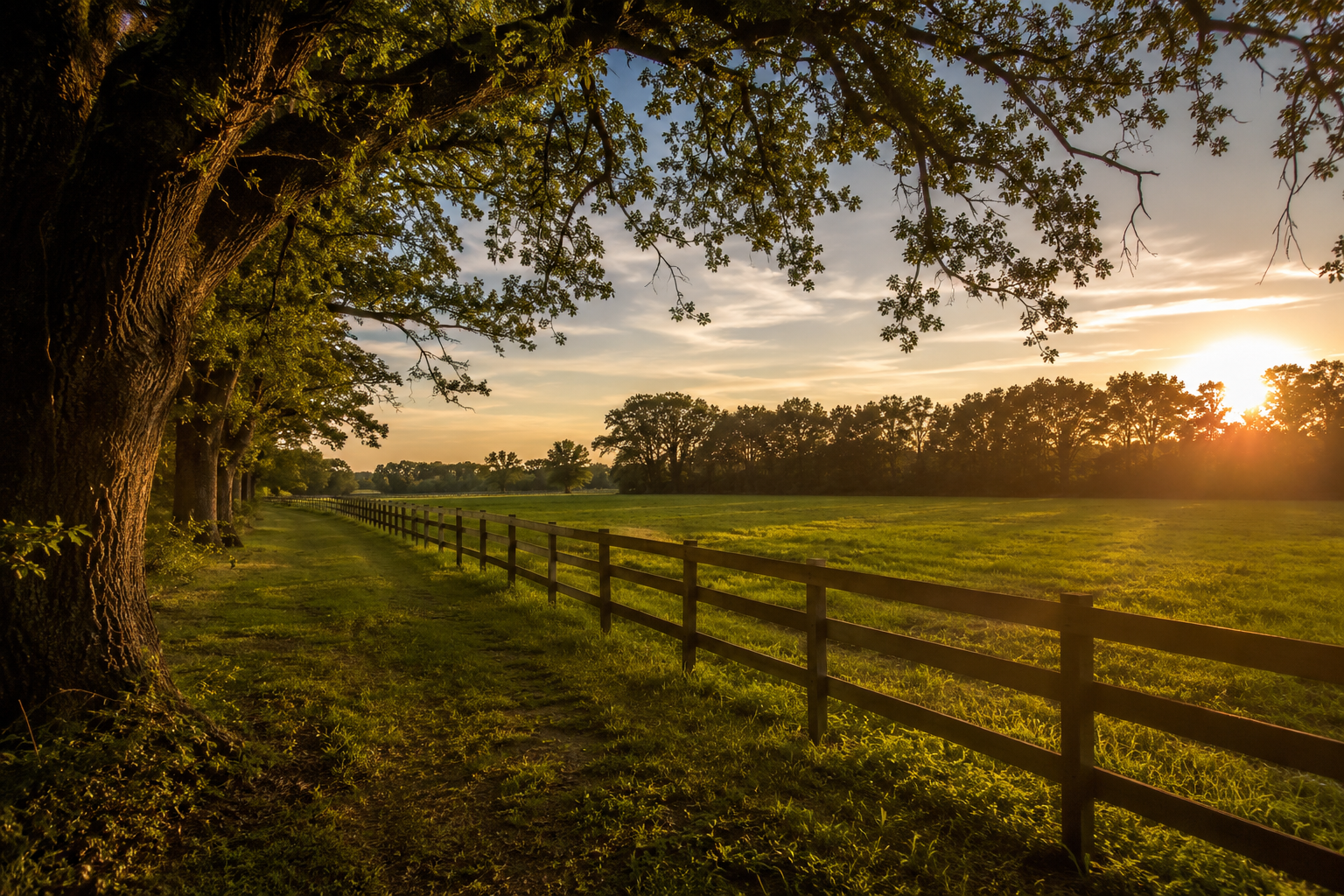
The 84-acre property, protected through a conservation easement with Lowcountry Land Trust, includes farmland, forested habitat, freshwater ponds, and one of the most iconic elements of historic Lowcountry landscapes: a grand oak allee. The land also provides habitat for migratory wildlife species and contains acreage classified as “farmland of statewide importance.”
But beyond the environmental significance, deals like this are quietly reshaping the future economics and housing patterns of the Charleston metro area.
The Charleston Region Is Running Out of Naturally Protected Land
For decades, Charleston’s growth radiated outward from the peninsula into Mount Pleasant, West Ashley, Summerville, Johns Island, and beyond. What once felt like endless undeveloped land across the Sea Islands and rural outskirts is now increasingly fragmented by subdivisions, apartment communities, road expansions, and commercial growth.
Wadmalaw Island has remained one of the few places in the Charleston region where large stretches of rural character still dominate the landscape. Unlike nearby Johns Island — where explosive development has transformed traffic patterns, infrastructure demand, and land prices — Wadmalaw has largely resisted dense suburbanization.
That resistance is not accidental.
Conservation easements and aggressive land preservation efforts have helped keep major portions of the island intact. Today, more than one-third of Wadmalaw Island’s total acreage is permanently protected. That level of preservation is almost unheard of in fast-growing coastal markets across the Southeast.
For many longtime Charleston-area residents, that preservation represents something deeper than environmental policy. It represents an attempt to hold onto the cultural and visual identity of the Lowcountry before it disappears entirely.
Conservation Is Also Becoming a Housing Market Issue
Charleston’s housing market is increasingly being shaped by a difficult balancing act: protecting natural landscapes while still accommodating population growth.
Every time acreage is permanently conserved, that land is effectively removed from future housing inventory calculations forever. Supporters argue that the long-term benefits outweigh the costs — preserving flood absorption areas, wildlife habitat, agriculture, and the tourism appeal that makes Charleston desirable in the first place.
Critics, however, increasingly point to a growing supply problem.
The Charleston region continues to attract wealth migration from the Northeast, Florida, California, and other high-cost markets. Population growth has remained strong despite higher interest rates and affordability pressures. Yet developable land in desirable coastal corridors is becoming scarcer every year.
That scarcity is one reason land prices across Johns Island, Wadmalaw, Awendaw, and parts of Mount Pleasant have surged dramatically over the past decade.
In many cases, conservation efforts indirectly increase surrounding property values by limiting future supply and preserving views, tree canopies, rural buffers, and open space. Homes adjacent to protected land often command premiums because buyers know the neighboring acreage is unlikely to become a dense subdivision later.
The paradox is that preservation simultaneously protects Charleston’s charm while also contributing to long-term scarcity that can push housing costs even higher.
Why Wadmalaw Is Different From Johns Island
The contrast between Wadmalaw Island and neighboring Johns Island has become increasingly striking.
Johns Island has emerged as one of the fastest-growing areas in South Carolina, with major residential expansion along Maybank Highway, River Road, and Bohicket corridors. Traffic congestion, infrastructure strain, drainage concerns, and debates over density have become central political issues.
Wadmalaw, by comparison, still feels distinctly rural.
Large farms, tree canopies, agricultural land, and conservation tracts continue to dominate much of the island’s landscape. The island’s lower density and protected acreage have preserved a slower-paced environment increasingly difficult to find anywhere near Charleston’s urban core.
That difference is becoming part of Wadmalaw’s economic value itself.
As Charleston grows more crowded, quieter areas with privacy, open land, and preserved natural beauty are becoming dramatically more desirable to affluent buyers seeking Lowcountry lifestyle properties, equestrian estates, family compounds, and recreational land.
Conservation Is Now Part of Charleston’s Climate Strategy
Land preservation is also becoming tied to flood mitigation and long-term coastal resilience.
Charleston’s rapid development has intensified concerns about stormwater runoff, drainage capacity, tidal flooding, and overdevelopment in environmentally sensitive areas. Preserving wetlands, forests, and permeable farmland can help absorb stormwater naturally in ways dense pavement and rooftops cannot.
In coastal markets increasingly vulnerable to flooding and rising insurance costs, conservation is no longer viewed strictly as environmental activism. It is becoming part of regional infrastructure strategy.
That reality is especially important in the Sea Islands, where marsh systems, wetlands, and undeveloped buffers help protect surrounding communities from erosion and water displacement during storms.
The Future of the Charleston Region May Depend on Balance
Charleston now finds itself at a crossroads familiar to many high-growth coastal markets.
The region wants economic growth, new housing, and continued investment. But it also risks losing the very landscapes and character that made people want to move here in the first place.
Projects like the preservation of H&H Farm reveal how difficult that balancing act has become.
For conservation advocates, the permanent protection of another Wadmalaw property is a victory for wildlife, agriculture, resilience, and Lowcountry heritage.
For housing economists and developers, it is another reminder that Charleston’s developable land inventory continues shrinking while demand keeps rising.
And for residents watching the region transform in real time, it raises an increasingly urgent question:
How much growth can the Lowcountry absorb before it stops feeling like the Lowcountry at all?
Leave a Reply