
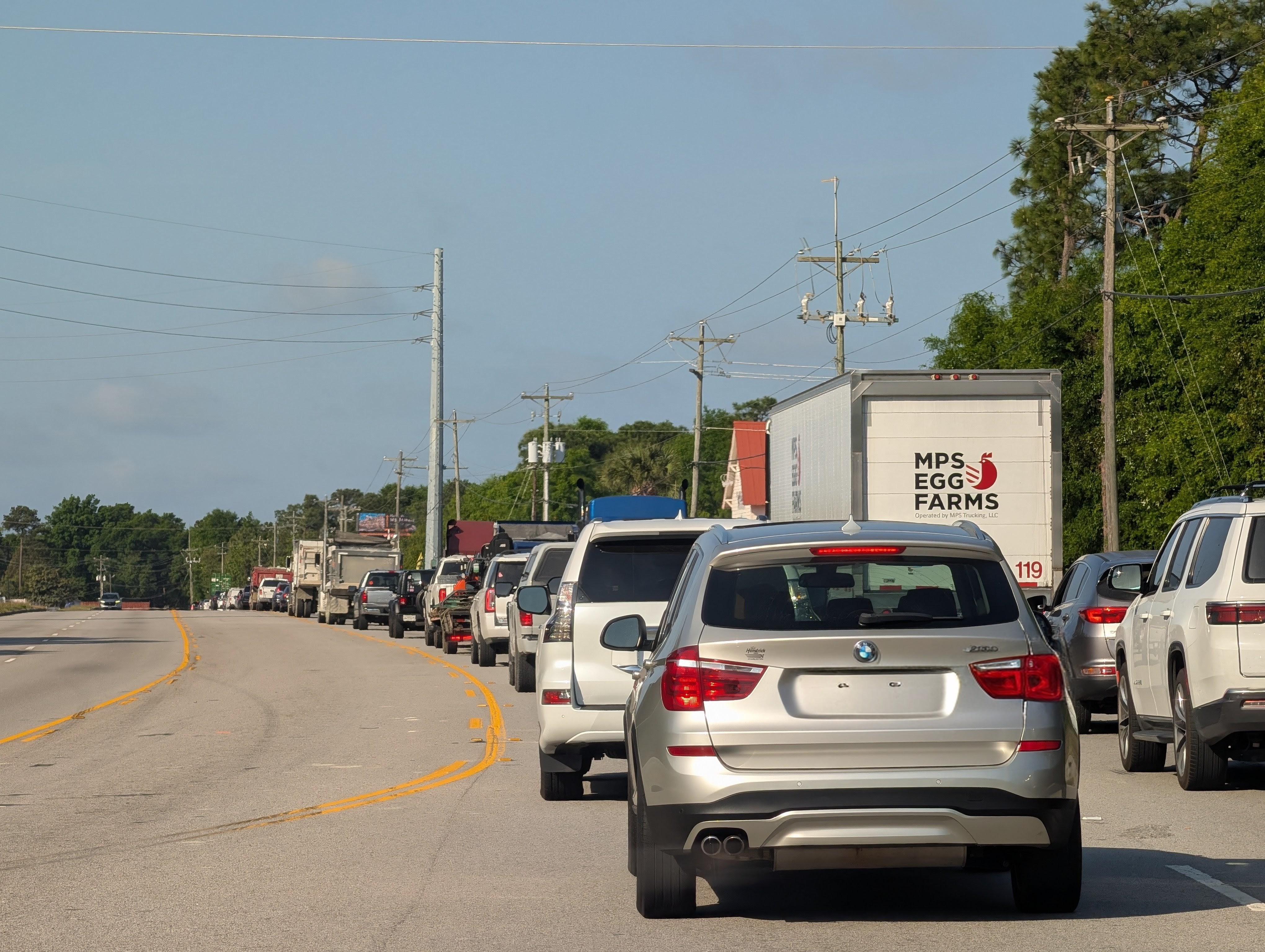
By Jennifer Jordan | Charleston Housing News
Charleston’s growth story has been one of the strongest in the country.
But increasingly, it’s being told through a more dangerous lens.
From Clements Ferry Road to downtown Charleston and even across the Ravenel Bridge, a troubling pattern is emerging: infrastructure is not keeping pace with development — and people are getting hurt.
Clements Ferry: A Road Trying to Be Two Things at Once
Along Clements Ferry Road, what was once a relatively quiet connector has transformed into one of the region’s most strained corridors.
New residential developments in Cainhoy, Point Hope, and surrounding areas are rapidly adding population — with projections pushing toward tens of thousands of additional residents in the coming years. At the same time, the road continues to serve as a major truck and logistics route tied to port activity.
That combination is proving volatile.
As recently reported by WCIV (Channel 4 News), residents say the mix of speeding traffic, heavy trucks, and increased population is creating a dangerous environment. One local driver described it plainly: “It’s just a lot all at once — you’ve got fast traffic, you’ve got trucks, and it’s hard to keep up with it.”
For families, the risk is not abstract. Another resident shared that her daughter was involved in a crash while attempting a left turn across multiple lanes — a maneuver many locals now describe as “taking your chances.”
And that’s the underlying issue.
Clements Ferry isn’t failing because of one problem — it’s failing because it’s being asked to serve incompatible uses without proper redesign.
The Data Tells a Bigger Story
While complete corridor-specific data is still being compiled, broader Charleston-area trends point in the same direction.
- South Carolina consistently ranks among the most dangerous states for roadway fatalities per capita
- The Charleston region has seen rising concerns around pedestrian safety, particularly in high-traffic corridors
- Urban streets like Broad Street have experienced repeated close calls and documented pedestrian incidents due to congestion, tourism traffic, and limited crossing infrastructure
- The Ravenel Bridge — while iconic — has also seen periodic closures and safety concerns tied to crashes, high speeds, and pedestrian/bicycle conflicts
This isn’t isolated.
It’s systemic.
When Growth Outpaces Planning
Charleston’s development pattern over the past decade has followed a familiar formula:
- Approve large-scale residential growth
- Allow density to increase rapidly
- Address infrastructure later
The problem is that “later” has arrived — and the roads aren’t ready.
Clements Ferry is a textbook example:
- Originally designed as a lower-capacity connector
- Now handling commuter traffic, residential access, and heavy freight
- Lacking sufficient turn lanes, signalization, and traffic-calming measures for its current use
And yet, development continues.
The Real Estate Angle No One Wants to Talk About
In real estate, location has always been everything.
But increasingly, access and safety are becoming just as important as the home itself.
Buyers looking in fast-growth corridors like:
- Cainhoy
- Point Hope
- Clements Ferry
- Parts of North Charleston
are beginning to ask different questions:
- How safe is the daily commute?
- How difficult is it to enter and exit the neighborhood?
- Will infrastructure improve — or get worse?
For some, these concerns are already influencing purchasing decisions.
And over time, they can impact:
- Property values
- Marketability
- Long-term desirability of entire submarkets
A Leadership Gap That’s Becoming Hard to Ignore
The most uncomfortable truth in all of this is that none of these outcomes are surprising.
Population growth projections have been known for years.
Development approvals have been intentional.
The risks — traffic, congestion, safety — were predictable.
And yet, infrastructure improvements have consistently lagged behind.
This creates a growing perception among residents that planning is reactive instead of proactive — and that safety is being addressed only after incidents occur, not before.
What Happens Next
If current trends continue, the pressure on Charleston’s roadways will only intensify.
Clements Ferry alone is expected to absorb massive population growth in the coming decade. Without significant intervention — road redesigns, traffic management, and enforcement — the risks will scale alongside it.
And this isn’t just about one road.
It’s about a broader question:
Can Charleston continue to grow at this pace without fundamentally rethinking how people move through the region?
Final Thought
Charleston remains one of the most desirable places to live in the country.
But desirability alone doesn’t make a market sustainable.
Safe roads, functional infrastructure, and thoughtful planning are not optional — they are foundational.
Because when growth and safety collide, it’s not just traffic that suffers.
It’s the people who call these neighborhoods home.
Leave a Reply