
by Jennifer Jordan
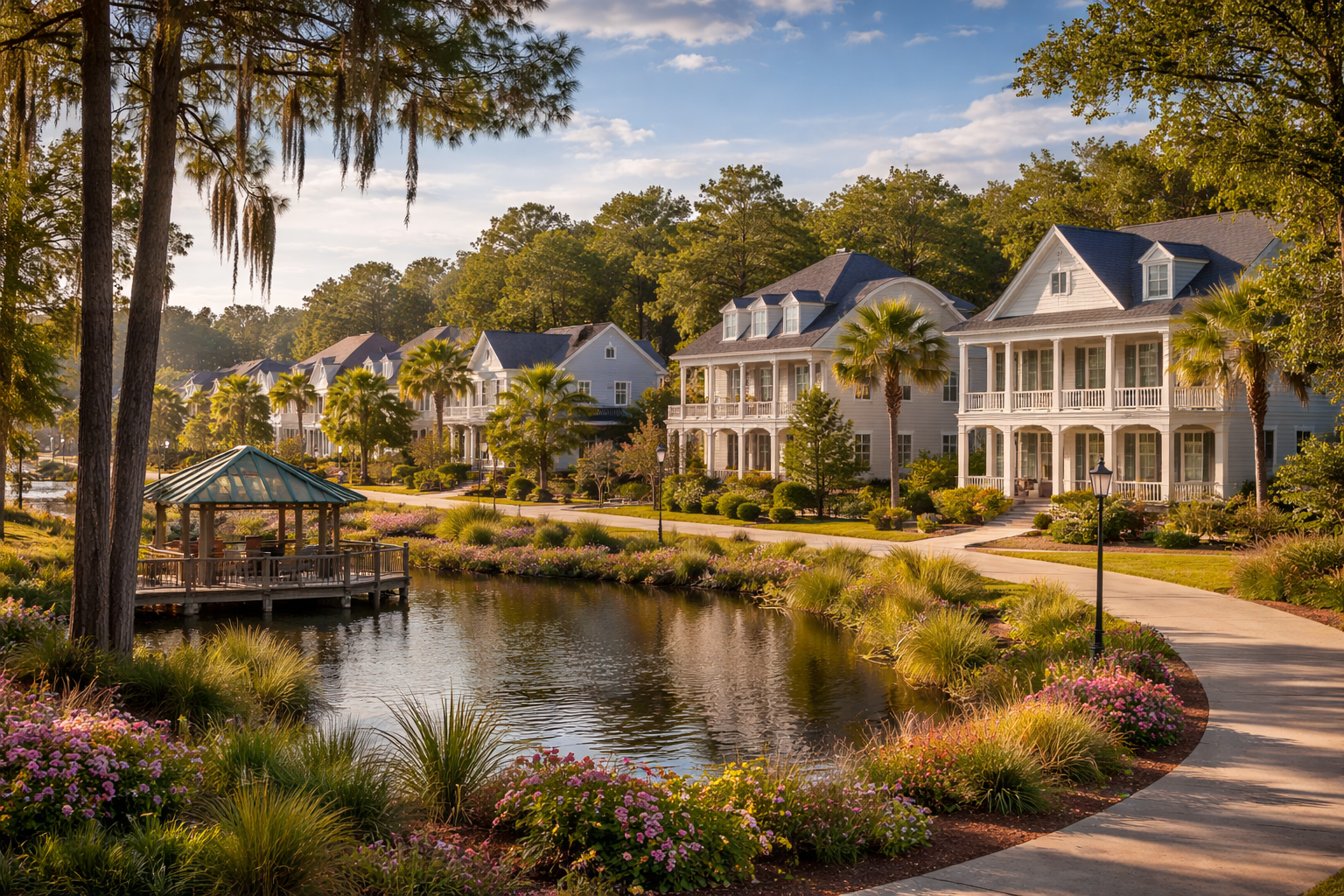
The housing market in Summerville, South Carolina has experienced significant growth over the past decade as buyers continue to search for more space, newer homes, and relative affordability compared with the urban core of the Charleston region. Located primarily in Dorchester and Berkeley counties, Summerville has evolved from a historic small town into one of the fastest-growing suburban housing markets in the Lowcountry.
Today, Summerville represents a major portion of new residential development in the Charleston metropolitan area.
Current Housing Market Conditions
As of early 2026, the Summerville housing market has shifted into a more balanced environment after several years of aggressive price growth during the pandemic-era housing boom.
Inventory levels have gradually increased, giving buyers more options than they had during the extremely tight supply conditions of 2020 through 2023. While homes are still selling, properties are generally taking longer to move compared with the rapid pace seen during peak demand years.
Median home prices in the broader Summerville area generally range from the mid-$300,000s to the mid-$400,000s, depending on neighborhood, home size, and proximity to key employment centers. Newer communities and larger homes can exceed these ranges, particularly in master-planned developments with extensive amenities.
Homes in the most desirable neighborhoods still sell quickly when priced competitively, but many listings now remain on the market longer than they would have just a few years ago. This has created more negotiating opportunities for buyers.
Inventory and Construction Activity
One of the defining characteristics of the Summerville housing market is its large volume of new construction. National homebuilders and regional developers have continued to expand communities throughout Dorchester and Berkeley counties.
Major residential developments have emerged along key corridors such as:
• Nexton
• Cane Bay Plantation
• Carnes Crossroads
• Summers Corner
• White Gables
• Pine Forest Country Club
These master-planned communities often include schools, parks, retail centers, and recreational amenities that appeal to relocating families.
In recent months, builders have also offered incentives such as closing cost assistance, interest rate buy-downs, and design upgrades in order to maintain sales momentum as mortgage rates remain elevated compared with historic lows seen earlier in the decade.
Demand Drivers
Several long-term factors continue to support housing demand in Summerville.
Population growth across the Charleston metropolitan area remains strong, driven by migration from higher-cost states, expanding job opportunities, and the region’s overall quality of life.
Major employers throughout the region—including aerospace, technology, logistics, healthcare, and advanced manufacturing—have helped fuel housing demand throughout Dorchester and Berkeley counties.
Summerville’s appeal also stems from its combination of suburban living and historic charm. The town’s downtown district features restaurants, shops, parks, and cultural events while still providing access to newer suburban communities nearby.
Market Outlook
While the market has cooled somewhat compared with the extraordinary pace of the pandemic housing boom, most real estate analysts expect steady long-term growth in the Summerville housing market.
The region continues to benefit from population migration into the Southeast, relatively affordable housing compared with many coastal markets, and expanding infrastructure throughout the Charleston metro area.
As inventory continues to increase, buyers may find that 2026 offers more opportunities to negotiate favorable purchase terms compared with recent years.
For sellers, competitive pricing and strong marketing remain key strategies in today’s more balanced market environment.
Overall, Summerville remains one of the most important residential growth centers in the Charleston region and is likely to continue attracting buyers looking for new homes, planned communities, and suburban lifestyle amenities in the Lowcountry.
Leave a Reply