By Jennifer Jordan | Charleston Housing News
CHARLESTON, SC — South Carolina remains one of the fastest-growing states in the country, but new data suggests the pace—and the pattern—of that growth is beginning to change in ways that could significantly impact the Charleston-area housing market.
According to newly released U.S. Census estimates, South Carolina led the nation in population growth in 2025. Yet at the same time, overall growth slowed compared to the previous few years, signaling a transition from explosive expansion to a more uneven and concentrated phase.
Charleston Region Still at the Center of Growth
The Charleston tri-county area—particularly Berkeley and Charleston counties—continues to be a major driver of that growth.
Berkeley County, in particular, ranked among the fastest-growing counties in the state, benefiting from a combination of:
- Relative housing affordability
- Availability of developable land
- Proximity to Charleston’s job centers
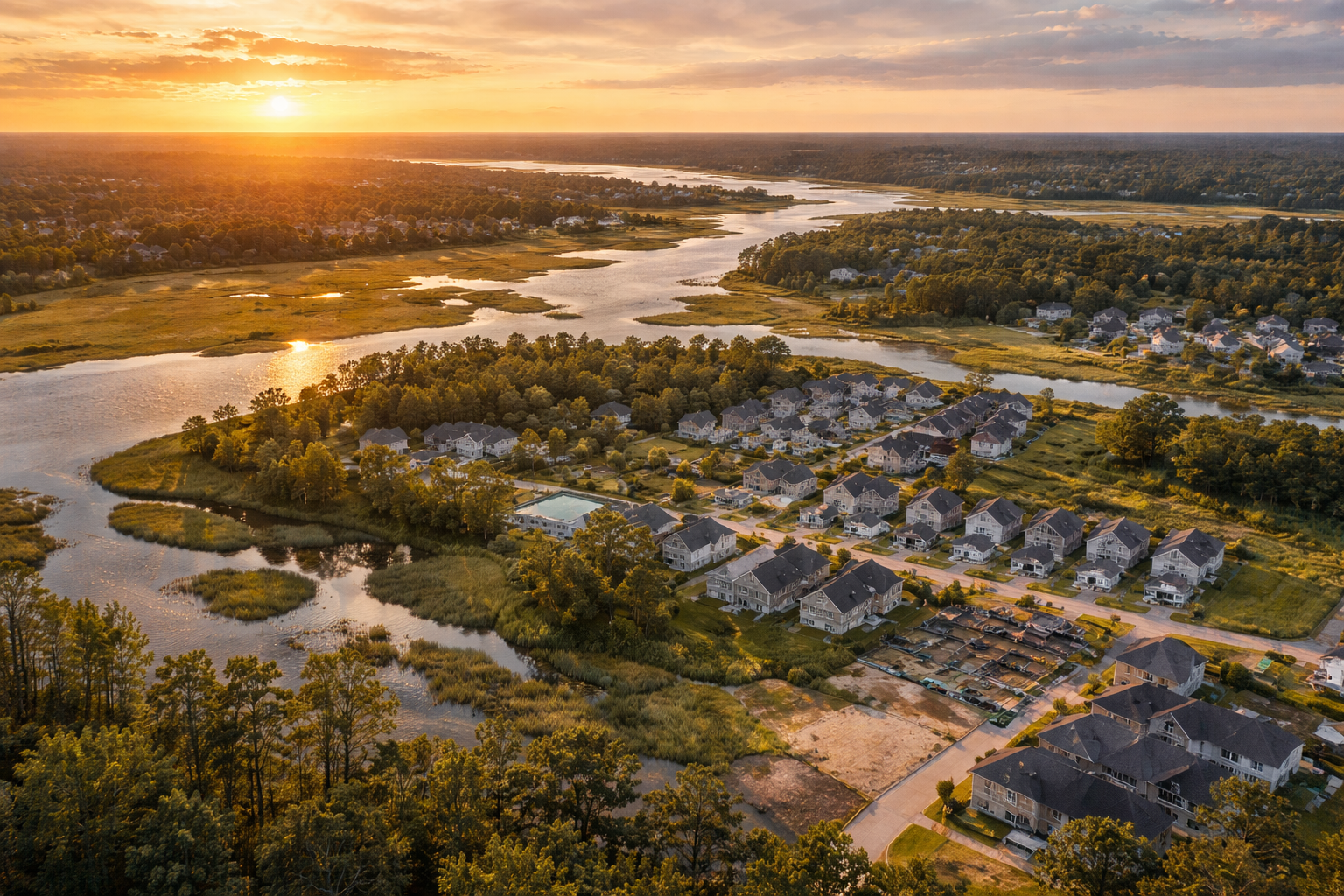
This dynamic has made areas like Moncks Corner, Goose Creek, and the Clements Ferry corridor focal points for new residential development.
At the same time, Charleston County remains constrained by limited land supply and rising costs, pushing both builders and buyers further outward.
Growth Is Concentrated—Not Universal
One of the most important takeaways from the latest data is that population growth in South Carolina is highly concentrated.
More than 80% of the state’s population increase since 2020 has occurred in just 10 counties—including Charleston, Berkeley, and Beaufort.
Meanwhile, many rural counties are seeing little growth—or even population decline.
That imbalance is creating a widening gap between high-demand coastal markets and slower-moving inland areas.
Migration Trends Are Changing
South Carolina’s growth has long been fueled by inbound migration, particularly from higher-cost states.
While that trend remains intact, it is beginning to cool slightly.
Between 2024 and 2025:
- Fewer domestic migrants moved into the state
- International migration also declined
- Overall population gains remained strong—but less intense
This shift reflects broader national trends, where post-pandemic relocation surges have begun to normalize.
What This Means for Charleston Real Estate
For the Charleston housing market, these changes are subtle—but important.
Population growth continues to support long-term demand, but the days of unchecked acceleration appear to be moderating.
That has several real estate implications:
1. Continued Demand—But More Balanced
Charleston is still attracting buyers, particularly retirees and lifestyle-driven relocations, but buyer urgency is beginning to soften.
2. Expansion Into Outlying Areas
As affordability pressures persist, growth is pushing into Berkeley County and beyond, where land availability allows for large-scale development.
3. Infrastructure Strain Becomes a Key Issue
Rapid population increases are putting pressure on:
- Roads and transportation systems
- Schools and public services
- Healthcare access, particularly for aging populations
Local governments are increasingly considering impact fees, development restrictions, and infrastructure-linked approvals to manage this growth.
The Rise of the Retiree Market
A significant portion of South Carolina’s population growth is being driven by retirees.
This demographic shift is reshaping housing demand in several ways:
- Increased demand for low-maintenance and single-story homes
- Growth in 55+ communities and lifestyle developments
- Higher demand for healthcare access and amenities
In some regions of the state, projections show more than one-third of residents could be over age 65 within the next two decades.
That trend is already influencing development patterns in coastal markets.
A Market Facing Both Opportunity and Pressure
While population growth has been a major economic driver for South Carolina, it has also introduced challenges.
Rising demand has contributed to:
- Higher home prices
- Limited inventory in desirable areas
- Increased competition for land
At the same time, local leaders are grappling with how to balance growth with quality of life.
Efforts under consideration include:
- Linking development approvals to infrastructure capacity
- Adjusting zoning and land-use policies
- Expanding funding for roads and public services
Looking Ahead: Slower Growth, Strong Fundamentals
Even with signs of moderation, South Carolina’s long-term trajectory remains strong.
State projections estimate the population could grow by another 800,000 residents by 2042, with much of that growth continuing to concentrate in coastal and metro-adjacent counties.
For Charleston, that means continued demand—but also increasing pressure to manage growth intelligently.
The Bottom Line
South Carolina is still growing—just not at the same breakneck pace seen during the height of the pandemic-era migration surge.
For the Charleston region, the fundamentals remain intact:
- Strong inbound demand
- Desirable coastal lifestyle
- Expanding economic base
But the next phase of growth will be defined less by speed—and more by how effectively the region balances development, infrastructure, and long-term livability.
Leave a Reply